
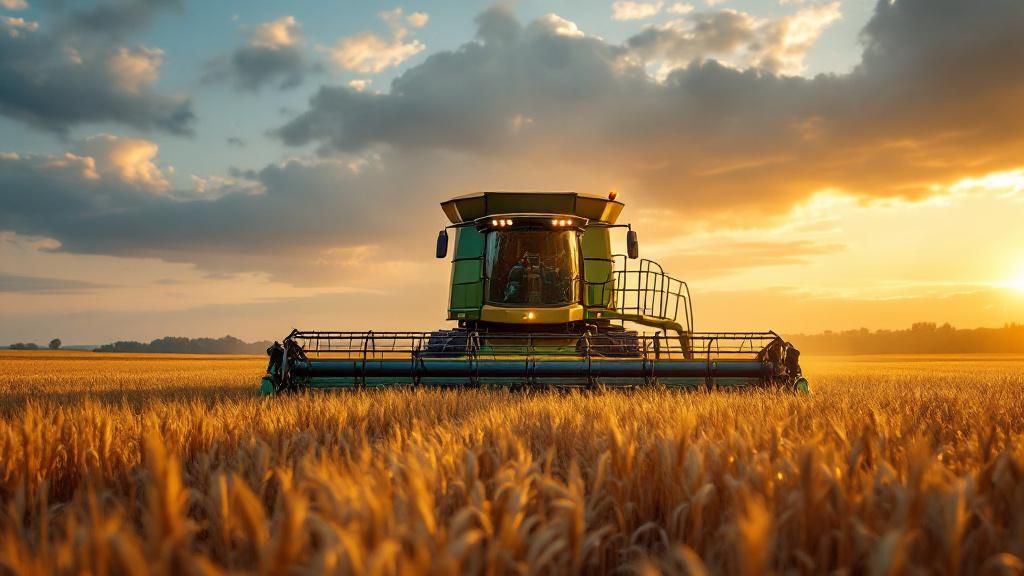
British farmers are facing an unprecedented financial squeeze as fertiliser and fuel costs climb out of reach, threatening the viability of the sector and potentially pushing up food costs for shoppers. Andrew Williamson, who operates 900 acres of crop production land in the vicinity of Bridgnorth in Shropshire, has warned that the industry is finding it difficult to maintain produce affordable amid the unpredictable commodity markets. Since July 2025, the cost of fertiliser have surged by approximately 50 percent, climbing from £330 to £490 per tonne, whilst the cost of red diesel has likewise soared. The steep rises, caused by geopolitical tensions in the Middle East and resulting oil price volatility, have compounded the difficulties facing farmers who are struggling with back-to-back disappointing crop yields.
The Complete Storm: Fertiliser and Fuel Squeeze
The timing of this crisis could hardly be more problematic for British agriculture. Farmers are caught between a rock and a hard place, confronted with choices that carry extraordinary monetary exposure. Williamson explained that farming operates on a two-year production cycle, with investments today only generating returns many months down the line. This extended investment approach exposes farmers to sudden market shocks, particularly when multiple cost pressures occur at the same time. The combination of soaring fertiliser prices, unstable energy prices, and recent poor harvests has created what amounts to a perfect storm for the sector.
What creates the situation notably difficult is the limited influence farmers can exert on these external factors. Regional conflicts in the region have sent oil prices soaring past $100 per barrel, creating cascading consequences throughout farming supply networks. Natural gas, which represents 60 to 80 per cent of nitrogen fertiliser expenses according to the National Farmers’ Union, has become prohibitively expensive. Williamson noted that farmer confidence had started recovering as spring arrived and crops flourished, only to be undermined by forces wholly beyond farmers’ control.
- Fertilizer costs increased 50 per cent since July 2025
- Natural gas accounts for 60-80 per cent of nitrogen fertiliser manufacturing expenses
- Oil prices exceeded $100 per barrel owing to tensions in the Middle East
- Farmers face two consecutive years of poor harvest recovery
Why Natural Gas Supply Prices Matter for Farmers Everywhere
The relationship between gas supplies and fertilizer costs highlights one of agriculture’s most critical yet underestimated risks. As per the National Farmers’ Union, gas comprises between 60 and 80 per cent of the overall expense of producing nitrogen fertilisers—the essential nutrients that support modern crop production across the UK. When global gas prices spike, as they have done in recent times due to geopolitical tensions in the Middle East, the knock-on effect ripples through every farm gate, regardless of size or location. This reliance on a unstable market for commodities exposes UK farming operations exposed to circumstances outside their influence.
The ongoing energy crisis has revealed just how precarious this situation has become. Farmers cannot simply switch to alternative fertilisers or cut consumption without risking significantly diminished crop yields. Instead, they must absorb these astronomical cost increases or face the prospect of reduced profitability—or worse, running at a deficit. For many farms currently working with razor-thin margins, this poses an fundamental danger to their long-term sustainability. The energy component of fertiliser production has become the tail wagging the agricultural dog, dictating whether farms can manage to supply food to the nation.
The nitrogenous fertiliser relationship
Nitrogen fertilisers are crucial for modern agriculture, delivering the essential nutrient that permits crops to grow productively. Yet their manufacture is exceptionally energy-intensive, with natural gas functioning as both a main feedstock and the power source for the manufacturing process itself. This twofold dependence means that when gas prices double or triple, fertiliser manufacturers have little choice but to pass these costs directly to farmers. The £160 per tonne rise that Williamson experienced—from £330 to £490—illustrates this clear connection between energy markets and agricultural inputs.
The issue is worsened by the reality that farmers struggle to build up fertiliser indefinitely. The cost of storage, spoilage concerns, and financial pressures mean that most farms must buy fertiliser shortly before the moment they require it. Grain producers like Williamson are fortunate in having bought inventory the prior season, but livestock farmers, who buy fertiliser more often throughout the season, face the full force of current inflated prices. This fundamental difference in purchasing patterns means distinct farming enterprises encounter the crisis with varying degrees of severity.
Arable Compared to Livestock: Unequal Impact Across the Sector
| Farm Type | Planning Advantage | Current Vulnerability |
|---|---|---|
| Arable Farms | Purchase fertiliser annually in advance, typically during summer months | Still exposed to price volatility for next season’s purchases; locked into decisions made months earlier |
| Livestock Farms | Flexibility to adjust purchasing patterns throughout the year | Severely disadvantaged; must buy fertiliser as needed, absorbing full impact of inflated prices immediately |
| Mixed Farms | Can plan some purchases in advance for crop production | Vulnerable on livestock feed and pasture management; cannot fully mitigate exposure across both enterprises |
| Small-Scale Operations | Limited storage capacity restricts advance purchasing options | Most exposed; lack economies of scale and cannot negotiate bulk discounts during price spikes |
The difference between crop and animal husbandry operations reveals how unequally this crisis spreads its impact across the agricultural sector. Arable farmers, notwithstanding their worries about seasons ahead, at least obtained the majority of their fertiliser needs at more reasonable prices in the previous year. Livestock farmers operate under significantly different limitations. They cannot stockpile feed additives and fertiliser in the identical manner; their animals need steady feed supplies throughout the year, compelling them to buy supplies on an ongoing basis. When prices surge as dramatically as they have recently, livestock operations face immediate and severe economic strain with virtually no opportunity to work around the problem.
This systemic inequality is reshaping the farming sector. Farmers currently unable to achieve profitability—a situation that farmers characterise as their reality—now face decisions that could determine their survival. Livestock farmers may be forced to cut livestock numbers or exit the sector entirely if they cannot pass costs to consumers through higher food prices. The cumulative effect of successive crop failures, rapidly escalating production expenses, and international instability has produced a convergence of crises that threatens far more than profitability but the fundamental viability of farm businesses across Britain.
The Extended Economic Difficulty for British Agricultural Sector
The present crisis extends far beyond individual farm gates, threatening the economic viability of British agriculture as a whole. With fertiliser costs having gone up by around 50% since July 2025—climbing from £330 to £490 per tonne—and fuel prices remaining volatile due to political instability in the Middle East, farmers face an unprecedented squeeze on their already narrow profit margins. The situation is particularly acute because these operational expenses constitute a substantial share of operational outgoings, yet farmers have limited ability to transfer these rises directly onto consumers. As Andrew Williamson points out, whilst the price of wheat in a loaf of bread is minimal, the overall consequence of increasing expenses across all farm operations undermines the sector’s ongoing survival and food supply security.
The timing of this crisis could hardly be worse for UK farming. Following two consecutive disappointing crop yields that have already depleted reserves and tested farmer resilience, the sector now confronts a combination of difficulties that seriously erodes faith in agriculture as a viable enterprise. Natural gas, which comprises 60-80% of fertilizer manufacturing expenses according to the NFU, remains subject to volatile global markets beyond any farmer’s influence. This lack of control—the inability to influence choices affecting survival—creates a psychological and financial strain that extends beyond simple figures. Farmers describe the situation as “concerning and worrying,” expressing not just urgent money worries but existential uncertainty about whether their operations can survive another season under such conditions.
- Natural gas volatility significantly affects nitrogen fertiliser costs, which represent the majority of production expenses
- Geopolitical tensions in Iran and Gulf states keep pushing oil prices above $100 per barrel
- Government strategic petroleum release provides only temporary relief to volatile energy markets
- Farmers have no control over input costs yet are unable to fully pass expenses to consumers
- Two successive weak harvests have depleted reserves, making farms vulnerable to further price shocks
Calls for Greater Transparency and Official Intervention
As the challenge worsens, farmers are growing more outspoken in their push for government intervention and better transparency in markets. The National Farmers’ Union has highlighted the pressing requirement for policy measures that tackle the systemic fragilities exposed by the ongoing energy cost spike. Farmers maintain that whilst global commodity markets remain outside their reach, national policy tools—including fuel cost assistance and fertilizer support—remain underused. The sector contends that without swift governmental action, the cumulative effect of rising input costs will drive many farm businesses into financial collapse, fundamentally altering the landscape of British agriculture and jeopardising national food security.
The discontent among agricultural producers arises partly due to the perception that their plight lacks sufficient consideration by policymakers in spite of agriculture’s critical importance to the country’s food security. Williamson and his peers emphasise that farming works across extended investment cycles, rendering abrupt price increases especially damaging. Unlike other sectors with greater pricing adaptability, farmers are forced to absorb losses or halt business operations. Agricultural leaders are pushing for emergency support schemes, price stabilisation mechanisms, and long-term strategies to shield British farms from volatile global energy prices. Without this action, they warn, the industry confronts an existential crisis that could reshape food supply for decades.
What farm operators are calling for
Farmers are seeking immediate government support through emergency financial aid, temporary subsidies on red diesel and fertilizer, and steps to stabilize fuel costs. Beyond short-term assistance, the sector requires sustained policy changes including investment in UK-based fertiliser manufacturing to reduce reliance on volatile global markets, and stockpiles of vital farming materials. Additionally, farmers call for greater transparency in market pricing and distribution networks, arguing that better market information would enable better-informed buying choices. The National Farmers’ Union emphasises that such measures are essential not merely for farm survival, but for maintaining Britain’s agricultural independence and nutritional resilience.
