
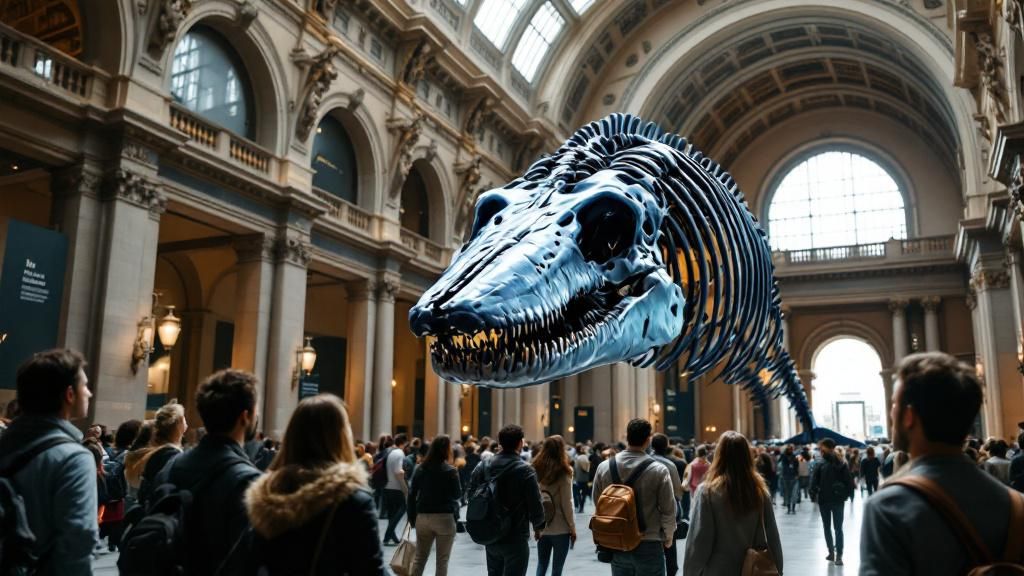
The Natural History Museum has regained its position as Britain’s most visited tourist destination, attracting a record 7.1 million visitors in the last 12 months. The South Kensington institution’s impressive tally constitutes a 13 per cent surge on 2024 numbers, claiming the coveted top spot for the first time and wresting the crown from the British Museum, which held the position for the preceding two years. The significant milestone highlights the lasting attraction of the UK’s heritage attractions, even as the nation grapples with economic uncertainty and a ongoing cost-of-living crisis. According to the Association of Leading Visitor Attractions, the Natural History Museum’s success reflects wider strength across Britain’s tourism sector, though overall attendance across all leading venues remains below pre-pandemic levels.
Record-Setting Year Signals Change in Cultural Tourism
The Natural History Museum’s rise to prominence of Britain’s popular attractions rankings represents a notable change in cultural travel patterns. The institution’s 7.1 million annual visitors surpassed all previous records for a standalone institution, demonstrating the public’s unwavering interest in natural sciences and palaeontology. Dr Doug Gurr, the museum’s head, credited the achievement to the team’s focus on providing outstanding experiences and world-class exhibitions. He observed that the numbers reflect “the enormous public appetite to engage with the wonders of the natural world,” indicating that heritage venues continue as vital pillars of UK leisure expenditure notwithstanding financial pressures.
The wider visitor economy displays promising recovery, with the Association of Leading Visitor Attractions reporting a 2 per cent increase in visits across its 409 member sites, totalling 165 million visits in 2025. However, this figure still lags behind the pre-Covid levels of 170 million visits in 2019, indicating that the sector has not yet fully recovered from Covid-related disruptions. Bernard Donoghue, the director of ALVA, observed that visitors have become increasingly strategic with their discretionary spending during this era of financial unpredictability. The data suggests that whilst Britons remain committed to cultural attractions, they are being more selective in deciding which venues to patronise.
- British Museum occupied first place for two years running previously
- Bayeux Tapestry exhibition anticipated to increase British Museum visitor numbers during September
- Five leading attractions such as Tate Modern and National Gallery ranked highly
- Edinburgh Castle and Royal Botanic Gardens Kew exceeded two million visitors
The Dynamic Landscape of British Attractions
The Natural History Museum’s pushing of the British Museum from the top position marks a significant reordering of Britain’s institutional standing. The British Museum, which had held sway over the rankings for the last two years, now holds runner-up status with a significant visitor base. However, the institution’s prospects appear notably positive, with the scheduled exhibition of the Bayeux Tapestry planned for September expected to generate substantial extra footfall. This prestigious loan from Normandy is projected to generate significant visitor numbers throughout the closing months of 2025 and beyond, possibly threatening the Natural History Museum’s newly acquired position.
Beyond these two major institutions, London’s cultural attractions continue to command substantial visitor figures. The Tate Modern and National Gallery both ranked within the top five most-visited destinations, whilst venues such as Royal Museums Greenwich and the National Portrait Gallery welcomed over 1.5 million visitors each year. Outside the capital, Edinburgh Castle became a notably sought-after destination, showing that cultural tourism reaches well outside London’s boundaries. This geographic variety reflects Britain’s rich heritage spread across multiple regions, with attractions including royal palaces to botanical gardens seizing public imagination.
| Attraction | Visitor Numbers |
|---|---|
| Natural History Museum | 7.1 million |
| British Museum | Not specified |
| Tate Modern | Not specified |
| National Gallery | Not specified |
| Royal Botanic Gardens Kew | 2 million+ |
| Edinburgh Castle | 2 million+ |
What Caused the Rise
The Natural History Museum’s notable 13 per cent growth in visitor numbers year-on-year suggests multiple compelling factors at play. The celebrated blue whale skeleton in the entrance hall continues to captivate audiences, whilst the museum’s dedication to providing world-class exhibitions has clearly resonated with the British public. Even in the face of economic uncertainty and a ongoing cost-of-living pressures, families and individuals value highly cultural engagement, regarding them as important pastimes worth protecting within their budgets.
Bernard Donoghue’s observation that visitors have become “more tactical” in their financial choices reveals a key understanding: people are selecting quality over quantity. Rather than dividing time across multiple destinations, they are focusing on leading establishments offering exceptional value and unforgettable moments. The Natural History Museum’s success reflects its standing for quality, welcoming approach, and the broad attraction of natural history subject matter that captivates visitors of all ages and backgrounds.
Recovery Progresses Throughout the Visitor Economy
The larger visitor attraction sector sustains its consistent recovery from the pandemic’s severe impact, though full pre-pandemic levels remain elusive. Across the 409 venues recorded by the Association of Premier Visitor Attractions, total visits attained 165 million in 2025, representing a creditable 2 per cent growth on the prior year. However, this figure falls short of the 170 million visits recorded in 2019, before coronavirus disrupted the sector completely. The data suggests that whilst impetus is building, the sector continues to have ground to make up to restore pre-Covid performance levels.
Despite these challenges, the sustained growth trajectory offers genuine encouragement to venue operators and policymakers alike. Bernard Donoghue’s remarks underscore a fundamental truth about British cultural life: visitor attractions represent experiences that people actively prioritise, even when finances are tight. The willingness of millions to venture out and engage with museums, galleries, gardens, and historic sites demonstrates resilience and a deep-rooted commitment|lasting dedication|profound attachment to cultural enrichment. This pattern suggests that once economic conditions stabilise further, the visitor economy could accelerate towards and potentially exceed pre-pandemic benchmarks.
- Total visits to 409 Alva affiliated venues reached 165 million per year
- A 2 per cent increase year-over-year demonstrates steady recovery momentum
- Figures remain 5 million visits below 2019 pre-pandemic levels
- Rising cost of living has not discouraged participation in cultural tourism
- Venues diversifying offerings to draw visitors amid economic challenges
Regional Expansion Trends
Geographical spread of visitor numbers reveals encouraging growth beyond London’s established dominance. Edinburgh Castle, Royal Museums Greenwich, the National Museum of Scotland, and Royal Botanic Gardens Kew all recorded over 2 million visitors, demonstrating that cultural visitor attractions extends throughout the United Kingdom. This dispersal of visitor traffic across different areas strengthens regional economies and provides possibilities for lesser-known attractions to thrive. The success of regional destinations suggests that provincial attractions are increasingly competitive, offering compelling experiences that compare with their London counterparts and drawing both domestic and international visitors to diverse destinations.
Looking Ahead: Upcoming Exhibitions and Possibilities
Whilst the Natural History Museum’s achievement represents a triumphant milestone, the market dynamics of British cultural venues continues to be fluid and uncertain. The months ahead will bring significant developments that could reshape attendance trends across the sector. Cultural institutions are actively investing in flagship shows and curated displays designed to engage audiences and drive footfall. These strategic initiatives demonstrate a nuanced grasp of patron expectations and the value audiences attach to novel, engaging experiences. The industry’s capacity to evolve and renew experiences will be essential in maintaining growth and securing repeat attendance from home and international patrons.
The British Museum’s anticipated surge in attendance figures demonstrates how prominent displays can catalyse dramatic shifts in visitor numbers. Heritage organisations are acknowledging that deliberate curatorial choices represents a key driver for increased attendance, particularly during times of financial constraint when audiences prioritise spending about their cultural expenditure. The triumph of landmark shows extends further than attendance figures, generating media coverage and public discussion that amplifies institutional profiles. As organisations create comprehensive programming initiatives, the competition for visitors will increase, ultimately advantaging visitors through greater excellence and diversity of cultural offerings across the country’s leading institutions.
The Bayeux Tapestry Effect
The British Museum’s upcoming exhibition of the Bayeux Tapestry from September represents a watershed moment for the institution. This 11th-century artefact, one of the world’s most acclaimed historical textiles, is expected to drive exceptional levels of visitor interest and potentially alter annual attendance figures. The tapestry’s coming to London represents only the second time it has left France in over 900 years, establishing genuine historic significance that surpasses typical exhibition hype. Industry observers anticipate this display might position the British Museum back to the highest visitor rankings and set new benchmarks for single-exhibition attendance records across the sector.
