
Israeli elite troops carried out a significant combat operation in the Lebanese village of Nabi Chit overnight, resulting in at least 41 deaths and 40 injuries per the Lebanese health ministry. The raid, which took place in the eastern Bekaa Valley, was intended to recovering the remains of an Israeli military airman who went missing in Lebanon 40 years earlier. The operation involved airborne insertions, ground clashes with Hezbollah fighters, and intensive aerial bombardment that reduced much of the town to rubble. Three Lebanese soldiers were killed along with civilians, including children, as the escalating conflict between Israel and the Iran-backed militant group Hezbollah continues to intensify across the Lebanese border.
The Procedure and Its Impact
The Israeli military campaign unfolded in stages throughout Friday night and into Saturday morning. Four Israeli aircraft appeared near Lebanon’s border with Syria late Friday, with two landing to deploy special forces onto the ground. Simultaneously, a massive air campaign commenced, targeting the town as Israeli commandos traversed Nabi Chit’s streets. The Lebanese military, which has sought to stay neutral in the broader conflict, launched flares to detect the landing positions and took defensive actions in response to the incursion.
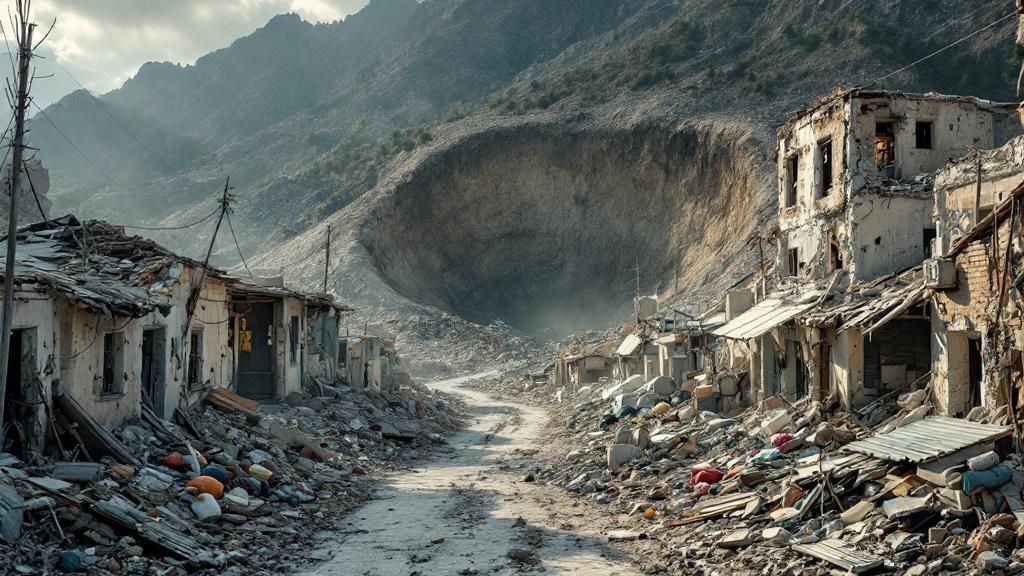
The physical destruction left behind revealed the extent of the raid’s severity. Buildings throughout Nabi Chit were reduced to piles of rubble, with a massive crater blown into the ground that damaged surrounding houses. Bullet holes marked destroyed vehicles, their seats stained with blood. Among the wreckage spread across the town lay traces of everyday life—children’s colouring books, paintings, and cooking utensils—powerful evidence of the lives disrupted by the operation.
- At minimum 41 people killed, 40 injured in the nighttime attack
- Three Lebanese soldiers among the dead together with civilians and children
- Heavy clashes erupted between Israeli military and Hezbollah fighters
- Heavy aerial bombardment enabled withdrawal of Israeli elite military unit
A Long-Standing Puzzle Prompts Armed Forces Action
The Israeli military action in Nabi Chit was specifically designed to locate the remains of an Israeli airman who disappeared in Lebanon 40 years ago. This decades-long search highlights the profound human cost of conflicts in the region and the steps nations will undertake to locate their missing soldiers. The recovery mission shows Israel’s longstanding commitment to locating and returning the remains of service members who died in military operations, a focus that has influenced diplomatic decisions throughout the country’s history.
However, the operation’s outcome prompted questions about its necessity. On Saturday, locals pointed to an empty grave in the town cemetery—a hole that was excavated during the raid. “They thought he was there but there was nothing,” one resident said, gesturing at the vacant plot. The absence of remains at the suspected burial site meant the large-scale military action, which resulted in numerous deaths, ultimately did not accomplish its primary objective while causing widespread devastation in its wake.
The Quest to Find Ron Arad
The missing airman’s case exemplifies one of Israel’s most persistent military mysteries. For four decades, questions have lingered over the circumstances of his disappearance and the location of his remains. The Israeli military’s choice to initiate a major special operations raid demonstrates the importance attached to resolving such cases, regardless of the time elapsed or tactical difficulties surrounding recovering missing personnel from hostile territory.
The failed retrieval operation in Nabi Chit highlights the risks and complications present in such operations. Israeli forces conducted large-scale ground operations and air support to secure the cemetery site, yet discovered no proof of the airman’s location. The discrepancy between intelligence assessments and ground reality led to a expensive mission that destroyed the Lebanese village without achieving the mission’s core objective.
Civilian Deaths and Controversial Approaches
The nighttime raid in Nabi Chit resulted in at least 41 deaths and 40 injuries, according to Lebanese health ministry figures. Among the casualties were three Lebanese soldiers and numerous civilians, including children, whose names were documented by local residents. The extent of damage extended far beyond the cemetery, with entire buildings reduced to rubble and a large crater gouged into the town’s landscape. Evidence of everyday civilian life—children’s coloring books, paintings, and kitchen equipment—lay scattered amid the debris, underscoring the operation’s indiscriminate effect on the community.
The intensity of the armed intervention has sparked concerns about proportionality and civilian protection. Israeli aircraft conducted what the Lebanese military characterized as a “extensive air strikes” simultaneously with the ground operation, making it difficult to differentiate attacks on Hezbollah fighters and those affecting civilian areas. Fighting broke out on Nabi Chit’s streets between Israeli special forces, Hezbollah fighters, and residents protecting their homes, creating a chaotic environment where civilian deaths became inevitable. The operation’s inability to find the airman’s remains has increased scrutiny of the tactics employed.
- Three Lebanese soldiers killed during the Israeli strike on Nabi Chit
- Large crater and destroyed buildings spread across the eastern Bekaa Valley town
- Lebanese military used flare bombs to detect Israeli special forces deployment areas
- Heavy ground combat between Israeli commandos, Hezbollah, and civilian defenders
- Civilian household items discovered in wreckage suggesting residential area targeting
Ground-Level Perspectives
Residents of Nabi Chit recounted the distressing experience of the nighttime attack. A local administrator described the point in time Israeli troops showed up: “At the witching hour, we sensed a strange movement on one side of the village. It was revealed to be an Israeli elite military unit assigned to some operation.” He outlined how Hezbollah militants quickly surrounded the commandos, resulting in violent clashes that compelled civilians to defend their homes while aerial bombardment escalated overhead. The chaos left the community emotionally scarred and challenging the mission’s rationale.
Saturday morning exposed the full extent of the destruction as residents inspected their ravaged town. Bullet casings littered the streets, and a destroyed vehicle bore the marks of intense gunfire, its seats stained with blood. Hezbollah, which administers the area, later granted journalists access to document the damage, allowing the world to observe the civilian toll. The contrast between the mission’s goal—retrieving bodies from an vacant burial site—and the extensive damage it caused has sparked broad controversy about military necessity and civilian responsibility.
Military Goals and Intensifying Hostilities
The Israeli military action in Nabi Chit was intentionally structured to recover the remains of an serviceman unaccounted for over forty years, reflecting the enduring commitment to identify missing soldiers. However, the scope of the operation—encompassing aerial insertions, special forces field actions, and sustained aerial bombardment—far went beyond what might be typical for a recovery mission. The operation highlights how the broader conflict between Israel and Hezbollah has converted routine military objectives into large-scale combat engagements, with non-combatants affected by the fighting as civilian casualties proves unavoidable in densely populated areas.
The escalation represents a significant heightening of hostilities in the eastern Bekaa Valley, a region that has become progressively destabilized as tensions between Israel and the Iranian-aligned Hezbollah keep escalating. The overnight raid demonstrates how the search for missing personnel can trigger disproportionate military responses when executed in ongoing combat regions under the control of armed militant groups. The Lebanese military’s observation of four Israeli aircraft breaching the border and deploying special forces indicates a coordinated, large-scale operation rather than a limited recovery effort, indicating broader operational aims beyond locating the airman’s remains and accelerating the region’s deterioration.
| Aspect | Details |
|---|---|
| Primary Objective | Recovery of Israeli airman missing for 40 years; remains not found in searched grave |
| Military Assets Deployed | Four Israeli aircraft, special forces ground units, sustained aerial bombardment support |
| Civilian Casualties | At least 41 killed, 40 injured; three Lebanese soldiers among dead; children reported deceased |
| Physical Destruction | Buildings reduced to rubble, massive crater created, destroyed vehicles, widespread infrastructure damage |
The operation’s failure to find the airman’s remains raises critical questions about whether the military response was commensurate to the objective. With the target grave discovered empty and numerous civilians dead, the tactical and strategic calculus of the mission has become deeply contested. The incident exemplifies the broader pattern of intensification in the Israel-Hezbollah conflict, where military operations increasingly obscure the distinction between legitimate security objectives and excessive force that inflicts severe civilian casualties and deepens regional instability.
Greater Implications for the Territory
The raid on Nabi Chit marks a pivotal moment in the escalating conflict between Israel and Hezbollah, demonstrating how localized military operations can rapidly expand into larger-scale regional clashes. The deployment of four aircraft and elite military personnel into Lebanese territory, combined with ongoing aerial attacks, reflects Israel’s readiness to execute extensive military strikes to achieve its objectives. This operation highlights the fragile security situation in the Bekaa Valley and raises concerns about increased deterioration of Lebanon, a country already contending with profound economic and political difficulties. The presence of civilians in active combat zones highlights the humanitarian cost of third-party conflicts in the Middle East.
The incident also underscores the complex role of the Lebanese military, which has sought to stay neutral in the Israel-Hezbollah conflict while also protecting Lebanese sovereignty. By using flare munitions to identify Israeli landing sites, the military demonstrated its capacity for response but ultimately proved unable to prevent the operation from proceeding or protect civilians from the resulting devastation. This dynamic raises questions about Lebanon’s capacity to preserve governmental control over its territory and prevent it from serving as a main theater in a broader regional conflict. The international community faces increasing pressure to address the humanitarian crisis and prevent further escalation.
- Israel’s extensive military penetrations into Lebanon’s borders strain established security arrangements and territorial independence
- Civilian casualties and infrastructure destruction compound Lebanon’s humanitarian and economic crisis
- Hezbollah’s military action demonstrates continued military capability and influence in frontier areas
- Global diplomatic initiatives face mounting pressure to prevent wider Middle East conflict expansion
