
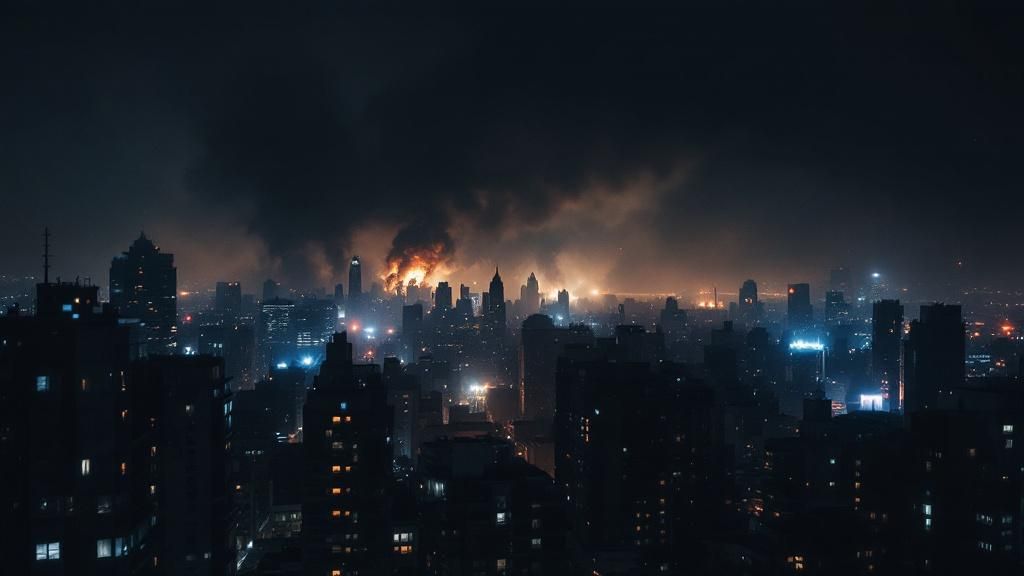
Some Iranian detractors of their government who initially supported military strikes against the Islamic Republic are now expressing doubt about the war’s human and economic costs. What began as a glimmer of hope for political change has shifted toward growing anxiety about possible devastation and civilian suffering, according to discussions among Iranians in Iran itself. While some dissidents still contend that foreign military action may be the most viable way to weaken the clergy-led government, others are confronting a troubling issue: whether any strategic victories could warrant the devastation of another war. The shift in sentiment reflects a complex reality that undermines the narrative some Western policymakers have promoted about the operation’s potential to accelerate regime change in Iran.
Early Optimism Transforms Into Harsh Reality
When news of the armed attacks initially surfaced, certain Iranian dissidents felt a wave of optimism. Sama, a 31-year-old engineer in Tehran, described feeling genuine hope after years of unsuccessful demonstrations and state repression. She even rejoiced when reports circulated that Supreme Leader Ayatollah Ali Khamenei had been killed in the strikes. “I was screaming in happiness when the major announcement was verified,” she recalled. For opponents worn down by the regime’s brutal suppression of dissent, the prospect of foreign military action seemed to offer what internal opposition had failed to achieve: a trigger for fundamental political change.
However, the early sense of excitement has rapidly deteriorated as the conflict moves into week two. The constant sound of explosions has transformed hope into fear, and many Iranians who supported the strikes are now gripped by anxiety for their wellbeing and their communities. Sleep has become impossible for some, overtaken by nightmares and anxiety about potential targeting. The human cost of the conflict is becoming impossible to ignore, prompting difficult reflection among those who had believed swift military action would rapidly bring down the government. The question haunting many opposition figures now is whether any political outcome could conceivably vindicate the devastation occurring in their surroundings.
- Years of failed protests and lethal state repression wore down Iranian opposition forces
- Early accounts of Supreme Leader’s death ignited celebrations within critics of the regime
- Constant explosions and disturbing dreams now shape everyday existence for Tehran residents
- Concern over neighborhood destruction replaces political optimism with deep-seated fear
The Human Cost and Individual Worries
As the crisis deepens, the original political considerations that inspired particular Iranian opposition voices are being overshadowed by mounting humanitarian concerns. The magnitude of anticipated civilian losses and physical devastation has prompted serious reconsideration among individuals who earlier regarded military intervention as a necessary evil. Conversations with Iranians reveal a deepening anxiety about the physical destruction of their country and the mass exodus of people. What started as optimism for political transformation has transformed into existential dread, with many now uncertain about regime change achieved through devastation would be worth the human cost their nation would sustain for years ahead.
The psychological impact is comparably serious. Beyond the direct threats of living in an ongoing war region, many Iranians report profound emotional trauma from the constant threat of bombardment. Sleep deprivation, anxiety disorders, and post-traumatic stress are becoming widespread among city dwellers. Parents struggle to explain to children why explosions shake their homes at night. The cumulative effect of weeks of tension and fear is undermining the social fabric of Iranian communities, creating divisions between those who still support military action and those who now see it as devastating, independent of its political outcome.
Population Displacement and Civilian Effects
Healthcare centers and residential areas remain vulnerable to strikes, forcing families to consider leaving from large urban centers. The possibility of turning into internally displaced refugees within their own country has become a genuine concern for many Iranians. City areas like Tehran face potential human rights emergencies as systems decline and essential services become compromised. Those with resources are exploring moves to rural areas or abroad, while at-risk groups lack resources to escape. The shadow of widespread displacement looms over public discourse, adding urgency to the ethical concerns opposition figures now contend with regarding the expense of anticipated political change.
The targeting of non-military infrastructure constitutes perhaps the most disturbing aspect of the conflict for opposition members in Iran who advocated for intervention. Schools, medical centers, and electrical infrastructure risk potential destruction, outcomes that would undermine the nation’s ability to function for years. Even if the regime collapsed, the country would be left with ruins necessitating extensive rebuilding. This difficult reality has prompted many to reassess whether external military pressure serves as a viable path to political change, or whether it merely produces suffering that goes beyond any single government’s tenure.
Intensified Crackdowns and Eroded Rights
The conflict has unexpectedly reinforced the Iranian regime’s grip on power rather than weakening it, a harsh truth for opposition figures who initially supported military strikes. Authorities have used the war as justification for sweeping security measures, including the near-total internet shutdown that began on February 28th, successfully suppressing opposing viewpoints and preventing coordination among opposition groups. Security forces have stepped up detentions of activists and critics, framing any opposition to the war effort as unpatriotic betrayal during a national emergency. The regime has tightened its grip over information flows, state media, and public discourse, making it virtually impossible for opposition movements to organize or convey their grievances to the broader population.
For many Iranian critics, the recognition that military involvement has enabled rather than prevented authoritarian crackdowns represents a significant strategic miscalculation. The very rights they sought to obtain through political transformation have instead shrunk sharply, with people facing increased monitoring and detention risks simply for challenging the war. News professionals face challenges to report freely, opposition members worry about imprisonment, and ordinary Iranians self-censor their conversations even in intimate environments, worried about government observation. This strengthening of restrictions suggests that even if external military pressure manages to degrading the regime’s armed forces, it may maintain Iran’s authoritarian control systems entirely preserved and more embedded than ever.
- Internet shutdowns block coordinated opposition efforts and strengthen regime propaganda dominance
- Security forces escalate detention of activists under wartime emergency pretexts
- Citizens experience increased monitoring and self-censorship despite aspirations of freedom
The Discussion Regarding Alternatives and Outside Influence
Among Iranian critics, a key debate has intensified over whether external military intervention represents the most viable path toward regime change. Some critics of the regime argue that decades of internal resistance—from street protests to covert coordination—have repeatedly proven ineffective to dislodge the Islamic Republic’s deeply rooted power structure. From this perspective, external military action may present the only viable way to weaken the system’s grip on power and create conditions for internal change. However, this view increasingly conflicts with mounting evidence that such intervention largely bolsters rather than erodes the regime’s repressive apparatus.
Other opposition figures argue that the ongoing military operation, irrespective of its stated objectives, has significantly shifted calculations about the financial implications of regime change itself. They highlight the civilian impact, economic disruption, and destruction of infrastructure as elements that might destabilizing Iran for many years, potentially creating a absence of central authority more problematic than existing circumstances. These doubters fear that concentrating only on military approaches has pushed aside diplomatic channels or community organizing approaches that might achieve democratic reform with less severe outcomes. The difference of opinion reflects fundamental questions about whether external pressure can catalyze genuine democratic change or merely precipitate chaos.
Internal Transformation Versus Military Force
Advocates of internal resistance contend that ongoing community mobilization, civil disobedience, and cultural opposition represent more sustainable paths to political change than foreign military action. They cite proven nonviolent campaigns in other contexts and propose that Iranian society possesses adequate organizational infrastructure and popular discontent to generate change without outside involvement. However, they recognize that the government’s security forces has consistently suppressed such movements with ruthless effectiveness, raising uncomfortable questions about whether internal pressure alone can ultimately prevail against such entrenched authoritarianism.
Conversely, those supporting external pressure contend that the regime’s internal security system is precisely why domestic opposition has consistently failed. They argue that armed strikes aimed at the regime’s military capabilities and strategic infrastructure could fundamentally alter the distribution of power, opening opportunities for internal opposition movements to build momentum. Yet this reasoning supposes that military weakening necessarily converts into political weakness—an assumption more contested by Iranians seeing their government’s ability to consolidate power even during armed conflict and international pressure.
- Internal resistance movements have historically encountered severe regime suppression and failed repeatedly
- Military intervention could undermine state capabilities but strengthen authoritarian governance structures
- Negotiation strategies and grassroots organizing offer alternatives with potentially lower human suffering
- Uncertainty persists about whether outside intervention promotes democratic change or simply triggers state collapse
Skepticism About Pledges and Extended Timeframes
As the conflict extends into its third week, many Iranians who first welcomed the prospect of outside involvement are grappling with broken expectations. The promised swift collapse of the regime has not come to pass, and instead, citizens face constant bombings, economic disruption, and an progressively reinforced security state. Sama’s opening optimism has transformed into anxiety about whether the armed operation will accomplish its declared goals or just continue suffering. “What if we’re left with ruins?” she told the BBC, expressing a fear growing among regime critics who once saw military strikes as a possible driver of transformation. The divide separating optimistic predictions and grim truth has forced a reckoning with the expectation that external pressure would directly result in political transformation.
This sense of betrayal reflects broader historical patterns in which foreign military interventions have not delivered the democratic outcomes their supporters anticipated. Iranian critics of the regime recall Iraq’s descent into chaos following the 2003 invasion and Libya’s state collapse following NATO intervention, cautionary tales that now shape their calculations. Even if military action substantially reduce Iran’s military strength, skeptics argue, there is no guarantee the regime will step down or that grassroots resistance forces will have the space to organize meaningful alternatives. The central dilemma haunting many Iranian dissidents is whether they have exchanged the devil they know for an uncertain disaster.
