
The government has pledged to crack down on energy firms capitalising from surging oil prices amid mounting tensions in the Middle East, with Energy Secretary Ed Miliband warning that price rip-offs will not be tolerated. Speaking to the BBC, Miliband confirmed that the Competition and Markets Authority (CMA) is positioned to intervene against unfair pricing practices as households face sharply higher heating oil costs and petrol pump prices rise. The stark warning comes as an effective embargo in the Straits of Hormuz, a critical energy supply route, threatens to push bills higher across the country. The government is under mounting pressure to act quickly, with Chancellor Rachel Reeves and Miliband set to meet petrol retailers later to reinforce warnings about unwarranted price increases.
Climbing Oil Expenses Prompt State Intervention
The sharp increase in oil prices, driven by conflict in the Middle East, has sparked considerable concern over the possible effects on household energy bills. Households reliant on heating oil have already experienced dramatic price increases dramatically, whilst petrol pump prices have risen considerably across the country. The government recognises the urgency of the situation and is moving swiftly to stop energy companies from exploiting the volatile market conditions. Miliband acknowledged that the CMA is examining the heating oil and motor fuels markets with particular scrutiny, prepared to implement decisive action against any unreasonable price increases that disadvantage consumers.
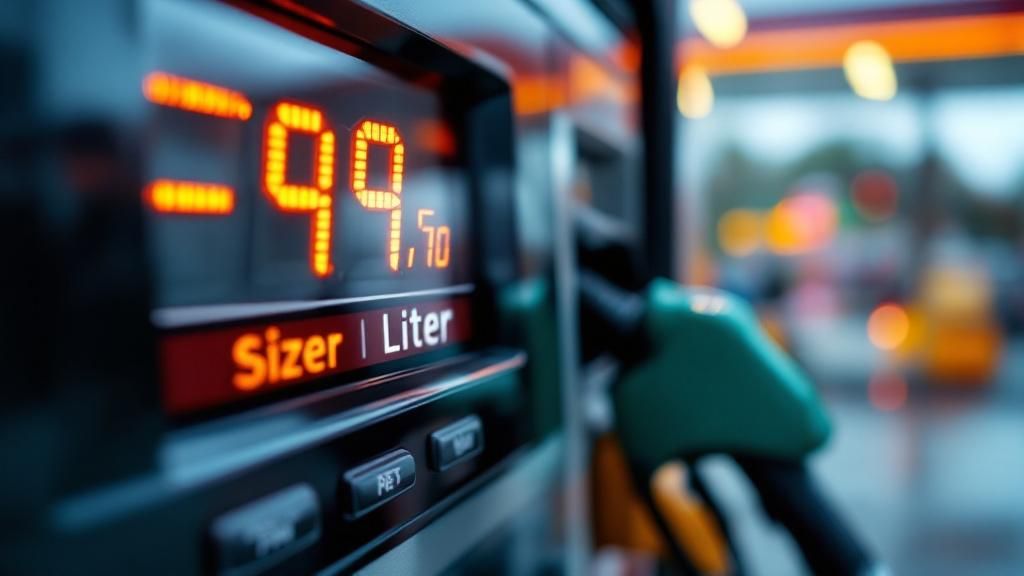
Chancellor Rachel Reeves has previously highlighted the significant differences in petrol pricing across different forecourts, with prices varying between £1.27 and £1.80 per litre—a difference that indicates potential profiteering. The government’s strategy integrates immediate oversight with sustained energy security initiatives. On Friday, Miliband is introducing an accelerated process for constructing new nuclear facilities, which the government views as crucial to reducing reliance on volatile fossil fuel markets. However, ministers acknowledge that faster intervention may be necessary to protect households from the worst effects of current price surges whilst these sustained initiatives progress.
- CMA on close watch for unjustifiable price rises across energy industry
- Petrol retailers convening with government to discuss pricing transparency concerns
- Nuclear power fast-track programme starting Friday to boost energy self-sufficiency
- Government dismisses new North Sea exploration as response to present crisis
Market Regulator Put on High Alert
The Competition and Markets Authority has been positioned to monitor closely to oversee energy markets for indications of price gouging or exploitative conduct. Energy Secretary Ed Miliband confirmed that the regulator is prepared to intervene swiftly if companies exploit the present market fluctuations to increase customer charges unjustifiably. The CMA has already engaged in talks with state representatives this week with particular focus on heating oil and motor fuel pricing, underscoring the seriousness with which authorities are addressing the situation. This forward-thinking approach indicates growing public concern about whether energy firms are leveraging geopolitical turmoil as cover for excessive profit-taking.
The watchdog’s willingness to act represents a significant show of force from the government, which has made clear that it will not tolerate unfair market practices during this time of energy price instability. By positioning the CMA as an engaged guardian of household protection, ministers are attempting to provide confidence to households that protections are in place against excessive pricing. The authority’s involvement also sends a pointed message to energy retailers and petrol companies that their pricing decisions will face rigorous scrutiny. With meetings between government and industry scheduled, the CMA’s presence underscores that compliance with fair pricing expectations is not merely encouraged but closely overseen.
Powers Wielded by the CMA
The CMA holds substantial enforcement capabilities to examine alleged violations of competition legislation and consumer protection regulations. Should the watchdog uncover proof of excessive pricing or anti-competitive conduct, it can launch formal investigations, issue enforcement orders, and levy substantial fines on offending companies. These powers deliver a credible deterrent against exploitative practices, ensuring that energy companies understand the repercussions of placing emphasis on excessive profits over fair treatment with customers during periods of market volatility.
- Initiate formal investigations into alleged price gouging and anti-competitive conduct
- Deliver enforcement orders mandating companies to discontinue unfair trading practices immediately
- Apply significant fines on companies found violating antitrust regulations
Extended Energy Approach Versus Immediate Remedies
Whilst the government recognises the immediate pressure created by surging energy prices, Ed Miliband has made clear that the administration’s response will not be diverted by calls to discard its long-term energy strategy. The Energy Minister has strongly rejected suggestions that the present oil price crisis should prompt a complete reassessment of the administration’s net zero commitments or energy independence goals. Instead, Miliband has framed the present geopolitical instability as vindication of the need to transition away from unstable fossil fuel markets completely. “We’ve got to have clean, homegrown power that we control,” he stated, contending that the crisis underscores the dangers of remaining tethered to the “fossil fuel rollercoaster” that renders Britain vulnerable to outside pressures.
The government’s position shows a resolve to reconcile pressing consumer issues with broader objectives that prioritise sustained energy stability and environmental goals. Rather than capitulating to demands for short-term solutions that might weaken broader policy objectives, ministers are pursuing a dual approach: tackling price gouging through enhanced vigilance whilst accelerating investment in sustainable and nuclear infrastructure. This plan implies that officials see the ongoing crisis not just as a issue needing emergency action, but as an opportunity to illustrate why radical shifts in energy supply are crucial. The unveiling of a accelerated process for new nuclear power stations reflects this resolve to building resilience through revolutionary infrastructure investment.
North Sea Development Debate
Some energy firms and industrialists have capitalised on the ongoing emergency to argue for increased fossil fuel extraction in the North Sea, claiming that greater home-grown output would insulate Britain from subsequent cost spikes. However, Miliband has firmly dismissed this proposition, contending that new exploration licences would provide no immediate relief to consumers paying increased charges. The government’s position is to continue extracting from existing production sites whilst denying approval for fresh drilling projects. This strategy seeks to weigh up energy resilience with environmental pledges, though it has drawn criticism from those advocating for faster offshore expansion as a pragmatic response to international tensions.
Opposition Criticism and Fuel Duty Rates Issues
The administration’s approach to handling skyrocketing energy costs has attracted fierce criticism from opposition parties, with shadow transport secretary Richard Holden accusing Chancellor Rachel Reeves of neglecting to implement decisive action to ease the cost-of-living emergency. The criticism underscores broader concerns that existing policies may fall short to protect households and businesses from the most severe impact of high energy costs. With fuel costs said to have doubled for some households since the intensification of Middle Eastern tensions, calls are growing on ministers to demonstrate tangible relief in the near term. Holden’s statement indicates the opposition plans to exploit the energy crisis as a political issue, positioning Labour’s approach as inadequate to meet the scale of the challenge facing ordinary Britons.
When questioned about potential emergency measures, Miliband significantly stopped short of dismissing direct financial support to vulnerable households or the possibility of extending the freeze on fuel duty if the geopolitical situation worsen. This strategic statement indicates the government maintains backup plans should existing policy measures fail to deliver results. The prospect of fuel duty extensions carries significant fiscal implications, yet ministers seem prepared to explore such options if circumstances warrant. The precise balancing of Miliband’s rhetoric—neither committing to nor completely ruling out further assistance—demonstrates the delicate balance the government needs to maintain between fiscal responsibility and urgent cost-of-living relief.
| Measure | Status |
|---|---|
| CMA Price Monitoring | Active and on high alert |
| Fuel Duty Extension | Not ruled out if conflict continues |
| Direct Consumer Support | Under consideration as contingency |
- Opposition demands increased state involvement on rising living expenses at once
- Fuel duty freeze continuation could be extended if international conflicts intensify
- Regulator prepared to intervene against unreasonable price rises promptly
Atomic Energy and Long-term Energy Stability
The government’s extended response to energy volatility focuses on accelerating Britain’s transition away from fossil fuel dependency through nuclear expansion. On Friday, Miliband is unveiling a fast-track process designed to expedite the construction of new nuclear power stations, addressing a sector long beset by delays, spiralling costs and regulatory obstacles. This initiative constitutes a cornerstone of the administration’s plan to create energy independence and protect the nation from future price shocks driven by international tensions. By prioritising nuclear development alongside renewable energy sources, ministers hope to build a stable, domestically controlled energy foundation that can weather international market turbulence.
Miliband has firmly resisted pressure from certain energy companies and industrialists to increase North Sea oil and gas exploration as a way of addressing current price pressures. He argues that new exploration licences would provide no quick relief to consumers whilst contradicting climate commitments. Instead, the government’s position maintains that continued production from existing North Sea fields—rather than new ventures—represents the proper balance between energy security and environmental protection. This stance reflects a conviction that genuine sustained energy security lies not in prolonging fossil fuel extraction, but in creating clean, homegrown renewable and nuclear capacity under British control.
