
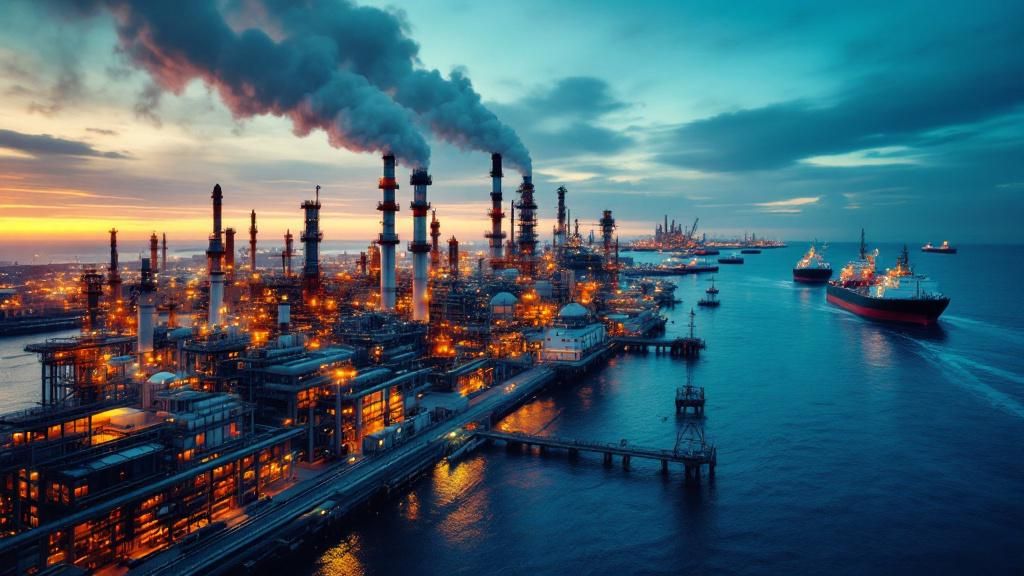
Global financial markets declined sharply on Monday as oil prices exceeded $100 a barrel, fueled by rising geopolitical tensions between the US, Israel and Iran that could disrupt critical energy supplies through the Middle East. Stock indices throughout Asia-Pacific tumbled sharply, with Japan’s Nikkei 225 falling over 7% and South Korea’s Kospi sliding over 8% before halting trading. The turmoil stems from weekend airstrikes on Iranian oil facilities and indicates mounting fears that a prolonged conflict could cut off roughly a fifth of the world’s oil supply that normally passes via the critical Strait of Hormuz. Brent crude surged by 24% to $114.74 a barrel, with analysts warning prices could surge even higher if the disruption continues.
Stock Markets Fall Globally as Energy Crisis Worsens
The ripple effects of rising petroleum costs went well past energy stocks, with global financial markets enduring acute volatility as investors contended with the prospect of sustained supply disruptions. South Korea’s Kospi index demonstrated heightened vulnerability, dropping more than 8% and triggering a 20-minute market pause—a trading circuit meant to prevent panic-driven selloffs. Similar safeguards were triggered in other regional trading venues as traders scrambled to reevaluate their portfolios in response to the intensifying geopolitical crisis. The pace of the market reaction underscored investor anxiety about the durability of the conflict and its likely economic consequences.
Analysts point to the stark reality that markets had largely underestimated the severity of the situation until weekend military strikes on Iranian oil infrastructure forced a reckoning. Adnan Mazarei from the Peterson Institute for International Economics noted that traders are now acknowledging the conflict will take considerable time to resolve, making previous reassurances about supply security “becoming less plausible.” The destruction of energy facilities across Iran and the Gulf region has intensified worries about supply disruptions, while the near-total halt of traffic through the Strait of Hormuz signals the beginning of what could become a prolonged energy crisis affecting global consumers and businesses alike.
- Brent crude climbed roughly 24% to $114.74 per barrel on Monday
- South Korea’s Kospi triggered trading halt after 8% decline
- Roughly one-fifth of worldwide oil production at risk by supply interruption
- Analysts alert prices could exceed $150 should crisis extends into March
The Hormuz Strait Chokepoint and Global Supply Chain
The Strait of Hormuz has historically functioned as one of the world’s most vital energy arteries, with approximately one-fifth of worldwide crude oil normally transiting through its confined passage each day. This strategic waterway between Iran and Oman operates as the main shipping corridor for crude oil and liquefied natural gas from regional suppliers, making any disruption to shipping patterns an pressing issue for petroleum markets worldwide. The current conflict has effectively choked this essential route, with traffic grinding to a near-halt as vessels either take longer courses or sit at anchor, awaiting information about maritime security and security assurances.
The consequences of a sustained closure extend far beyond oil prices, posing a threat to the complex worldwide distribution networks that require stable energy supplies. Refineries in Europe, Asia, and North America require consistent Gulf crude supplies to keep production on track and satisfy consumer needs. Any prolonged interruption forces these facilities to deplete emergency stockpiles or obtain replacement sources at inflated rates, ultimately translating to increased expenses for jet fuel, polymers, chemical compounds, and many derivative materials that support contemporary economies. The doubt about the duration of the blockade has already encouraged companies to reassess their energy procurement strategies and hedge against potential price spikes.
Critical Shipping Route Facing Strain
Before the situation intensifying, the Strait of Hormuz processed roughly 21 million barrels of crude oil daily, alongside substantial quantities of liquefied natural gas destined for markets across Asia, Europe, and beyond. The narrow passage, measuring just 21 nautical miles at its broadest section, has traditionally remained vulnerable to interruptions, but recent geopolitical tensions have turned theoretical risks into urgent operational issues. Shipping insurers have boosted rates for vessels crossing the strait, while some operators have chosen longer alternative paths around Africa rather than risk exposure to potential military action or accidental strikes on their cargo.
The halting of traffic through the strait represents an historic test of global energy resilience in recent times. While strategic reserves in the United States and other countries can provide temporary relief, they are not built to maintain sustained supply shortages continuing for weeks or months. Analysts note that the longer the disruption persists, the more likely it becomes that oil prices will climb beyond existing levels, potentially reaching the $150-per-barrel threshold if the conflict extends through March. This scenario would constitute the record-high oil prices on record, surpassing the 2008 financial crisis peak and producing substantial economic pressures globally.
Crude Oil Price Movement and Economic Projections
| Commodity | Current Price | Change Percentage |
|---|---|---|
| Brent Crude | $114.74 | +23.8% |
| Nymex Light Sweet | $114.78 | +26.2% |
| WTI Crude | $110.45 | +21.5% |
| Brent Futures (March) | $108.32 | +19.7% |
The dramatic jump in oil prices reflects market traders’ increasing view that the Middle East conflict will persist much longer than originally foreseen. In early Monday Asian trading on Monday, Brent crude shot past the $100 mark in mere minutes, rising 10% in 60 seconds before adding another 10% within 15 minutes. This rapid increase shows how precarious market confidence has grown concerning energy supply stability. The significant milestone of the $100-per-barrel level, which many analysts had forecast would take place sometime this week, arrived with striking speed as new weekend attacks eliminated any remaining hopes for swift diplomatic resolution.
Energy analysts and economists now confront scenarios that seemed inconceivable just days ago. If the Strait of Hormuz stays effectively shut through the end of March, crude could reach or surpass $150 per barrel—a level not witnessed even in the 2008 financial crisis. Such prices would spread throughout global supply chains, raising manufacturing costs, transportation expenses, and consumer prices across sectors from aviation to agriculture. Insurance premiums for Gulf-bound shipping have already jumped substantially, while some operators have begun rerouting vessels around Africa, adding weeks to transit times and billions in extra expenses to global commerce.
Industry Assessments for Extended Conflict
Adnan Mazarei from the Peterson Institute for International Economics cautioned that market participants are just starting to understand the conflict’s potential duration and economic consequences. He emphasized that suspended output in several Gulf nations, combined with visible destruction of energy infrastructure in Iran and throughout the area, indicates a prolonged confrontation improbable to end quickly. The early assurances offered by the United States concerning insurance coverage and military goals now appear progressively implausible given the rapid escalation. As international tensions intensify and each side demonstrates commitment to sustained military operations, markets are adjusting energy commodities to account for not days or weeks of disruption, but potentially months of limited worldwide availability.
Cascading Impacts Across Consumer and Manufacturing Sectors
The jump in oil prices risks spreading through global economies far beyond energy markets themselves. Airlines experience growing pressure as jet fuel costs spike, potentially forcing carriers to levy supplementary charges on tickets or take on losses that squeeze profit margins. Manufacturing sectors that rely on petroleum-based inputs—from plastics to chemicals—confront rising production costs that may ultimately translate into higher prices for consumers. Transportation and logistics companies already grappling with elevated shipping costs will see expenses rise more, particularly those running container ships and delivery fleets that depend heavily on fuel expenditures.
Emerging economies and lower-income households face significant harm disproportionately from sustained price increases. Fuel costs for heating will increase as winter approaches in Northern Hemisphere countries, putting pressure on family finances already pressured by other inflationary forces. Agricultural sectors reliant on chemical fertilizers and machinery fuel face production cost increases that could drive food prices higher worldwide. Monetary authorities tracking inflation data now confront renewed pressure to reassess monetary policy decisions, generating further uncertainty for companies and investors planning capital expenditures. The complex interdependence of modern supply chains means shocks spread throughout, affecting sectors without direct energy ties.
- Airlines implementing fuel surcharges on passenger and cargo flights worldwide
- Plastic and petrochemical manufacturers increasing costs due to raw material expenses
- Agricultural operating costs climbing from fertilizer and energy price increases
- Shipping companies rerouting vessels via alternative routes, extending transit time
- Central banks reassessing inflation trajectories and policy approaches
G7 Crisis Management and Political Implications
The escalating crisis has sparked critical talks among Group of Seven nations about coordinated responses to steady energy markets and prevent continued financial deterioration. Government officials understand that sustained blockage through the Strait of Hormuz—which handles roughly one-fifth of worldwide oil—could unleash ripple effects of economic damage far beyond energy sectors. G7 members are exploring options including strategic petroleum reserve releases, diplomatic engagement to de-escalate Middle East tensions, and collaboration with major oil-producing nations outside the conflict zone. The political element adds complications, as any response must balance energy security concerns with broader geopolitical considerations and steer clear of actions that might intensify regional tensions.
The timing of this crisis compounds existing structural vulnerabilities across advanced economies still navigating post-pandemic recovery and sustained price pressures. Federal Reserve and similar institutions face renewed pressure as petroleum-related inflation could weaken recent progress in controlling price increases. Policymakers grapple with hard choices between providing urgent relief support and sustaining economic restraint. International coordination becomes critical, as unilateral actions by individual nations could prove ineffective or damaging. The uncertainty surrounding how long the conflict lasts—with some experts flagging possible $150 per barrel prices if the disruption continues into March—adds urgency to official deliberations and strategic market positioning.
Public and Market Confidence
Market observers are following government communications and policy responses as measures of confidence in managing the crisis. Analysts note that US commitments regarding insurance coverage and strategic goals are “becoming more unrealistic,” reflecting growing doubt about rapid resolution. The rapid acceleration of oil prices—climbing 10% in a single minute during Asia-Pacific trading—reveals declining confidence that supply problems will prove temporary. Government credibility in managing the situation shapes investor behavior and consumer sentiment. Without clear, believable commitments to stabilizing the situation, markets may continue experiencing volatility as traders adopt defensive stances against sustained supply constraints.
