
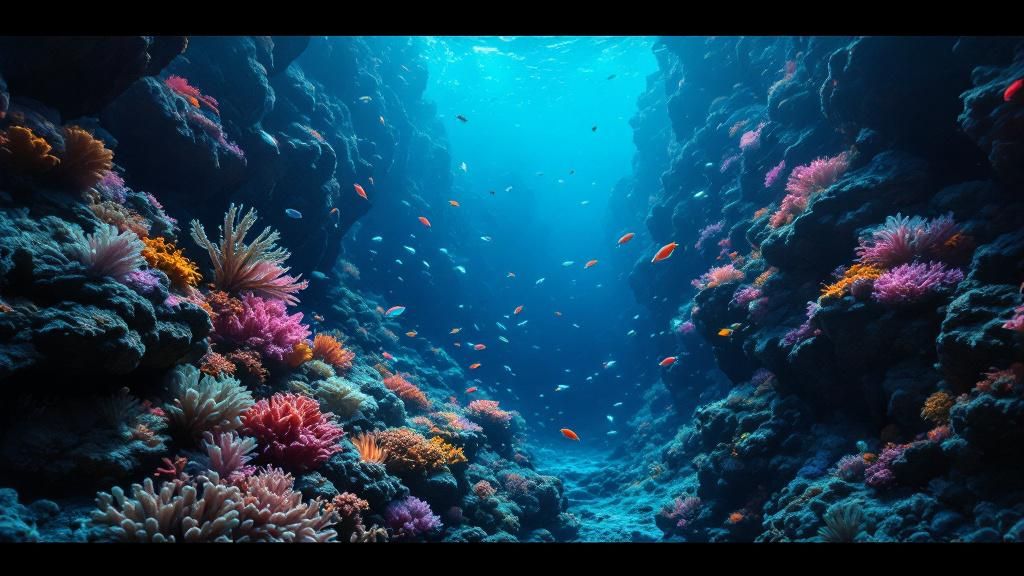
Scientists have unveiled a collection of hidden underwater wonders off the coasts of Britain’s Caribbean territories, exposing an alien world of never-before-seen creatures and virgin coral communities flourishing in the depths. Running nonstop for six weeks, researchers traveling on the oceanographic ship RSS James Cook investigated the waters adjacent to the Cayman Islands, Anguilla, and Turks and Caicos, diving to depths of 6,000 meters (19,700 feet) to document an underwater mountain range, a enormous sinkhole, and luminous deep-sea life that have never been documented by science. The pioneering mission, headed by Professor James Bell and supported by the UK environmental and fisheries research organization (CEFAS), captured approximately 14,000 individual specimens encompassing 290 different ocean species, substantially enhancing our comprehension of life in the Caribbean’s enigmatic waters.
A Six-Week Expedition Through the Unfamiliar Territory
The expedition dealt with remarkable challenges sailing through waters that remained poorly mapped for decades. Scientists depended on outdated charts filled with substantial inaccuracies and vast uncharted areas as they guided the RSS James Cook through the Caribbean region. Professor James Bell explained the challenge of mapping uncharted subsea formations in near real-time, highlighting the constant risk of running aground on uncharted formations like Pickle Bank, a submerged ridge north of Little Cayman island. The team’s continuous 24/7 schedule meant researchers labored around the clock to optimize their time in these largely undiscovered areas, testing equipment at extreme levels under intense deep-sea pressure.
Despite the obstacles to navigation, the expedition’s methodical strategy produced extraordinary discoveries that astonished even the most seasoned ocean researchers. The team documented creatures that resisted quick categorization, including a peculiar swimming sea cucumber that researchers first thought might be the rare “headless chicken monster” before determining it was an completely separate species. Bell conveyed astonishment at the remarkable variety encountered, stressing that many of these environments had not previously been observed by humans before. The research represents the inaugural thorough biological examination of these depths, creating a essential foundation for understanding Caribbean marine ecosystems.
- Underwater mountain range rises from 2,500m to roughly 20m depth
- Nearly 14,000 separate organisms catalogued across 290 ocean species
- Glowing organisms such as luminescent pelican eels and deep-sea dragonfish documented
- Coral reefs found apparently unaffected by climate change impacts
Uncovering Organisms in Extreme Environments
Animals Never Before Documented
The expedition’s cameras documented remarkable glowing creatures perfectly adapted to the pitch-black depths of the Caribbean. A pelican eel with a luminescent pink appendage that glows red to lure food showcased the clever adaptive techniques developed in these harsh conditions. Similarly remarkable was a transparent-headed fish featuring tubular eyes directed upward, enabling it to detect the outlines of possible food sources set against the dim illumination coming from the surface. A deep-sea dragonfish featured a luminous appendage beneath its chin, functioning as both a hunting tool and communication device in the absolute darkness of the ocean depths.
Perhaps most fascinating was the enigmatic deep-diving sea cucumber that initially perplexed researchers. Scientists initially theorized it might be the legendary “headless chicken monster,” a infrequently catalogued species known to science. However, subsequent analysis revealed it was an entirely different organism—a undocumented species contributing to the growing list of endemic Caribbean species. This discovery exemplifies how scant knowledge exists about these deep-sea environments, with each submersion potentially uncovering species new to science. The expedition’s results suggest that numerous unstudied organisms still inhabit these waters, yet to be thoroughly documented and analyzed.
The biodiversity documented during the survey goes well past individual curiosities, showcasing entire ecosystems thriving in conditions hostile to most surface life. Researchers encountered coral reefs that seem strikingly untouched by climate change, suggesting these deeper waters may serve as sanctuary for species at risk in shallower regions. The identification of 290 different ocean organisms, consisting of nearly 14,000 individual specimens, establishes these Caribbean territories as international hubs of marine biodiversity. Scientists stress that detailed cataloging and study will extend over months, with many specimens awaiting formal identification and taxonomic placement within the scientific community.
- Pelican eel uses bright red tail to lure unsuspecting prey in deep waters
- Barreleye fish’s upward-pointing eyes identify silhouettes of prey above
- Dragonfish uses bioluminescent chin rod for hunting and deep-sea communication
- Swimming sea cucumber represents previously unknown species unknown to science
- Coral reefs show strong recovery despite global climate change threats
Underwater Geological Wonders Beneath the Waves
Pickle Bank and Submerged Peaks
Among the expedition’s most significant discoveries was an submerged mountain range, with Pickle Bank standing as a especially remarkable example. Located to the north of Little Cayman island, this underwater formation rises dramatically from depths of 2,500 metres to within just 20 metres of the ocean surface. Maneuvering past such features proved hazardous for the research ship, as the team relied on decades-old maps containing serious errors and missing entire sections of the seafloor. The difficulty in charting Pickle Bank without risking the ship running aground highlighted both the dangers and the scientific necessity of this groundbreaking expedition into uncharted waters.
The identification of these submarine mountains demonstrates a fundamental gap in humanity’s understanding of the underwater landscape of the Caribbean region. These geological structures generate distinctive habitats where water currents, temperature gradients, and pressure variations combine to support unique biological communities unparalleled in any other location. The mountains function as physical obstacles and convergence zones for different water masses, forming differentiated environmental areas that researchers are just starting to understand. Grasping how these mountains work is crucial for creating comprehensive ocean safeguards and forecasting the impact of climate change on the region’s most vulnerable species.
The Intriguing Blue Hole Discovery
The expedition also revealed a massive “blue hole”—a dramatic geological formation that has fascinated marine scientists over many years. These distinctive underwater sinkholes form over many millennia through intricate natural processes, creating circular or oval-shaped depressions on the seafloor. The blue hole discovered during this expedition expands the increasing number of such features in the Caribbean, each potentially harboring distinctive habitats suited to the specific conditions within. The massive size of this formation indicates it might have needed thousands of years to form, making it a geological treasure that warrants protection and further scientific investigation.
Blue holes act as scientific research sites for comprehending deep-sea geology and biology. The surfaces and foundations of these formations often hold separate strata that reveal the region’s geological history, while their separation from surrounding areas creates isolated ecological niches. Researchers determined that these habitats support organisms with remarkable adaptations to extreme conditions, including rare species that may be found exclusively in these formations. The finding of this enormous blue hole underscores how much remains unknown about the Caribbean’s underwater landscape and underscores the urgent need for thorough documentation and conservation of these irreplaceable geological wonders.
| Geographic Feature | Key Characteristics |
|---|---|
| Pickle Bank | Uncharted underwater mountain rising from 2,500m to 20m below surface, north of Little Cayman island |
| Underwater Mountain Range | Previously unknown geological formations creating unique ecosystems with specialized deep-sea organisms |
| Massive Blue Hole | Large circular sinkhole formation creating isolated habitat pockets with distinct environmental conditions |
| Deep Ocean Basin | Extreme pressure environment reaching 6,000 metres depth, accessible only with specialized equipment |
Pristine Reefs Withstanding Worldwide Threats
Among the most notable discoveries of the expedition were coral reef systems that appear to have avoided the extensive damage inflicted by climate change on reefs worldwide. These marine environments, found in the depths surrounding the Caribbean territories, maintain vibrant ecosystems with thriving coral colonies and diverse marine life. Scientists were amazed to find such largely untouched environments at depths where human activities typically have limited effect. The discovery suggests that certain deep-sea reef habitats may possess natural resilience or protective characteristics that shield them from warming ocean temperatures and acidification affecting shallow reefs globally.
The preservation of these deep-sea coral communities provides promise for ocean conservation initiatives and delivers invaluable possibilities for research endeavors. By studying how these reefs sustain health in spite of global environmental pressures, researchers could uncover crucial insights into coral resilience and adaptation mechanisms. The results underscore the vital significance of protecting these marine environments from future threats such as deep-sea mining, pollution, and other human activities. Professor Bell noted that this finding represents “the first step” in protecting and comprehending spaces humanity has scarcely investigated, let alone comprehensively documented.
- Deep-sea coral reefs show excellent condition and biodiversity despite global climate change impacts
- Safeguarded deep-water areas shield reefs from warming temperatures and ocean acidification threats
- Study results highlight critical requirement for comprehensive conservation strategies in Caribbean regions
Safeguarding the Future of Waters of the Caribbean
The expedition’s pioneering discoveries have triggered an pressing conservation imperative among scientists and policymakers. With nearly 14,000 individual specimens catalogued and 290 distinct marine species catalogued, researchers emphasize that this substantially intact environment faces escalating threats from global warming, ocean pollution, and potential deep-sea exploitation. The UK government, which shares responsibility for preserving these British Overseas Territories, now faces growing calls to establish comprehensive safeguarding measures. Professor Bell stressed that “the race is on” to safeguard these ecosystems before human activities compromise their integrity. The findings demonstrate that up to 90% of Britain’s unique marine species occupy these waters, making their preservation a question of national environmental significance.
The expedition’s achievements has uncovered significant shortcomings in current marine protection frameworks. Decades-old, inaccurate maps and uncharted regions highlighted the lack of detailed foundational data required for effective conservation planning. Scientists contend that creating ocean reserves and restricting destructive activities such as underwater extraction is essential to protect these discoveries. The untouched reef ecosystems and previously unknown creatures represent irreplaceable biological resources that could disappear before science completely comprehends their ecological roles and possible advantages. Swift intervention is required to translate these scientific discoveries into concrete policy measures that will safeguard the Caribbean seas from future degradation and guarantee sustainable management of these precious environmental resources.
Local Communities and Scientific Collaboration
The scientific undertaking brought together scientists from the Cayman Islands, Anguilla, and Turks and Caicos, highlighting the value of joint scientific initiatives including community expertise and local knowledge. These cooperative relationships enhanced the expedition’s effectiveness and ensured that discoveries directly benefited the people inhabiting these waters. Regional experts contributed essential understanding into Caribbean marine systems and cultural connections to the ocean environment. By including island scientists across the entire research timeline, the scientific undertaking promoted capacity-building and knowledge-sharing that reinforces long-term conservation initiatives. This collaborative approach ensures that upcoming conservation plans incorporate both scientific evidence and the concerns of communities whose economic wellbeing and cultural identity depend on preserving healthy Caribbean marine ecosystems.
