
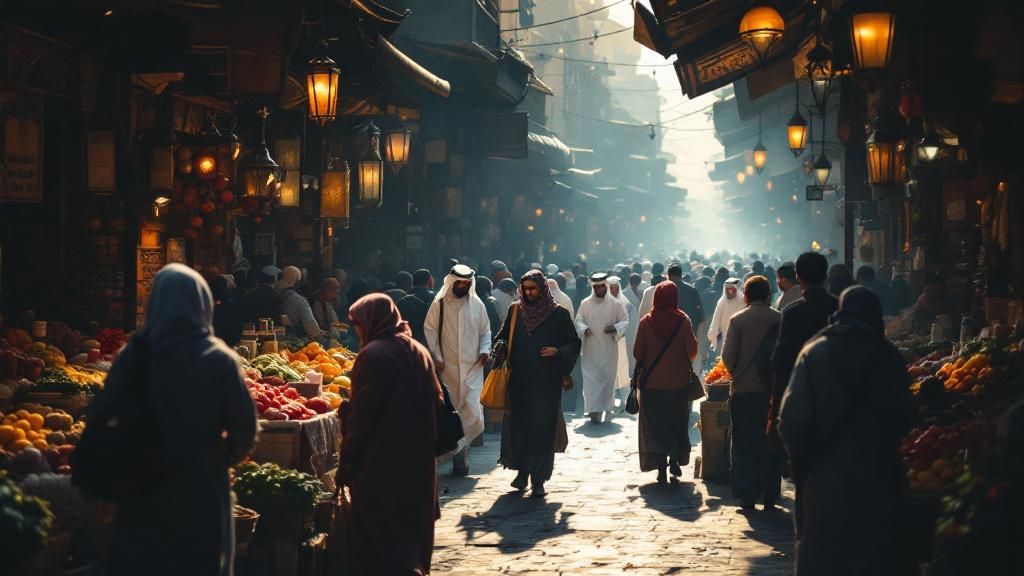
Doha’s bustling Souq Waqif market is returning to activity as the Gulf region commences adjustment to a fragile new reality following the heightening of hostilities between Iran, Israel and the United States. Two weeks into the conflict that erupted on 28 February, the iconic marketplace—typically a bustling centre in Qatar’s capital—is progressively becoming busier with shoppers once more, a notable shift to the unsettling desolation that engulfed the souq in the initial period of regional attacks. Whilst nearby Gulf countries have taken the full force of Iran’s retaliatory response, which have claimed at least 18 lives, Qatar has largely avoided significant impact, with most missiles intercepted by air defence systems and no deaths documented within Qatar. As the region traverses this unstable phase, residents are carefully resuming to their regular schedules.
The Opening Jolt and Geographical Consequences
When the fighting broke out on 28 February, the impact rippled across the Gulf region with considerable force. Doha’s Souq Waqif, ordinarily a thriving marketplace where locals and visitors browse among spice stalls and textile merchants, changed abruptly into an eerie ghost town. Residents of Qatar’s generally secure and peaceful capital faced an unprecedented sense of vulnerability as geopolitical pressures escalated sharply. The sudden escalation left many questioning their security and the stability of their surroundings, prompting a widespread withdrawal from shared areas as people chose to remain at home.
The human impact of the conflict has been unevenly distributed across the Gulf states. Neighbouring countries bore the brunt of Iran’s retaliatory attacks, with at least 18 people killed across the region in the initial stages of the war. Qatar, however, benefited from its robust air defence systems, which successfully intercepted most missiles aimed at the country, including those targeting US military installations. This disparity in casualties and damage has established a intricate regional situation where some nations encounter significantly worse outcomes than others, even as all grapple with the implications of sustained hostilities.
- Iran conducted retaliatory operations in numerous Gulf states
- Qatar’s anti-aircraft capabilities intercepted most of the incoming missiles effectively
- At least 18 casualties recorded in surrounding nations
- No fatalities or significant damage reported within Qatar
Qatar’s Overall Safety Profile During Broader Regional Conflict
Whilst the expansive Gulf region has fallen into a state of heightened alert, Qatar has established itself as a relative haven of steadiness within the volatile environment. The nation’s strategic positioning and state-of-the-art defensive capabilities have protected it against the worst consequences of the rising hostilities. Where surrounding nations have grappled with casualties and physical devastation, Qatar has substantially prevented such devastation, allowing its inhabitants to begin the process of psychological recovery more swiftly than their peers in other parts of the region. This degree of separation has produced a particular position whereby Doha can serve as a possible stabilising force and potential mediator in regional disputes.
The success of Qatar’s air-defence capabilities has proven vital in preserving this defensive barrier. Most aerial threats targeting Qatari territory, encompassing those targeting strategic US military facilities in Qatar, have been successfully intercepted before striking their intended targets. This technical success has produced real safety for the civilian communities, with no deaths reported and slight damage to essential facilities. The success of these systems has fostered a degree of confidence amongst residents, permitting residents to slowly return to normal activities and venture back into public spaces such as the iconic Souq Waqif marketplace.
Air Defence Success
Qatar’s advanced air defence network has proven highly effective during the recent crisis, intercepting the large share of incoming threats. The system’s dependability has not only secured infrastructure and stopped casualties but has also reinforced public trust in domestic defence capabilities. This technological advantage demonstrates sustained funding in protective systems and constitutes a notable divergence to the situations of regional counterparts. The timely blocking of projectiles aimed at US military bases illustrates the system’s capacity to counter sophisticated joint attacks, offering confidence to both inhabitants and foreign stakeholders present in Qatari territory.
Signs of Normalcy Coming Back to Souq Waqif
Two weeks into the conflict between Israel, the United States, and Iran, Doha’s most iconic marketplace is experiencing a noticeable shift in atmosphere. The Souq Waqif, which remained nearly deserted in the days following of the 28 February attacks, is slowly repopulating with shoppers and visitors once more. The transformation constitutes far more than a basic resumption to commerce; it indicates a mental shift for residents of Qatar’s capital. The marketplace’s revival reflects growing confidence amongst the population that the immediate threat has subsided, and that everyday routines can return to its familiar rhythms despite the wider geopolitical instability.
The BBC’s visit to the lively market uncovered a populace cautiously optimistic about the path forward. Traders and shoppers both expressed relief at the comparative security Qatar has enjoyed in contrast with adjacent Gulf states, where counter-attacks have claimed at least 18 lives. This comparative security, strengthened through the effectiveness of Qatar’s air defence systems in stopping approaching dangers, has opened the way for residents to step outside their homes. The gradual repopulation of Souq Waqif demonstrates how effective security measures can facilitate the return to normal social and economic activity, even amid wider instability.
- Foot traffic increasing steadily as security confidence grows amongst residents
- Shopkeepers reopening stalls and restarting trade after initial closures
- Families beginning to visit community areas once more for shopping and recreation
- Vendors expressing measured confidence about economic recovery in coming weeks
- Marketplace functioning as symbol of Qatar’s resilience and stability in region
Community Perspectives
Conversations with market visitors and traders show a complex comprehension of the current situation. Whilst people recognise the genuine dangers created by territorial disputes, many stress their faith in Qatar’s defensive capabilities and the government’s crisis management. Individuals convey thanks that their nation has been spared the casualties and destruction experienced by neighbouring countries, yet continue to be sharply mindful that the larger-scale fighting continues undiminished. This equilibrated outlook—neither downplaying genuine risks nor succumbing to alarm—appears to characterise the dominant mood amongst the city’s inhabitants as they move through this unpredictable time.
The restoration of Souq Waqif has become emblematic of Qatar’s commitment to uphold community unity and financial resilience despite external pressures. Community members view the souq’s restoration as a statement of resilience, a shared commitment to resist permitting fear to govern everyday activities. Conversations reveal that communities are developing what many characterize as “a new norm”—a adjusted way of living that recognizes regional uncertainty whilst resisting the loss of the practices and venues that characterize their culture. This psychological adaptation suggests that Qatar’s population is progressing past the initial shock towards a more lasting strategy to existing within persistent instability.
Adapting to the Current Reality
As the third week of the crisis unfolds, Doha’s residents are demonstrating impressive adaptability in the face of extraordinary regional turmoil. The opening shock that cleared Souq Waqif has shifted to a more cautious response, with people carefully calibrating their daily activities around the ongoing security situation. Rather than withdrawing completely from public life, Qataris are finding ways to return to normal whilst staying alert. This measured approach reflects a increasing trust in the country’s air defence capabilities, which have effectively blocked strikes directed at military facilities. The marketplace’s gradual repopulation symbolises not indifference, but rather a pragmatic determination to maintain social and economic stability despite outside dangers.
The psychological change amongst inhabitants is equally significant as the physical relaunch of business establishments. Many outline their present situation as operating within “a new norm”—a framework that recognises genuine dangers whilst resisting fear to immobilise society. This outlook represents a delicate balance between awareness and resilience. Residents express genuine gratitude that Qatar has avoided the casualties and destruction inflicted upon neighbouring states, where at least 18 individuals have been killed. Yet this sense of relief is moderated by acknowledgement that the broader conflict continues and unpredictable. For many Doha residents, resuming visits to shopping areas and communal venues represents an deliberate decision to protect their lifestyle against external pressures.
| Aspect | Current Status |
|---|---|
| Market Footfall | Steadily increasing as security confidence grows |
| Casualties in Qatar | None reported despite targeted strikes |
| Air Defence Effectiveness | Successfully intercepting majority of incoming threats |
| Regional Impact | At least 18 deaths across neighbouring Gulf states |
The marketplace functions as far more than merely a business centre; it has become a significant symbol of Qatari society’s collective resilience. Shopkeepers reopening stalls and families returning to browse represent deliberate displays of resistance against the unpredictable circumstances they face. This communal determination to maintain normalcy strengthens social cohesion at a time when external pressures might otherwise undermine public morale. The gradual revival of Souq Waqif shows that Doha’s residents is neither ignoring real dangers nor succumbing to fear; instead, they are establishing workable ways of life within a dramatically changed regional landscape.
