
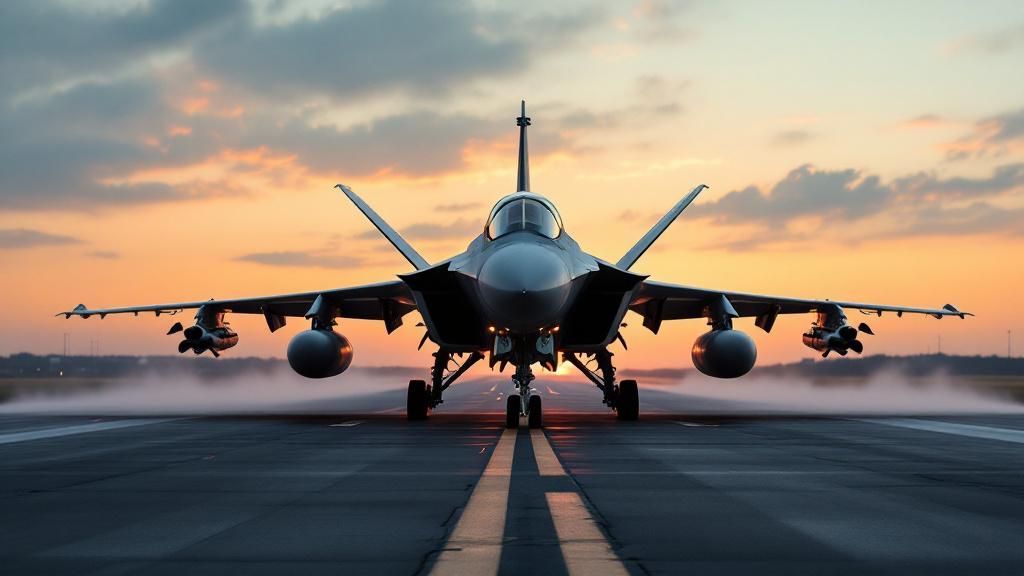
The United Kingdom has consented to broaden American military presence to British bases, enabling the United States to carry out military operations against Iranian positions threatening shipping lanes in the Strait of Hormuz. Prime Minister Sir Keir Starmer endorsed the move on Friday, marking a significant change from the earlier policy that limited US deployments at RAF Fairford in Gloucestershire and Diego Garcia in the Chagos Islands to defensive measures. The move takes place during rising tensions in the Middle East, in the wake of an failed Iranian missile strike on the joint US-UK base at Diego Garcia. The move has drawn strong opposition from the opposition, with Conservative leader Kemi Badenoch labelling it the “mother of all U-turns”, whilst President Donald Trump implied the UK could have acted faster.
A significant change in UK defence strategy
The decision marks a notable departure from Britain’s earlier position on military engagement in the Middle East conflict. Under the existing framework, the UK had permitted American forces to use British armed forces bases exclusively for defensive purposes—specifically to counter Iranian missiles that created immediate dangers to British staff or vital interests. This more cautious approach demonstrated Downing Street’s wish to preserve some distance from the mounting tensions whilst continuing to support its principal ally. The expansion now allows offensive actions against Iranian facilities that jeopardises international shipping, a significantly wider scope that indicates a reassessment of British defence priorities in response to regional instability.
Downing Street has attempted to characterise the expansion within the existing framework of “collective self-defence”, maintaining that protecting critical maritime passages through the Strait of Hormuz aligns with Britain’s strategic interests and international obligations. The government emphasised that the UK will refrain from participating in American strikes, preserving a separation between providing facilities and direct participation in military strikes. Nevertheless, the distinction has done little to mollify critics who regard the move as a capitulation to American pressure. The government’s assertion that “the principles behind the UK’s approach to the conflict are unaltered” has been greeted with considerable scepticism from opposition figures challenging whether the policy actually represents unchanged principles.
- RAF Fairford in Gloucestershire currently equipped for offensive operations
- Diego Garcia base expanded to support extended operational reach
- Policy presented within mutual defence structure by government officials
- UK maintains it will refrain from direct involvement in military operations
Public criticism and international responses
The government’s decision has sparked strong objections from all political quarters, with opposition parties describing the move as a fundamental reversal of stated policy. Conservative leader Kemi Badenoch denounced it as the “mother of all U-turns”, whilst Liberal Democrat foreign affairs spokesman Calum Miller accused the government of being “drawn further and further down Trump’s slippery slope”. Both parties have questioned the absence of parliamentary oversight concerning what they view as a significant expansion of British military engagement. The criticism reflects wider concerns about the speed and scale of the policy shift, which numerous MPs argue warrants proper parliamentary debate and approval rather than executive action alone.
Iran’s Foreign Minister Abbas Araghchi promptly denounced the British decision, claiming that Sir Keir Starmer was “putting British lives in danger” through the extended accord. The accusation reflects Tehran’s perspective that Britain’s enabling of American strikes constitutes direct participation in escalatory measures. Meanwhile, President Trump’s reaction revealed impatience with the UK’s prior hesitation, suggesting that Britain “should have acted a lot faster” and voicing astonishment at the late reply from what he described as America’s “first ally”. Trump’s comments demonstrate the complex dynamics between the allies, where contrasting risk analyses and strategic priorities have created tension.
Opposing voices become increasingly vocal
Green Party leader Zack Polanski described the decision as “another worrying escalation” and called for that MPs be afforded a vote on Britain’s participation in the widened military agreement. His appeal mirrors extensive pressure from the opposition for enhanced democratic control in overseas policy matters of this magnitude. The missing parliamentary scrutiny has emerged as a central concern for detractors who argue that such consequential decisions affecting national security and international relations should not be decided exclusively by ministerial power. The growing pressure points to the administration may confront continued parliamentary resistance to defend its decision.
Calum Miller explicitly called upon Sir Keir to permit Parliament to determine the provisions of the accord governing American use of British bases. This request indicates unease that the government sidestepped normal constitutional procedures for approving substantial military engagements. The Liberal Democrat position emphasises parliamentary sovereignty and the principle that determinations involving British participation in foreign military ventures should require proper legislative examination and authorisation. Such calls underscore the strain between executive flexibility in responding to international conflicts and the constitutional obligation for parliamentary oversight of defence issues.
The Hormuz Strait emergency and international consequences
The Strait of Hormuz represents one of the world’s most strategically vital maritime passages, with approximately one-third of worldwide maritime oil commerce transiting through its confined passages annually. The waterway, located between Iran and Oman, has turned increasingly turbulent as Iranian threats have substantially limited shipping operations. The financial consequences are substantial, affecting global energy costs and threatening the integrity of worldwide commerce. The UK’s choice to increase military support demonstrates increasing international concern that the passage’s shutdown could precipitate major economic disruption, making military engagement appear ever more essential to Western powers seeking to preserve maritime freedom.
The risk to shipping in the Strait of Hormuz goes further than financial factors to address wider geopolitical consequences. Strikes against cargo vessels and the deployment of ballistic missiles have fostered a climate of uncertainty that dissuades vessel operators from directing oil tankers through the passage. This interference has prompted Western military planners to examine possibilities for protecting the strait, with British armed forces staff now stationed with US Central Command to assess feasible strategies. The joint efforts of British and American armed forces points to a long-term commitment to maintaining maritime security in the region, potentially signalling a sustained military presence irrespective of current diplomatic progress.
| Period | Daily vessel traffic |
|---|---|
| Pre-crisis baseline | Approximately 2,000 vessels monthly |
| Recent months | Significantly reduced due to security threats |
| Current operations | Disrupted by Iranian missile deployments |
- The strait manages roughly one-third of worldwide maritime oil commerce annually
- Iranian actions have effectively restricted normal shipping operations through the passage
- Western powers regard military intervention as essential to restore navigational freedom
Diplomatic strain and Iranian warnings
Iran’s Foreign Minister Abbas Araghchi has promptly criticised the UK’s opt to broaden military partnership with the United States, alerting that Sir Keir Starmer is “risking British personnel” through the widened accord. The Iranian government views the growth of British defence assistance as a inflammatory intensification that substantially changes the scope of UK participation in regional tensions. Tehran has consistently portrayed Western military operations in the Middle East as aggressive interventions intended to weaken Iranian independence and regional standing. The diplomatic rhetoric from Tehran indicates that continued British military participation may trigger additional Iranian responses, potentially drawing British troops and equipment into direct conflict.
The scheduling of Iran’s ballistic missile strike against Diego Garcia, taking place shortly before the UK’s announcement, underscores the precarious state of present diplomatic efforts and military positioning. Whether intentionally synchronised or coincidental, the attack illustrated Iran’s determination to attack shared American-British military bases and signalled its resolve to oppose Western military intervention. The failed strike, with one missile allegedly failing and another intercepted, may have strengthened the resolve of Western military planners to pursue more aggressive strategies. However, the incident also serves as a stark reminder of the tangible risks posed to British military personnel based at these key sites across the Indian Ocean and elsewhere in the region.
Tehran’s response and warnings
Iran’s defence ministry has indicated that it maintains the ability and determination to conduct additional attacks against Western military installations in the region should hostile actions escalate. The placement of ballistic missiles targeting Diego Garcia constitutes a significant escalation in Iranian military posturing and shows Iran’s technical capability to attack remote targets. Strategic analysts assert that Iran’s missile development has advanced considerably, allowing operations against reinforced targets across the Indian Ocean. The Revolutionary Guards has conventionally leveraged shows of force as a bargaining tool in diplomatic discussions, and the latest attack may constitute part of a broader strategy to deter further Western military expansion.
Beyond military threats, Iran’s diplomatic channels have intensified warnings about the implications of increased British involvement in American armed activities. Iranian officials have argued that the UK’s action violates established legal frameworks regarding mutual defence provisions and represents a dangerous precedent for armed action. Tehran has urged the global powers to condemn what it describes as British involvement in American aggression. These diplomatic warnings, alongside proven military capability, create a unstable environment where missteps or heightened tensions could rapidly spiral into direct military confrontation involving British forces.
Military coordination and strategic considerations
The growth of American military access to British bases constitutes a substantial transformation in defence cooperation between London and Washington, demanding exceptional degrees of military coordination. UK military planners have already begun working alongside US Central Command to formulate strategic approaches for securing essential shipping corridors through the Strait of Hormuz. This integration of British defence expertise with American defence facilities demonstrates a enhanced resolve to regional stability, though it also ties UK strategic objectives more closely to American foreign policy objectives. The decision reflects general apprehensions about preserving navigational freedom in one of the world’s most critical energy corridors, through which roughly one-third of globally traded oil passes on a daily basis.
However, the military implications go further than immediate tactical considerations. By permitting American forces to launch strikes against Iranian targets from British soil, the UK has fundamentally altered the character of its armed engagement in conflicts across the Middle East. Previously, British bases functioned mainly defensive functions, but the fresh agreement allows for aggressive actions substantiated by collective self-defence principles. Military strategists have raised questions about the sustainability of this approach and whether it properly considers possible Iranian counter-attacks against British installations. The coordination between British and American forces now includes not only protective actions but also aggressive strategy, demanding sophisticated intelligence sharing and combined operational frameworks to conduct activities successfully.
