
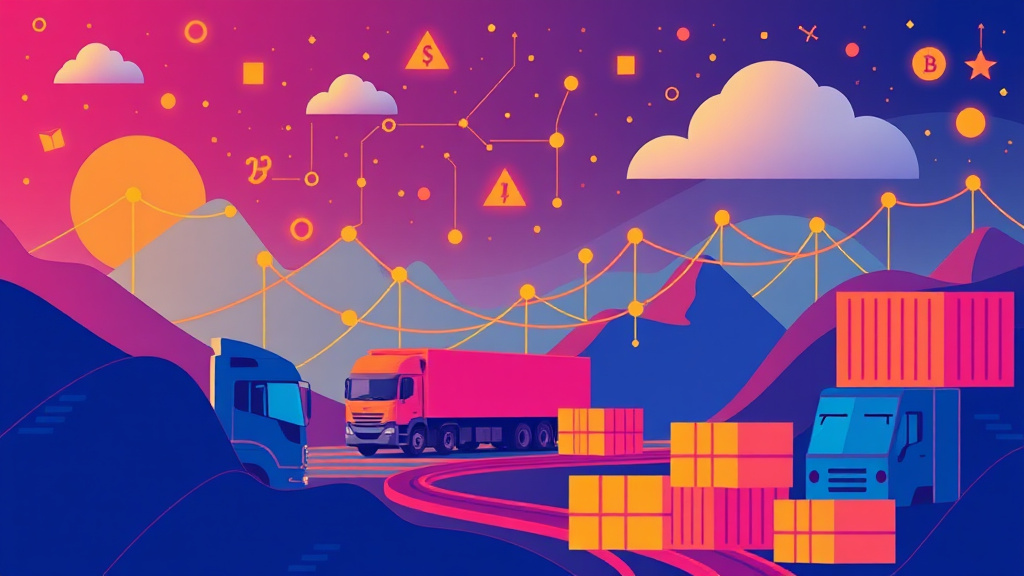
In a time period where counterfeit products cost businesses billions annually and lack of transparency in supply chains breeds customer skepticism, blockchain technology stands as a game-changing approach. By creating immutable, decentralized records of every exchange, blockchain enables never-before-seen visibility across global supply chains while delivering reliable verification techniques. This article examines how this cutting-edge innovation is transforming sectors, from luxury goods to medical products, enabling businesses to establish customer trust and remove deception from the root.
Advancing Supply Chain Transparency with Blockchain
Blockchain technology fundamentally transforms supply chain management by creating immutable records of every transaction and movement. Each product’s journey from manufacturer to consumer is permanently documented on a shared ledger, available to authorized stakeholders. This distributed model eliminates single points of failure and maintains data integrity across the full supply chain, greatly minimizing opportunities for fraud or manipulation.
Standard supply chains struggle with fragmented information systems where different parties keep separate databases with restricted interoperability. Blockchain consolidates these disparate systems into a unified network, enabling real-time data sharing among suppliers, manufacturers, distributors, and retailers. This unification dramatically improves operational efficiency, minimizes disruptions, and enables stakeholders to pinpoint constraints and redundancies swiftly and precisely.
Beyond operational benefits, blockchain-enhanced transparency establishes consumer trust and brand loyalty. Customers can now authenticate product authenticity and trace items back to their source with full confidence. This capability is invaluable in industries like pharmaceuticals, where counterfeit medications pose serious health risks, and luxury goods, where authenticity influences value and prestige.
Real-Time Monitoring and Visibility
Instant tracking utilizing blockchain offers complete visibility into supply chain operations. Every shipment movement, temperature fluctuation, and condition alteration is recorded automatically and promptly transmitted across the network. This continuous monitoring guarantees products maintain required standards throughout transportation and storage, especially vital for temperature-sensitive items like pharmaceuticals and perishable foods.
The combination of IoT devices with blockchain creates a seamless supply chain network where sensors automatically gather information and send it to the blockchain network. This removes human input mistakes and delays, maintaining data precision and real-time access. Stakeholders achieve complete visibility into inventory levels, package locations, and estimated delivery times with unprecedented precision and reliability.
- Monitor product location and movement instantly
- Record climate factors during transportation and storage
- Log timestamps for each exchange and transfer
- Alert stakeholders to issues or deviations right away
- Allow swift response to logistics interruptions
Product Authentication and Counterfeit Prevention
Fake products represent a critical challenge for global commerce, compromising brand reputation and product safety across industries. Blockchain technology addresses this problem by creating tamper-proof digital identities for physical products. Each item receives a unique cryptographic identifier recorded on an permanent database, allowing stakeholders to verify authenticity instantly. This innovative solution eliminates the weaknesses of traditional authentication methods, making it extremely difficult for counterfeiters to forge or alter product information without detection.
The implementation of blockchain-based verification systems delivers consumers with direct insight into product details and origin verification. By scanning a QR code or reviewing a blockchain record, buyers can immediately determine whether a product is legitimate and track its full path through the distribution network. This transparency enhances buyer confidence while also establishing accountability throughout manufacturing and logistics networks. Companies employing blockchain-based systems report substantial decreases in counterfeit incidents and enhanced brand loyalty among knowledgeable customers.
Industries highly susceptible to counterfeiting—including pharmaceuticals, luxury goods, and electronics—are increasingly deploying blockchain solutions to protect their markets. The technology allows immediate detection of suspicious products before they reach consumers, avoiding potential safety risks and financial losses. Furthermore, blockchain authentication creates valuable data insights into supply chain flows, helping companies identify and eliminate illegitimate distribution networks. This forward-thinking strategy transforms product authentication from a reactive security measure into a key market differentiator.
Immutable Digital Records
Blockchain’s unchangeable ledger technology forms the foundation reliable product authentication systems. Once product information is recorded on the blockchain, it cannot be altered, deleted, or forged without leaving clear signs of tampering. This unchangeable nature ensures that every transaction, manufacturing step, and ownership transfer stays permanently recorded and verifiable. The cryptographic safeguards underlying blockchain records delivers authentication certainty that standard databases cannot match, creating an secure chain of custody for products throughout their entire lifecycle.
The decentralized architecture of blockchain networks enhances the security benefits of tamper-proof data. Rather than storing product authentication data in centralized databases vulnerable to hacking or manipulation, blockchain spreads data across thousands of independent nodes. This decentralization makes it substantially harder for malicious actors to alter data or inject fake information. Consumers and businesses alike benefit from understanding that product information has been verified by multiple independent parties, creating unprecedented confidence in verification systems and supply chain visibility.
- Permanent transaction records prevent unauthorized modifications or deletions
- Cryptographic encryption methods guarantee integrity of data across all distributed nodes
- Distributed ledgers eradicate centralized vulnerabilities or manipulation
- Time-marked entries establish traceable historical product histories
- Transparent audit trails support comprehensive compliance documentation
Future Potential and Business Impact
Blockchain technology’s potential reaches far beyond current implementations, delivering fundamental shifts across many sectors. Emerging applications include real-time tracking of temperature-controlled items, streamlined compliance monitoring, and smart logistics enhancement using machine learning technologies. As regulatory frameworks develop worldwide, enterprises are coming to understand blockchain’s ability to lower expenses while simultaneously enhancing supply visibility. Banks and lenders, public authorities, and production companies are committing significant resources in distributed ledger systems, signaling widespread industry confidence in this system’s game-changing power for logistics optimization.
The cumulative impact of blockchain adoption will significantly alter organizational processes and client connections. Companies deploying blockchain solutions document significant improvements in fraud detection, operational efficiency, and stakeholder trust. As technological maturity grows and implementation costs decrease, blockchain will establish itself as standard in various industries, establishing new competitive advantages for first movers. This shift delivers safer products, greater market efficiency, and informed consumers who can validate authenticity in real time, ultimately building a more trustworthy international commerce platform.
