
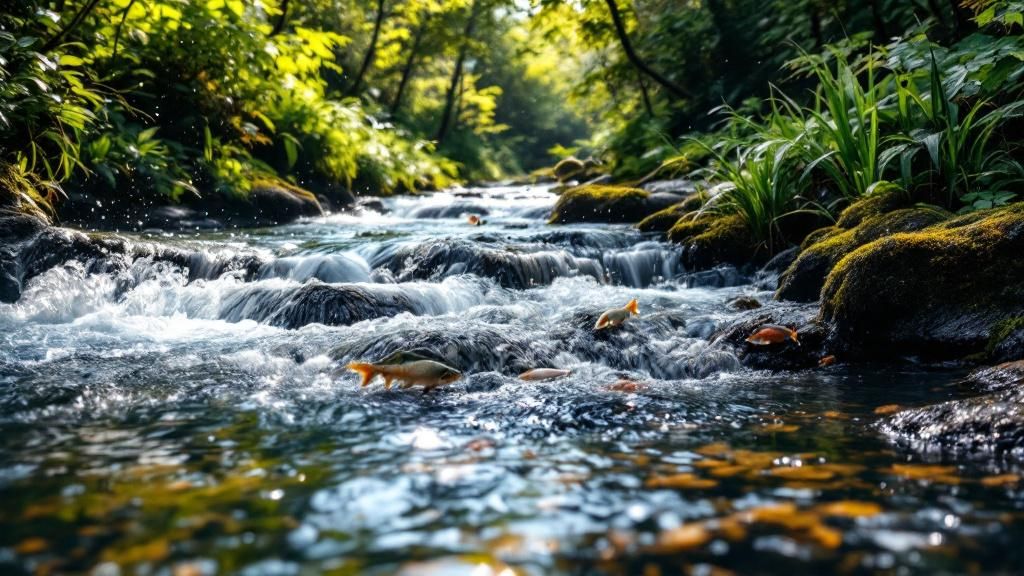
Freshwater fish species that travel extensive distances across freshwater and marine environments are experiencing severe population collapse, with populations declining by approximately 81 per cent over the preceding five decades. A landmark United Nations report has now identified as priorities 30 key fish species for immediate worldwide conservation efforts, including the golden mahseer and catfish varieties, alongside British species such as the salmon and river lamprey. The detailed evaluation, which analysed more than 15,000 freshwater migratory fish species—representing 50% of worldwide fish populations—reveals that dams, pollution and overfishing are preventing these creatures from reaching their breeding grounds. The findings underscore the critical importance of these species, which provide economic support of approximately 200 million people worldwide and constitute an extraordinary diversity of aquatic life.
The scale of deterioration throughout international water bodies
The alarming figures emerging from the UN’s thorough assessment paint a stark picture of freshwater fish species populations in decline. An 81% drop over just five decades constitutes one of the most significant collapses in any vertebrate group, yet these organisms have traditionally received considerably less focus than terrestrial or marine counterparts. Dr Zeb Hogan, co-writer of the study and professor of biology at the University of Nevada, Reno, emphasises the severity of the circumstances: “Freshwater fish sustain hundreds of millions of individuals worldwide, so for humans, they’re very important.” The extent of this decline threatens not just the survival of extraordinary species but also the food security and cultural heritage of communities worldwide.
The diversity of migratory fish species at risk of extinction is as striking as it is varied. These creatures exhibit remarkable adaptations and behavioural patterns—some species exceed 295 kilograms in weight and cover distances spanning 7,000 miles during their regular annual journeys. From the golden dorado making long-distance journeys through South American waterways to tropical eels travelling thousands of miles across Oceania, the vast spectrum of evolutionary strategies represents an invaluable ecological legacy. The previous UN assessment in 2011 examined only 3,000 species, but the expanded analysis now covers approximately 15,000, exposing the true magnitude of the conservation challenge affecting international authorities.
- Dams obstruct migratory pathways and fragment fish populations irreversibly
- Pollution deteriorates river habitats essential for reproduction and spawning
- Overfishing exhausts populations more rapidly than natural reproduction rates
- Habitat loss due to mangrove destruction eliminates vital breeding grounds
Threats that fragment river networks and spawning routes
Dams and habitat destruction
The development of dams across global river systems has emerged as one of the most destructive barriers to fish migration populations. These structures physically obstruct traditional migration routes that species have followed for millennia, stopping them from reaching spawning grounds crucial for reproduction. The goonch catfish, also known as the giant devil catfish, highlights this problem—once abundant in rivers like the Indravati, populations have collapsed as development has fragmented their habitats. Without access to conventional spawning sites, entire generations do not reproduce, accelerating population decline across affected regions.
Beyond dams, broader habitat destruction compounds the crisis facing freshwater migrants. Mangrove ecosystems, which act as critical nurseries for fish larvae, have been systematically destroyed along coastal areas where mobile species reproduce and grow. The Atlantic tarpon, which travels extensive distances along the United States coast, has seen its populations plummet as mangrove wetlands are lost. Chemical pollution further impairs remaining river systems, degrading water quality and removing the pristine water quality required for productive breeding and juvenile development across numerous continents.
Challenges within European waters
European rivers exemplify a particularly severe case study of how infrastructure construction has decimated migratory fish populations. Species including the Allis Shad, River Lamprey, Brook Lamprey, and Atlantic Salmon—all occurring in British waters—face major challenges as they attempt to navigate increasingly segmented river systems. Historical the construction of dams, whilst providing hydroelectric power and flood control, has created impassable barriers that prevent these species from reaching their historic breeding areas in upper river reaches. The overall consequence of multiple barriers along single river systems has virtually destroyed migration corridors that maintained healthy populations for centuries.
The Atlantic Salmon, perhaps Europe’s most emblematic migratory fish, has become a symbol of the continent’s conservation challenges. Once abundant in rivers across the British Isles and northern Europe, numbers have fallen dramatically as industrial development has blocked passage ways. River Lamprey and Brook Lamprey, species of great age that long predate most modern fish, likewise face challenges against the infrastructure legacy of industrialisation. Conservation initiatives now concentrate on removing or modifying current obstacles and averting new construction that would further fragment these already stressed fish stocks, though progress remains frustratingly slow.
- Multiple dams create insurmountable barriers preventing access to spawning grounds
- Water contamination and habitat degradation eliminate suitable breeding habitats
- Coastal development eliminates mangrove nurseries essential for juvenile fish survival
30 species currently prioritised for immediate conservation
In addressing the concerning deterioration of migratory freshwater fish populations, the United Nations has identified thirty key species demanding urgent conservation measures. These species have been chosen not simply for their environmental significance, but for their economic and cultural significance to communities across the globe. The golden mahseer, regarded as the “tiger of the river” in the Himalayas, demonstrates how certain fish species transcend their biological value to become essential elements of regional identity and spiritual practice. Similarly, the goonch catfish and piraíba—a giant Amazonian species—represent the extraordinary diversity of freshwater migratory species now threatened with extinction without urgent intervention and coordinated global effort.
The UN’s comprehensive assessment, which analysed over 15,000 migratory freshwater fish species compared to just 3,000 in 2011, has substantially expanded the scope of conservation objectives. Dr. Zeb Hogan, co-author of the landmark report, highlights the exceptional variety these creatures represent, from fish exceeding 295 kilograms to tropical eel species traversing thousands of miles across Oceania. The thirty key species now form the basis of a newly established global monitoring system designed to enable population restoration and prevent further decline. This represents a substantial change in worldwide conservation approach, recognising that freshwater migrants have been traditionally neglected despite sustaining the livelihoods of approximately 200 million people globally.
| Species | Geographic significance |
|---|---|
| Golden mahseer | Himalayan rivers; culturally and spiritually significant across South Asia |
| Goonch catfish | Indian rivers including the Indravati; critically overfished and habitat-threatened |
| Piraíba (giant catfish) | Amazon Basin; iconic Amazonian species facing pollution and dam threats |
| Atlantic salmon | British Isles and northern European waters; economically and culturally important |
| Allis shad | European coastal and river systems; found in UK waters and Mediterranean regions |
| River lamprey | British and European rivers; ancient species requiring free-flowing river corridors |
Cross-border collaboration provides path towards recovery
The UN’s identification of 325 fish species needing protection under global monitoring agreements marks a watershed moment in freshwater protection. By establishing these priority species within international frameworks, nations can work together to eliminate obstacles to migration, rehabilitate damaged ecosystems and implement sustainable fishing standards. The expanded assessment demonstrates that safeguarding migratory fish species requires transnational cooperation, as these species traverse multiple countries and jurisdictions. Without coordinated action, individual nations’ protection initiatives remain disjointed and inadequate to reverse the catastrophic 81 per cent population decline witnessed over the last five decades.
Dr. Zeb Hogan underscores that freshwater migratory fish constitute irreplaceable biodiversity demanding immediate protection. The economic implications are just as important—these species sustain livelihoods for 200 million people worldwide, making their preservation a matter of food security and human welfare. International agreements now provide the regulatory structure required to implement river restoration initiatives, environmental safeguards and fishing restrictions across cross-border rivers. Such collaborative approach offers real prospect for species like the Atlantic salmon and river lamprey, which require unobstructed waterways stretching across multiple nations.
Learning from successful conservation efforts
Previous preservation efforts have shown that migratory fish populations can bounce back when risks are methodically tackled. River restoration projects across Europe and North America have successfully reopened passage routes, enabling fish to reach ancestral spawning areas. These achievements offer templates for similar interventions in emerging economies where freshwater fish populations face the greatest challenges. By expanding proven methodologies and securing international funding, experts maintain broad-scale population restoration remains achievable within the coming decades.
Community participation proves essential to conservation success, particularly in areas where fishing traditions sustain local economies. Engaging indigenous peoples and fishing communities in decision-making processes ensures that conservation approaches respect traditional customs whilst protecting species. Education programmes highlighting the environmental and financial importance of migratory fish have changed public perception in numerous nations. This local support strengthens political will for implementing protective legislation and maintaining long-term commitment to restoration projects.
- Demolish obsolete dams restricting fish migration routes across river systems
- Designate marine protected areas protecting coastal spawning and juvenile rearing grounds
- Implement responsible catch limits through international regulatory agreements
