
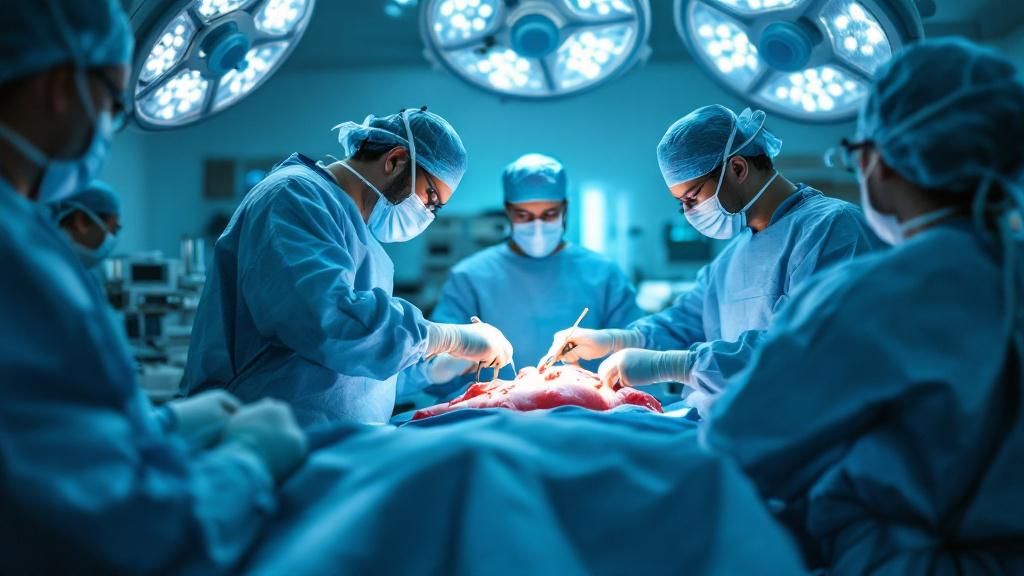
Britain’s transplant system, once regarded as world-leading, has fallen dramatically behind other leading European countries, stranding hundreds of patients in uncertainty and prompting pressing demands for overhaul. The NHS currently performs half as many lung transplant operations per head as many European countries, despite receiving comparable numbers of donated organs. Amongst those on the waiting list is Jodie Cantle, a 34-year-old with cystic fibrosis who has been presented with new lungs on 17 different occasions over seven years, only to have each procedure cancelled. A BBC investigation has revealed widespread failures such as outdated technology, persistent underfunding and the exodus of senior surgeons, whilst the government has now demanded the NHS “urgently implement” recommendations to overhaul the service.
A Framework in Deterioration
The contrast between Britain’s transplantation successes and its present position could hardly be more pronounced. Once a beacon of excellence, the NHS transplantation programme has stagnated whilst other countries have advanced. The number of heart and lung transplants undertaken per annum has stayed largely the same for the past thirty years, a troubling figure that reflects deeper systemic problems. What makes this particularly troubling is that the deficit cannot be put down to a insufficient organ supply—the UK’s organ donation levels are comparable to, or in some cases better than, European counterparts. Instead, the challenge lies in how effectively those vital organs are being used once they get to healthcare settings.
The root causes of this decline are multifaceted and deeply entrenched. Outdated equipment sits alongside chronic underinvestment in facilities and training, whilst senior surgeons increasingly choose to leave the profession or emigrate abroad. The technology gap is particularly acute: whilst overseas hospitals routinely employ advanced devices to assess and preserve organs, many NHS centres lack access to these same tools. This disparity has created a vicious cycle where fewer organs are deemed suitable for transplantation, leading to longer waiting times for patients and further demoralisation among clinical staff who feel hamstrung by inadequate resources.
- Only a tenth of lungs and a seventh of hearts are used for transplantation
- Some countries across Europe make use of twice as many organ donations
- Twelve surgeons report lengthy periods of slow progress on requests for equipment
- Leading transplant experts are leaving the NHS system
Technology and Capabilities Falling Behind
The technological disparity between the NHS and its European equivalents has become increasingly problematic. Whilst hospitals across France, Germany and the Netherlands have adopted cutting-edge evaluation and preservation equipment, many British transplant centres continue to operate with obsolete machinery that constrains their capacity to assess organ viability. This shortage of equipment directly translates into fewer transplant successes. Organs with salvage potential with modern technology are deemed unsuitable and discarded, depriving patients of potential life-saving procedures. The disparity is not merely an inconvenience—it represents a fundamental competitive disadvantage that damages patient outcomes.
Senior clinicians have become more outspoken about the funding shortage affecting their work. For years, transplant surgeons and specialists have called for modern equipment, only to face bureaucratic delays and budget constraints that leave their pleas unheeded. This extended battle has worn down morale within the profession, leading experienced consultants to seek opportunities abroad where they can practise their craft with adequate resources. The exodus of talent represents an immeasurable loss to the NHS, robbing the system of expertise precisely when it is required urgently to reverse the decline.
Obsolete Systems Hindering Performance
The lack of up-to-date organ assessment tools constitutes one of the most significant obstacles to improving transplant rates. Devices that are now routine in top-tier European healthcare facilities—such as normothermic machine perfusion and state-of-the-art diagnostic imaging—are not accessible in a large number of NHS facilities. These tools enable doctors to better evaluate whether organ donations are viable for transplant procedures, potentially recovering organs that would typically be rejected. Without such systems, the NHS is forced to rely on older assessment methods that are less trustworthy and more restrictive in their assessments.
Spending on organ preservation systems has similarly lagged. Perfusion devices for hypothermic and normothermic preservation, which sustain viable organs in transit and allow for extended assessment periods, are standard in continental hospitals but continue to be a rarity in numerous UK hospitals. This technological deficit has generated a self-perpetuating problem: fewer organs are deemed suitable for use, transplant activity plateau, and the argument for further investment grows more difficult to defend to financial decision-makers who see declining activity rates.
- Warm perfusion technologies commonly employed in European hospitals remain unavailable in many NHS centres
- Sophisticated diagnostic imaging for organ assessment is standard practice internationally but unavailable in the UK
- Cold storage systems are commonplace in European centres but scarce in Britain
- Traditional evaluation approaches are more conservative and decline tissues that modern technology might recover
- Procurement applications have faced years of delays and financial limitations within health service purchasing systems
The Social Cost of Waiting
For patients like Jodie Cantle, the transplant crisis is not an abstract policy failure—it is a daily reality that shapes every aspect of their life. The 34-year-old, who has CF, must keep her mobile telephone within arm’s reach at all times, prepared to drop whatever she is doing should a compatible organ become available. Yet in seven years, despite being presented with new lungs on 17 separate occasions, each operation has been called off. The psychological toll of constant letdowns, combined with the physical constraints imposed by her condition, creates a strange state of limbo where life feels perpetually suspended.
Jodie is among 450 adult patients currently waiting for a heart or lung transplant across the United Kingdom. With just 9% lung capacity left, a transplant constitutes her only viable option to a regular existence. However, the system’s inefficiencies mean that even when organs become available, they are frequently deemed inappropriate for use—a decision that leaves patients in a state of perpetual anxiety. The psychological toll of these repeated cancellations, coupled with the uncertainty about when, or if, a appropriate donor organ will arrive, exerts a profound impact on patients’ psychological wellbeing and mental health.
Life on Hold
The consequences of prolonged waiting stretches far beyond the physical realm. Patients must organise their whole existence around the possibility of an immediate summons, unable to manage to make firm commitments or pledges. Jodie describes experiencing the sensation that “the world is moving on without me” whilst she stays tethered to her oxygen cylinder. This enforced stasis affects relationships, career possibilities, and personal development. For younger individuals in particular, the transplant wait amounts to a significant portion of their developmental period passed in a period of stasis, watching peers progress whilst they remain trapped by their clinical situation.
Complications Following Surgery
Beyond the anguish of waiting, patients who do eventually undergo transplants face ongoing challenges with post-operative care. The NHS’s budgetary pressures stretch beyond the transplant operation itself, impacting the standard of ongoing support and immunosuppression management that are crucial to sustained graft survival. Inadequate aftercare raises the risk of organ rejection and infection, possibly damaging the very organs patients have waited years to receive. This systemic weakness erodes the therapeutic benefits obtained through transplantation, rendering patients vulnerable to complications that could have been avoided with better-equipped support services.
Geographic Disparities and Brain Drain
The crisis influencing Britain’s transplant services is inconsistently distributed across the country. Significant disparities exist between transplant centres, with patients in certain regions experiencing substantially extended waiting periods than their counterparts elsewhere. These regional disparities reflect wider funding distribution issues within the NHS, where some centres face difficulties with ageing machinery, limited personnel, and limited theatre availability. The variation in waiting times has raised questions about equity of access to critical interventions, with patients’ postcode essentially establishing not only the length of their delay but also their prospects for getting a suitable organ. Such variations weaken the principle of nationwide medical coverage and leave some of the most vulnerable patients enduring excessive difficulty.
Contributing substantially to these disparities is the exodus of experienced transplant surgeons and specialists from the United Kingdom. Senior clinicians, disheartened with chronic underfunding and outdated facilities, have progressively pursued opportunities overseas where they can utilise contemporary equipment and work within better-resourced systems. This brain drain reduces the expertise available within UK transplant units, forcing remaining staff to work under even greater pressure. The loss of skilled practitioners not only diminishes the current ability to carry out transplant procedures but also diminishes the supervisory support to trainee physicians specialising in this specialised field. Without intervention, this trend threatens to create a vicious cycle of eroding knowledge and worsening service provision.
| Transplant Centre | Average Wait Time for Heart Transplant |
|---|---|
| Harefield Hospital, London | 894 days |
| Papworth Hospital, Cambridge | 756 days |
| Freeman Hospital, Newcastle | 612 days |
| Wythenshawe Hospital, Manchester | 743 days |
| Royal Brompton & Harefield, London | 867 days |
| Great Ormond Street Hospital, London | 521 days |
| Bristol Heart Institute, Bristol | 698 days |
Decline in Talent Overseas
The migration of transplant specialists from Britain signals a significant loss to the NHS and highlights the worsening state within the service. Surgeons developed through substantial taxpayer investment are increasingly transferring their skills to better-funded healthcare systems in Europe, North America, and beyond. These departures are seldom abrupt; instead, they come after extended periods of discontent with funding constraints, inadequate facilities, and the inability to access technologies regularly accessible in similar countries. The exit of veteran practitioners creates a gap that is difficult to remedy, as training new specialists requires extended periods of study and guided clinical experience. For individuals requiring transplant surgery, the exit of talented specialists significantly affects their chances of accessing prompt, excellent treatment.
International recruitment drives by other nations have actively targeted British transplant teams, offering contemporary equipment, improved pay, and the prospect of working with cutting-edge technology. Some surgeons have described the decision to leave as one driven by professional conscience—a commitment to delivering patients with the optimal results using available resources. Their testimonies present an image of a service struggling to compete with better-equipped alternatives. The cumulative effect of these departures endangers the very foundation of Britain’s transplant programme, potentially causing a further decline in clinical performance and patient outcomes. Without urgent investment and structural change, the departure of skilled professionals seems probable to intensify.
What Requires Change
Specialists and medical professionals working within the transplant service have identified a number of key areas requiring immediate attention and investment. The most pressing concern focuses on modernising equipment and technology, with surgeons highlighting that many of the tools now standard in other Western nations are not available in NHS hospitals. Investment in devices for organ preservation, improved surgical equipment, and diagnostic technology could significantly boost the number of donor organs viable for transplant. Additionally, staffing levels need reinforcement to guarantee sufficient surgical teams, anaesthetists, and support staff can be deployed to handle the greater volume of work that improved technology would facilitate.
Beyond apparatus and personnel, the transplant service demands a detailed assessment of its functional framework and financial distribution. Healthcare leaders stress that enduring advancement calls for ongoing investment rather than quick solutions, with committed support for training new specialists and maintaining experienced surgeons. The government’s pledge to enact 2024 recommendations serves as a foundation, but those working in the field argue that recommendations alone are inadequate without aligned budget support. A unified approach tackling recruitment, retention, training, and structural improvement is vital to re-establish Britain’s position as a global frontrunner in transplantation.
- Fund modern organ preservation systems regularly utilised across Europe
- Expand staff capacity and improve remuneration to keep experienced surgeons
- Allocate dedicated funding for organ transplant programme enhancement and growth
- Implement extensive training initiatives to cultivate the next generation of experienced practitioners
