
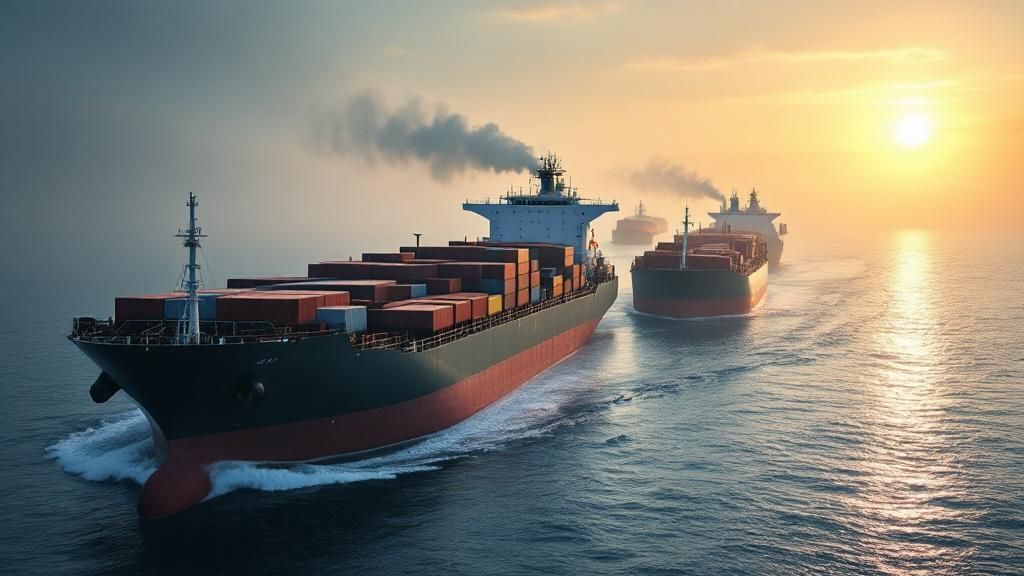
Prime Minister Sir Keir Starmer and US President Donald Trump have come together on the urgent need to reopen the Strait of Hormuz subsequent to a phone conversation on Sunday evening, as the critical shipping route remains effectively blockaded by Iran. Traffic through one of the world’s busiest waterways has fallen dramatically by approximately 95% since hostilities escalated on 28 February, endangering global energy stability. A Downing Street spokesperson verified the leaders “concurred that restoring the Strait of Hormuz was crucial for maintaining stability in worldwide energy markets”. The international effort takes place as crude oil prices have climbed 45% to $106 a barrel, with roughly one-fifth of the world’s oil and liquefied natural gas normally transiting the strait. Sir Keir is scheduled to chair a Cobra crisis session on Monday to evaluate the conflict’s effect on British cost of living.
The turmoil affecting international energy markets
The closure of the Strait of Hormuz has created disruption through global energy markets, with crude oil prices climbing dramatically since Iran’s near-total blockade of the waterway. The 45% surge to $106 a barrel constitutes a substantial rise that threatens to ripple through economies worldwide. With roughly one-fifth of the world’s crude oil and LNG normally flowing through this critical chokepoint, the near-total shutdown of traffic has created an unprecedented supply crunch. Energy analysts caution that prolonged instability could spark wider inflation concerns, particularly affecting families already grappling with elevated living costs and firms reliant on stable fuel supplies.
The economic implications reach far beyond oil prices, impacting everything from heating bills to transport costs and manufacturing expenses. The UK government has already taken steps to address urgent pressures, with Housing Secretary Steve Reed announcing a £53 million financial aid for homes experiencing sharp increases in heating oil prices. However, officials acknowledge that sustained disruption could apply sustained upward pressure on inflation across the economy. The Bank of England governor will attend Monday’s Cobra meeting expressly to assess these broader economic risks, as policymakers address the challenge of safeguarding British households and businesses from the consequences of Middle Eastern instability.
- Crude oil prices have climbed 45% since the blockade commenced on 28 February
- One-fifth of global oil and liquefied natural gas usually transits the strait
- UK government providing £53 million support scheme for fuel oil aid
- Price increases threaten household budgets and commercial supply networks throughout the UK
Diplomatic pressure mounts on Tehran
The crisis has escalated international strain among Western nations and Iran, with world leaders now actively considering strategies to force the return to normal operations at the Strait of Hormuz. Sir Keir Starmer and President Donald Trump have prioritised the matter in senior-level talks, understanding that sustained obstruction threatens international economic balance. Their coordinated position indicates a unified strategy to pressuring Tehran into reopening access along the shipping route. The exchange between the pair emphasises the seriousness with which Western nations regard the crisis, with both agreeing that enabling transit via the waterway is essential for maintaining stable energy markets worldwide and averting additional economic decline.
Beyond bilateral discussions, the UK government is activating its internal crisis response systems to tackle the consequences. The Monday Cobra meeting constitutes a comprehensive whole-of-government approach, uniting leading cabinet figures overseeing energy, foreign affairs, and fiscal matters. Officials are assessing the full spectrum of potential impacts, from domestic power costs to commercial distribution networks and inflation pressures. The involvement of Bank of England governor Andrew Bailey underscores government anxiety about broader economic ramifications. Ministers are reportedly considering various policy options, though the government has stayed silent about particular actions being contemplated to protect British families and companies from escalating costs.
Trump’s ultimatum and Iranian response
President Trump has assumed a confrontational posture, making a clear warning on social platforms that he would “destroy” Iranian energy infrastructure if the Strait of Hormuz is not restored to operation within forty-eight hours. This demand represents an escalation in tone and demonstrates Washington’s commitment to address the closure promptly. The threat underscores the Trump administration’s preparedness to apply military leverage as bargaining power against Tehran, signalling that negotiation alone may not be enough to allow transit through the vital waterway.
Iran has replied to Trump’s threat with counter-threats of its own, with Tehran cautioning via state media that it would strike US-linked energy sites throughout the Gulf region if American military action proceeds. This back-and-forth escalation raises the spectre of further regional conflict and potential strikes on critical infrastructure. The Iranian response demonstrates Tehran’s determination to maintain its blockade despite international pressure, creating a precarious impasse that threatens to worsen the global energy crisis further.
Britain develops home economic response
The British government is acting swiftly to manage the financial impact of the Middle East conflict, understanding that prolonged disruption to the Strait of Hormuz represents a real risk to UK families and companies. With crude oil prices already rising 45 per cent to $106 a barrel, officials are deeply mindful that continued escalation could spark inflation concerns that ripple through the entire economy. The urgency of the situation is reflected in Sir Keir Starmer’s move to establish a high-level Cobra meeting on Monday, bringing together the nation’s most senior policy leaders to create a coordinated strategy.
The government’s stance shows a resolve to protect British people from the worst effects of global energy market disruption. Housing Minister Matthew Pennycook acknowledged that officials are “very alive to the threats” stemming from the conflict, particularly regarding upward pressure on inflation. The comprehensive nature of the response—encompassing the Bank of England governor, the chancellor, and key cabinet secretaries—illustrates the gravity with which Whitehall is handling anticipated economic impacts. Ministers are actively exploring policy options to mitigate cost-of-living effects, though the government has declined to disclose specific measures being considered at this time.
Emergency Cobra gathering takes place Monday
- Bank of England governor Andrew Bailey on hand to examine economic consequences
- Chancellor, foreign secretary and energy secretary engaged in deliberations
- Energy security and household cost pressures on families central discussion points
- Business procurement networks and international response coordination subject to assessment
- Policy options under review to safeguard consumers from inflation pressures
Support measures presently available
The government has already begun rolling out assistance programmes to help struggling families cope with energy costs. A £53 million package has been deployed to support homes experiencing steep rises in heating oil prices, showing swift intervention on an acute problem. Housing Secretary Steve Reed emphasised the government’s commitment to “standing behind” the British people during this difficult time. These measures represent an first step, though ministers are clearly preparing further measures for possible consideration at Monday’s Cobra meeting should the Middle East situation worsen.
Military escalation and security concerns
The escalating military tensions encircling the Strait of Hormuz have triggered concern across major Western cities. President Trump’s Saturday declaration to “eliminate” Iranian power plants if the waterway is not made accessible within a two-day window represents an unprecedented level of dangerous posturing. In reaction, Tehran has vowed to attack American-affiliated power facilities throughout the Gulf territories, according to Iranian state media. This tit-for-tat rhetoric has dramatically heightened the likelihood of armed conflict between the United States and Iran, with conceivably severe repercussions for worldwide energy sectors and regional stability.
The Israel Defense Forces revealed on Saturday that Iran possesses weapons able to strike targets up to 4,000 kilometres away, highlighting the genuine military capability underpinning Tehran’s threats. Intelligence assessments suggest that Iran has shown both the technological sophistication and evident willingness to use long-range missiles in recent strikes. This capability gap has sparked pressing talks between British and American leadership about de-escalation strategies and contingency planning. The convergence of military posturing, economic leverage, and strategic miscalculation risks has created an extremely unstable situation that demands careful diplomatic handling.
| Military development | Details |
|---|---|
| Iranian missile range | Weapons capable of reaching targets up to 4,000km away, according to IDF assessment |
| Trump’s ultimatum | Threatened to “obliterate” Iranian power plants if Strait of Hormuz not reopened within 48 hours |
| Iranian retaliation threat | Tehran warned it would target US-linked energy sites across the Gulf region if threatened |
| Strait blockade | Iran has effectively blocked the waterway since US and Israel attacks on 28 February |
UK military installation involvement and ballistic threats
British military bases in the Gulf region have emerged as inadvertent focal points in the mounting tensions. The Israel Defense Forces earlier stated that Iranian missiles had struck at the joint US-UK base at Diego Garcia, a strategically vital installation in the Indian Ocean. This revelation prompted Foreign Secretary David Lammy to criticise what he described as “reckless Iran threats.” The participation of UK armed forces in the conflict zone has heightened domestic security concerns and underscored the direct implications of Middle Eastern instability for British national interests and troops stationed abroad.
Despite the concerning military developments, UK officials have attempted to convince the public about pressing dangers. Housing Secretary Steve Reed stated there is “no specific determination that the Iranians are focusing on the UK—or even could if they wanted to.” This measured statement shows official confidence in Britain’s protective systems and intelligence reports. However, the recognition that Iranian missiles possess sufficient range to theoretically impact British territories has sparked greater caution among defence organisations and military planners keeping close watch.
