
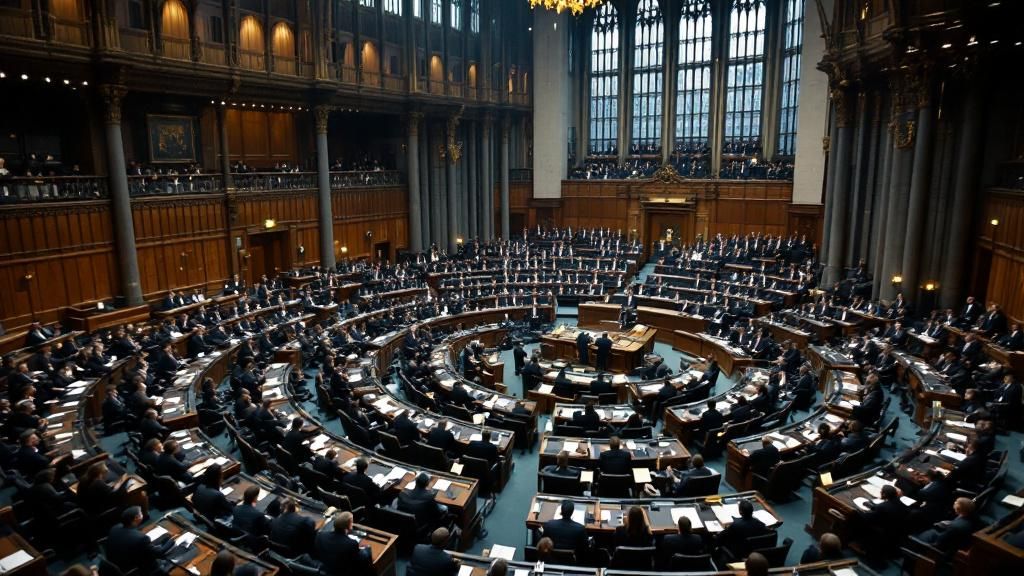
Scotland is set to create history this week as Scottish Parliament members are set to vote on groundbreaking end-of-life legislation. The Assisted Dying for Terminally Ill Adults (Scotland) Bill, introduced by Liberal Democrat MSP Liam McArthur, will undergo its final vote on Tuesday evening, following overwhelming parliamentary backing for its general principles in May. If passed, Scotland would become the first part of the United Kingdom to permit assisted dying, ahead of comparable yet different bills now advancing through Westminster for England and Wales. The Scottish bill would permit terminally ill adults expected to die within six months to terminate their existence, conditional upon strict eligibility criteria and measures meant to shield vulnerable individuals from undue influence.
What the Scotland’s bill suggests
The Scottish legislation sets out a meticulously detailed framework for how assisted dying would operate in practice. Under the bill’s provisions, qualifying people would be mandated to provide numerous formal declarations of their intent, with evaluations conducted by independent medical professionals to verify their eligibility. The process emphasises safeguarding, requiring medical practitioners to confirm that applicants have the mental capacity to make such a major decision and are actually terminally ill. The bill also contains defined protections against possible pressure, recognising concerns expressed by opponents about vulnerable individuals being coerced into ending their lives prematurely.
A important distinction between the Scottish method and the Westminster bill relates to how mental capacity is assessed. Whilst English and Welsh legislation assumes capacity unless proven otherwise—following standard legal precedent—the Scottish bill reverses this presumption for assisted dying cases. This means individuals must clearly show they have the necessary mental capacity to comprehend the procedure, maintain their choice, and express their preferences with clarity. Medical professionals would require assurance that any psychological conditions would not impair the person’s ability to make such a major decision, introducing further examination to applications.
- Applicants need to be 18 years of age or above and residents of Scotland for a minimum of 12 months
- Individuals must be registered with a Scottish GP and terminally ill, anticipated to pass away within six months
- Mental capacity evaluation focuses on comprehension of information and communicating decisions clearly
- People with mental disorders affecting their decision-making would be excluded from the process
- The framework includes several protective measures intended to avoid undue pressure and protect vulnerable applicants
Essential eligibility standards
To be eligible for assisted dying under the Scottish bill, individuals must satisfy a number of strict criteria designed to ensure the process is restricted to those genuinely facing terminal illness. Applicants must be a minimum of 18 years old and have been living in Scotland for a minimum of 12 months, establishing a genuine connection to the country. They must also be listed with a Scottish general practitioner, permitting healthcare professionals to retrieve their medical history and validate their terminal diagnosis. The requirement that applicants be anticipated to die within six months ensures the legislation is restricted to those approaching death rather than individuals with extended life expectancies.
Mental capacity constitutes perhaps the most substantial eligibility criterion, reflecting the bill’s commitment to protecting at-risk people from possible abuse. Applicants must demonstrate they can comprehend details and guidance about the assisted dying process, formulate and express their decision, and maintain that choice over time. Crucially, individuals suffering from mental disorders that might impact their judgment would be ruled out entirely, even if they otherwise meet the physical and residency criteria. This safeguarding method acknowledges that terminal illness can deeply influence psychological wellbeing and capacity to decide.
How the procedure would work in real-world application
Once an individual meets the eligibility criteria, the Scottish bill sets out a defined framework meant to guarantee comprehensive evaluation and avoid rushed conclusions. The process starts with the individual lodging an official application to their GP, who will verify their terminal diagnosis and assess their mental capacity to make such a substantial commitment. After preliminary consent, the case advances to separate medical evaluation, with checks established at every step to enable consideration and thought and to confirm the applicant’s commitment to their decision stays the same during the procedure.
| Stage | Details |
|---|---|
| Initial application | Patient submits written request to their GP, who verifies terminal diagnosis and mental capacity |
| First independent assessment | A specialist doctor reviews the application and confirms eligibility criteria are met |
| Waiting period | Mandatory reflection time between assessments allows applicant to reconsider their decision |
| Second independent assessment | A second specialist doctor provides independent verification of the applicant’s continued wish and eligibility |
| Final approval and implementation | Once both doctors approve, the patient self-administers the prescribed substance to end their life |
The obligation to obtain two distinct separate medical evaluations represents a vital protection within the Scottish framework. Both doctors must confirm not only that the applicant meets the rigorous qualifying requirements but also that the individual’s wish to proceed is sincere, informed and without external pressure. This two-stage assessment approach aims to provide comprehensive safeguarding against possible coercion whilst honouring the self-determination of individuals facing terminal illness who have made a careful decision about their final days.
Contrasting Scotland against England and Wales
Whilst both Scotland and Westminster are advancing end of life legislation, the two bills vary in a number of important respects. The English and Welsh proposal, put forward by Labour MP Kim Leadbeater as a Private Members’ Bill, adopts a fundamentally similar framework to the Scottish legislation but with distinct variations in implementation and safeguards. Both demand applicants to be facing terminal illness, over 18, and listed with a GP, yet the pathways to approval and the specific protections woven throughout each bill demonstrate distinct philosophical approaches to this highly sensitive issue.
One of the most striking differences lies in the assessment procedures and timeframes required. The Westminster bill mandates that applicants make two distinct statements, witnessed and signed, with assessments from two independent doctors spaced at least seven days apart. Following approval, patients must observe an additional 14 days before moving forward. The Scottish approach similarly involves two medical evaluations but with its own specific procedural requirements. Additionally, the Westminster bill outlines that a doctor will produce the substance but the patient must self-administer, whereas the Scottish bill’s implementation details are yet to be finalised in subordinate legislation.
- England and Wales bill requires applicants to demonstrate a “explicit, consistent and reasoned wish” free from coercion
- Scotland’s bill prioritises mental capacity assessment with stricter definitions than the UK Parliament approach
- Westminster bill includes a compulsory 14-day cooling-off period following final sign-off before taking effect
- Both bills limit eligibility to those anticipated to pass away within six months their application
The capacity question
The definition of mental capacity represents perhaps the most fundamental difference between the two legislative instruments. The Scottish bill adopts a stricter framework, requiring positive demonstration that an applicant has the ability to comprehend relevant details, make decisions, and retain that decision. By contrast, the Westminster bill adheres to the traditional common law presumption that people have capacity unless proven otherwise. This conceptual distinction has important consequences for the assessment of applications and which applicants might eventually be deemed eligible to move forward.
Medical and legal specialists are split over which approach better protects vulnerable individuals whilst honouring personal choice. The Scottish model’s demand of clear competency evaluation seeks to deliver additional safeguards, particularly for those with cognitive conditions that might influence their choices. Yet, critics argue this could create barriers for some terminally ill people. The Westminster model’s assumption of competency sits with wider legal standards but prompts worry about sufficient safeguarding. This divergence highlights how various regions are wrestling with the ethical complexities of assisted dying legislation.
Primary issues and debate points
Opposition to the assisted dying bill has crystallised around a number of significant concerns that have shaped parliamentary and public discourse. Critics worry that legalising assisted dying could create unintended consequences for at-risk groups, whilst supporters argue that comprehensive safeguards adequately address these fears. The debate has proven deeply emotional, with campaigners on both sides presenting compelling personal testimonies. Medical practitioners, disability campaigners, and ethicists have all provided perspectives to what remains one of Scotland’s most contentious legislative proposals. The intensity of feeling reflects the profound moral and practical questions at stake.
- Risk of coercion or pressure on frail patients nearing end of life to hasten death before natural conclusion
- Doubts regarding sufficiency of cognitive competency evaluations for those with cognitive impairments or depression
- Possible financial and operational demands for implementing safeguards and coordinating assessments across Scotland
- Uncertainty about long-term societal effects of normalising assisted dying in healthcare settings
- Questions over whether current palliative care provision sufficiently tackles other options for managing terminal distress
The pressure threat
Those against the bill have raised substantial worries about the risk of coercion, particularly regarding elderly or disabled individuals who might feel pressured by family members or financial pressures to opt for assisted dying. Campaigners are concerned that despite protective measures, subtle coercion could occur in family environments where outside scrutiny is not feasible. They point to international experience suggesting at-risk individuals may feel burdensome to relatives, potentially affecting their decisions. These concerns have struck a particular chord among disability rights groups, who argue that insufficient provision and societal prejudices could drive decisions that might not represent truly independent decision-making.
Supporters of the bill argue that the strict safeguards incorporated within the legislation—including cognitive ability evaluations and separate medical review—deliver robust protection against coercion. They argue that denying terminally ill people the choice to end their suffering represents a type of coercion itself. The debate reveals real disagreement about whether stricter legal controls can successfully stop indirect personal influence. Both sides recognise the potential danger but diverge significantly on whether the proposed safeguards adequately mitigate it or whether the danger supports rejecting the legislation in full.
NHS capacity and financial pressures
Questions have been raised about whether Scotland’s NHS possesses sufficient resources to implement the assisted dying framework effectively. The legislation mandates separate clinical evaluations, dedicated instruction for lead physicians, and comprehensive documentation processes. Healthcare professionals must undergo training to evaluate cognitive ability and manage applications properly. Some NHS leaders have raised questions about resource implications, especially in remote regions where obtaining two separate medical practitioners might be difficult. These practical considerations could substantially impact how smoothly the system functions if the bill is enacted, potentially creating hold-ups or geographical inequities in access.
The monetary expenses of implementation remain unclear, though the Scottish administration has pledged financing essential facilities. Palliative care advocates have furthermore challenged whether investment could be better directed towards improving end-of-life support services rather than implementing assisted dying structures. They argue that many people’s desire for assisted dying originates from poor pain control or psychological support rather than advanced illness itself. Conversely, supporters suggest that assisted dying and improved palliative care represent complementary approaches rather than rival priorities, and that resources in both areas assists terminally ill people irrespective of their ultimate preferences.
What takes place elsewhere in the British Isles
Assisted dying continues to be illegal throughout the majority of the United Kingdom and Ireland, while public opinion has gradually shifted in support of legalisation. England and Wales are presently examining their own legislation through Kim Leadbeater’s Private Members’ Bill at Westminster, which has advanced past initial stages but faces an uncertain parliamentary future. Northern Ireland upholds strict restrictions against assisted dying, with no ongoing legislative proposals for change. The Republic of Ireland similarly prohibits the practice, though discussions about possible changes have arisen in the past few years amongst healthcare professionals and civil society groups.
Scotland’s possible introduction would make it the first part of the UK to implement end-of-life choice laws, if the legislation succeeds in its final vote this week. This distinctive approach demonstrates Scotland’s independent judiciary and devolved powers over health matters. The difference in Scotland’s forward-thinking position and the greater caution at Westminster highlights increasing differences in legislation across the UK nations. International comparisons show that nations such as Canada, Belgium, and the Netherlands operate functioning assisted dying frameworks, offering potential models for UK legislators to study.
- Northern Ireland upholds strict prohibition with no current legislative change initiatives currently under consideration.
- The Republic of Ireland bans assisted dying, though medical practitioners have started exploring possible forthcoming reform options.
- Canada and the Netherlands run well-developed end-of-life systems that UK legislators have examined as potential models.
