
Donald Trump has reiterated his criticism of the UK government’s response to the worsening Iran situation, raising objections with what he views as lacking resolve to restoring passage through the Strait of Hormuz, one of the world’s most vital oil shipping routes. Speaking to reporters on that day, the US President insisted he remained “not happy” with Britain, contending that it “should be involved enthusiastically” in initiatives to reinstate passage through the waterway after Iran effectively closed it to tankers. The remarks mark another point of friction between Washington and London, coming after Prime Minister Sir Keir Starmer stated the UK would not be drawn into a “larger military engagement” and vowed to engage with allies on a “viable, collective plan” rather than taking unilateral action.
The Hormuz Strait Standoff
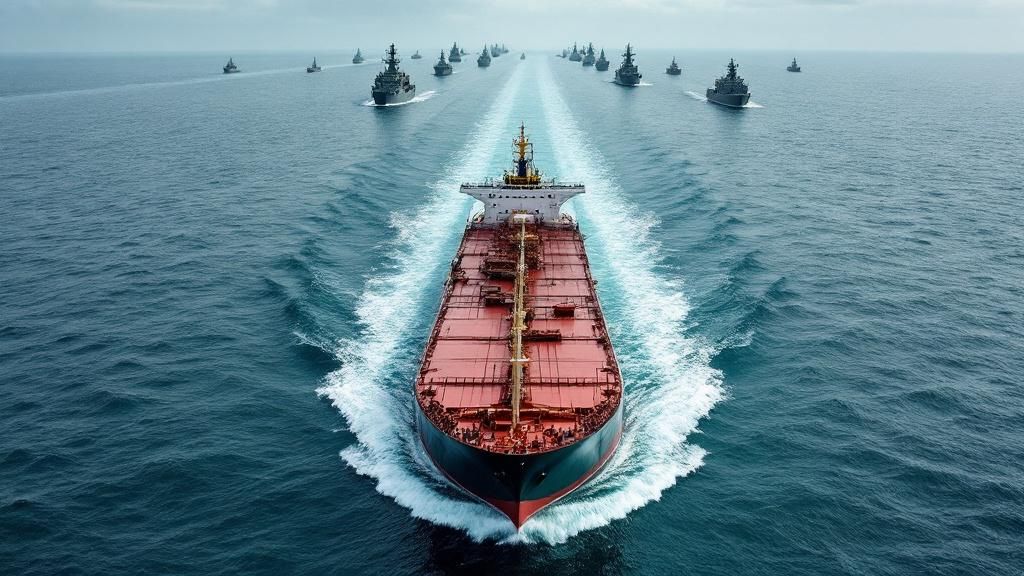
The Strait of Hormuz constitutes one of the world’s strategically crucial maritime chokepoints, with roughly approximately 20 percent of global oil passing through its waters daily. Iran’s effective closure of the channel to tankers has triggered upheaval through international energy markets, driving oil prices higher markedly. The situation creates an immediate danger to worldwide economic security, with shipping companies and energy producers scrambling to assess the implications of sustained interruption. Trump has called for allied nations, particularly Britain, to station naval forces to defend commercial shipping and enable normal transit through the waterway.
The challenges facing shipping in the region are complex and significant. Iran has openly declared its intention to attack any vessels it considers linked to American objectives, whilst the presence of sea mines further hampers passage through the region. These combined dangers have generated widespread worry about the safety of merchant shipping and the broader implications for global trade. The UK has stated it owns minehunters equipped to tackle the mine threat, yet Sir Keir Starmer has declined Trump’s demands for prompt commitment, insisting instead on coordinating a collective response with partner countries before deploying military resources.
- Iran has warned of attacks on American-affiliated cargo ships in the strait
- Sea mines create significant maritime dangers to commercial tankers
- Oil prices have increased significantly following the effective closure of the channel
- The strait transports approximately one-fifth of global daily oil shipments
Washington’s Dissatisfaction with British Resistance
Donald Trump’s dissatisfaction with Britain’s cautious approach has become more apparent, with the US President making his dissatisfaction abundantly clear during Monday’s media appearances. Trump directly asserted he was “not happy” with the UK’s reaction, arguing that the nation “should be involved enthusiastically” in efforts to reopen the Strait of Hormuz. His objections underscores a core dispute over how partner countries should respond to the Iranian blockade, with Washington favouring swift, decisive military action whilst London advocates for a more measured, collaborative approach. The discord reflects broader differences in strategic vision between the two regimes regarding armed action and risk management in the volatile Middle Eastern theatre.
The US President’s remarks carried particular sting given the historical relationship between the two nations. Trump highlighted that the UK had previously been considered “the Rolls-Royce of allies,” suggesting disappointment at what he perceives as a failure to live up to that standard during a critical moment. His frustration appears rooted in what he sees as British indecision and an unwillingness to act independently. Trump suggested he was testing world leaders’ commitment to international security, implying that the UK’s hesitation revealed a lack of genuine partnership. The criticism has intensified existing tensions between Washington and London, adding another layer of complexity to an already fraught diplomatic situation.
Trump’s Blunt Criticism
In his most pointed remarks, Trump accused Sir Keir Starmer of over-consultation and insufficient executive decisiveness. The US President recounted telling the Prime Minister that he should not consult his team before committing British naval assets, saying plainly: “You don’t have a team. You’re the prime minister. You can make a decision.” This characterisation of Starmer’s approach as indecisive proved particularly cutting, suggesting that pursuing consensus represented weakness rather than prudent consultation. Trump’s demand for solo action from Britain contrasts sharply with the Prime Minister’s expressed commitment to coordinating responses with allied partners, emphasising a basic philosophical gulf between the two leaders’ approaches to military decision-making.
Trump also made an critical comparison between British hesitation regarding the Strait of Hormuz and their cooperation in Ukraine, questioning the apparent inconsistency in allied commitment. He voiced considerable frustration over the British ownership of minehunters—vessels purpose-built to address the mining danger in the strait—yet refusal to deploy them immediately. The President’s frustration extended to his description of the situation as “terrible,” emphasising his belief that British reluctance weakened wider Western security concerns. These complaints represent a substantial diplomatic criticism, suggesting that Trump views the UK’s cautious stance as a betrayal of alliance responsibilities at a crucial moment.
Downing Street’s Carefully Calibrated Reply
Downing Street has sought to defend the Prime Minister’s strategy as cautious rather than hesitant, emphasising that Sir Keir’s discussions with military advisers and allied partners represents responsible governance rather than indecision. UK sources within government circles stressed that the Prime Minister was seeking to build a unified global response to the crisis, establishing unity among Britain’s allies on what joint intervention might achieve. This collaborative approach, they argued, represented collective resolve rather than the weakness Trump suggested. The government’s position reflects a belief that solo military actions, however swift, risk weakening the very global agreement necessary for long-term military activity in such a geopolitically delicate area.
The divide between Trump’s call for swift action and Starmer’s emphasis on collective planning reveals a deeper disagreement about how democracies should conduct foreign policy. British ministers have pointed out that the Prime Minister has the authority to commit naval forces without team consultation, yet opts to pursue more extensive buy-in. This collaborative method, they argue, guarantees defence actions receive internal and external legitimacy. Moreover, the government has emphasised its established pledge to regional security, noting that British mine-clearing vessels are currently deployed in the area and that defensive measures have been authorised. The criticism, therefore, effectively ignores the substantial steps Britain has already taken.
- UK highlights unified international action over solo military intervention
- Government emphasises minehunters currently positioned to the region
- Downing Street justifies consultation as prudent decision-making
Present Naval Assignments
The British Royal Navy has maintained a presence in the Gulf region, with the warship HMS Dragon leaving Portsmouth on 10 March to strengthen regional security efforts. Beyond this deployment, the UK has positioned minehunters specifically designed to tackle the threat of underwater mines that Iran has allegedly deployed throughout the Strait of Hormuz. These vessels represent a tangible British contribution to preserving freedom of passage in one of the world’s most vital maritime routes. The government’s position that these assets are currently involved in protective measures suggests that Britain is meaningfully involved in efforts to enable transit through the strait, challenging assertions of complete disengagement.
European Partners Share British Doubts
Britain’s restrained approach to the Iran crisis has resonated with multiple EU countries, who similarly oppose Trump’s push for one-sided military intervention in the Gulf. France, Germany, and additional EU countries have raised alarm that rushed military decisions could worsen conditions in an inherently unstable region and damage diplomatic efforts to lower tensions. European leaders have stressed the vital necessity of pursuing diplomatic avenues before committing additional naval assets, a position that aligns closely with Sir Keir Starmer’s emphasis on a “viable, collective plan”. This transatlantic divide reflects contrasting strategic outlooks, with European leaders favouring multilateral agreement over rapid response to American demands.
The rift between Washington and Western Europe illustrates a wider trend in the past few months, where Trump has grown increasingly frustrated with allies he views as inadequate in their commitment to his strategic objectives. Germany, in particular, has faced similar criticism from the American President over defence spending and military contributions. France has maintained its independent foreign policy stance, resisting pressure to align automatically with American military initiatives. These European concerns suggest that Trump’s dissatisfaction with the UK is indicative of broader disagreements within the Western alliance about how to respond to regional conflicts and the right balance between military action and diplomatic efforts.
| Country | Position on Strait Operations |
|---|---|
| United Kingdom | Seeking coordinated allied response; minehunters already deployed; emphasis on collective planning |
| France | Prioritising diplomatic channels; resisting pressure for unilateral military escalation |
| Germany | Cautious approach aligned with European consensus; focus on multilateral solutions |
| European Union | Emphasising de-escalation and exhaustion of diplomatic options before military commitment |
Political Divisions at Home
Sir Keir Starmer’s measured approach to the Iran crisis has faced opposition not only from Washington but also from Conservative opposition figures at Westminster. Shadow Foreign Secretary Andrew Mitchell and other leading party figures have questioned whether the Prime Minister is being adequately forceful in protecting UK interests and backing a key ally. The government’s hesitation in committing additional naval resources without first seeking advice from military advisers and allied partners has been characterised by some critics as overly cautious leadership at a moment demanding decisive action. However, government sources have justified the Prime Minister’s position as strategically prudent, stressing the importance of assessing collective allied capabilities before committing to unilateral commitments.
Labour backbenchers have largely rallied behind Sir Keir’s careful approach, arguing that hasty military action could be counterproductive and worsen regional stability. Many MPs have expressed concern that Trump’s calls for swift action without sufficient planning could drag Britain into a broader conflict without defined strategic goals or off-ramp strategies. The government has attempted to strike a balance between preserving the vital transatlantic relationship and safeguarding British military assets and personnel from unnecessary risk. This internal political friction reflects broader anxieties within Parliament about America’s erratic foreign policy course under Trump’s administration.
- Conservative opposition criticises government’s perceived lack of assertiveness regarding the United States and Iran conflict.
- Labour MPs support the PM’s focus on coordinated planning over solo military intervention and escalation.
- Parliament split over balancing loyalty to transatlantic partnerships with independent British strategic interests and military prudence.
