
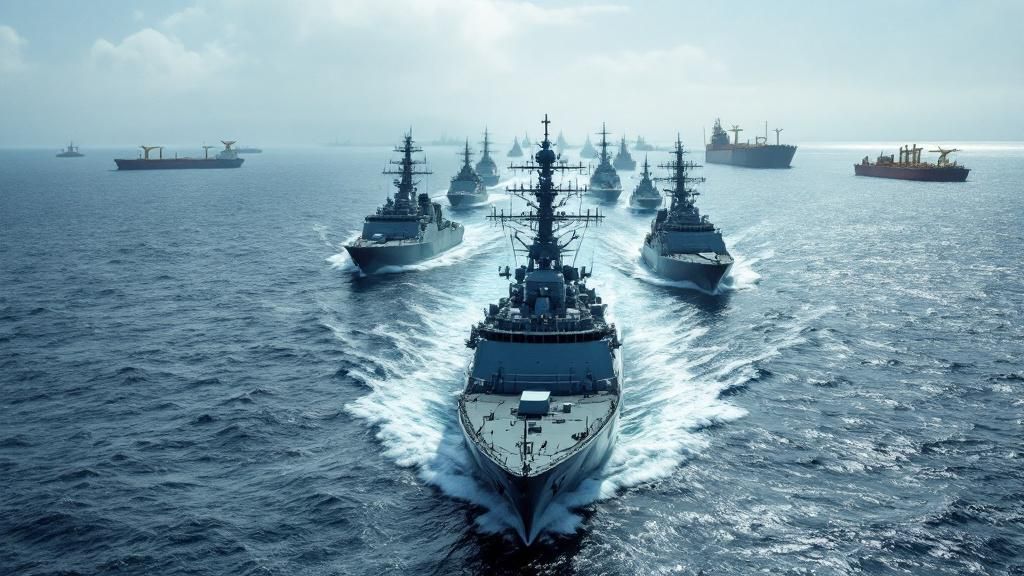
Donald Trump faces intensifying scrutiny as the coordinated US-Israeli military effort against Iran moves into its third week, with crucial choices ahead that could shape the remainder of his presidency. Despite the intensifying hostilities, the American president has upheld his characteristically unbothered public presentation, dividing his attention between discussions of the war effort and an wide variety of unrelated topics during statements at the White House on Monday. The situation has developed into a more complicated matter, with Trump’s earlier assertions that the conflict was “already won” and “very complete” now yielding to acknowledgement that military operations could extend for weeks or more. The deferral of his intended April trip to China underscores the war’s increasing requirements on his administration, whilst efforts to construct an international coalition to safeguard maritime commerce through the strategically vital Strait of Hormuz have received lukewarm responses from major partners.
A leader preoccupied with escalating challenges
Trump’s outward conduct points to a leader unburdened by the weight of an growing war, yet the reality paints a different picture. During over an hour of White House remarks on Monday, the president oscillated between discussing the Iran situation and an range of seemingly minor issues, including Kennedy Center refurbishment, White House ballroom construction plans, the World Cup competition, and the health of a Republican representative. This scattered approach to presidential communication obscures a underlying tension: whilst Trump may prefer to concentrate on other matters, history shows that war inevitably consumes presidencies regardless of a leader’s preferences or desires.
The postponement of Trump’s planned April trip to China exemplifies how the crisis is transforming his administration’s timetable and priorities. White House Press Secretary Karoline Leavitt explained the delay by highlighting that “the president’s utmost duty right now as commander in chief is to secure the sustained achievement of Operation Epic Fury,” the military designation for the Iran war. Yet Trump’s social media activity tells another story: he has devoted comparable effort to assailing the Supreme Court as he has to addressing the challenges of an increasingly unstable military engagement.
- Trump played golf at his Florida property over the past weekend
- He postponed his China visit by a month because of war
- Operation Epic Fury is the military name for the Iran situation
- The president’s remarks addressed numerous unrelated domestic matters
The Strait of Hormuz dilemma
A partnership that failed to materialise
Trump’s effort to establish an international coalition to protect passage via the Strait of Hormuz has encountered significant resistance from potential allies. Over the weekend, the president made a direct appeal to nations whose economies depend on the shipping route, sharing on social platforms that he was “assembling a coalition of military forces” and requesting that China, France, Japan, South Korea, the United Kingdom and others contribute naval vessels. “One way or the other, we will shortly secure the Hormuz Strait OPEN, SAFE, and FREE!” he declared, reflecting his typical self-assurance in America’s ability to reshape geopolitical outcomes via unilateral measures.
However, the feedback from global allies has turned out to be distinctly cool. A increasing collection of nations, such as Japan, Australia and numerous European powers, have indicated they are disinclined to support the effort. UK PM Keir Starmer presented a notably sharp rebuff on Monday, stating that Britain would “not be drawn into the larger military engagement” whilst remaining open to a “practical coordinated approach” to address Hormuz safety issues. This official rejection leaves Trump confronted with an difficult decision: whether to commit substantially more American naval resources to securing the strategic waterway on its own.
The Strait of Hormuz constitutes one of the world’s most vital maritime chokepoints, with approximately 20 per cent of worldwide oil production transiting through its narrow passage. Trump’s failure to gather international support underscores the limitations of American diplomatic leverage, even when appealing to nations with direct economic interests in maintaining free passage. The inability to construct a meaningful coalition may force the administration to carry the weight unilaterally, consuming extra military expenditure and potentially deepening American engagement with the regional conflict.
- Japan, Australia and nations across Europe chose not to participate in the coalition
- One fifth of world oil supply passes through the strait
- UK refused to be drawn into the broader dispute
Economic impacts jeopardise political credibility
As the Iran crisis deepens, the economic implications threaten to undermine Trump’s electoral prospects at a pivotal time. Oil prices have commenced increasing as concerns mount over likely disturbances to global energy supplies, with the Strait of Hormuz staying exposed to further Iranian action. The administration’s failure to swiftly address the emergency or secure meaningful international support conjures the prospect of sustained inflationary pressure that may reverberate throughout American households before the upcoming elections. Trump’s economic performance has been central to his electoral strategy, making any extended jump in petrol prices a conceivable weakness.
The wider markets for finance have begun to reflect growing anxiety about the conflict’s direction. Shipping insurance premiums have surged as businesses reconsider the risks involved in transiting through disputed waters, in effect levying a invisible tax on worldwide trade. Consumers in America, already affected by prices at the pump at the pump, may soon feel the cumulative weight of these financial pressures. For an administration that has continually highlighted economic competency and stability, the prospect of inflation stemming from geopolitical turmoil represents a significant political risk that could persist for months.
| Economic indicator | Current impact |
|---|---|
| Oil prices | Rising due to supply chain concerns and Strait of Hormuz vulnerability |
| Shipping insurance premiums | Surged significantly, increasing costs for global commerce |
| Consumer fuel costs | Elevated and likely to remain high pending resolution |
| Inflation outlook | Threatened by sustained energy price pressures |
The affordability crisis
American households currently facing living cost challenges confront the possibility of rising petrol costs if the Iran situation stays unresolved. The standard family’s monthly fuel expenditure could increase substantially, intensifying ongoing concerns about supermarket prices, accommodation expenses and utilities. For working-class voters who form a crucial part of Trump’s electoral coalition, such increases result in lower spending power and greater financial stress. The electoral implications of prolonged price increases could be especially harmful given the administration’s emphasis on economic performance.
The affordability crisis reaches past petrol to cover wider logistical disruptions that could impact consumer goods prices. Production industries requiring on-time transport through global shipping routes experience potential delays and increased expenditure. These challenges could ultimately feed through to shop prices, affecting numerous items spanning technology through domestic supplies. With cost increases staying as a top concern for voters, Trump’s ability to manage the economic fallout from the Iranian dispute may become pivotal to his broader political fortunes.
Armed conflict intensification entails considerable dangers
Trump’s public presentation may project confidence, yet the combat possibilities at his disposal in the Iranian conflict each carry considerable hazards that could fundamentally alter the trajectory of his administration. A increasingly assertive American military posture in the Gulf region could trigger Iranian response against US forces deployed across the region, potentially resulting in considerable loss of life and engaging the United States in a prolonged conflict far more extensive than the current operations. The president’s prior description of the war as “already won” now looks increasingly detached from the tactical reality on the ground, where Iranian military capabilities continue to pose real dangers to critical international shipping lanes and US interests.
The problem of coalition-building compounds these strategic challenges significantly. With major allies including the United Kingdom, Japan and Australia declining to join Trump’s suggested maritime alliance for the Strait of Hormuz, the burden of securing international maritime trade threatens to fall heavily upon American forces. This possible unilateral approach could stress the US military’s capabilities whilst at the same time raising costs and exposing American service members to heightened danger. The president must address an uncomfortable choice between either embracing a diminished international role or allocating substantially greater resources to a situation he first indicated was concluded.
- Iranian drone and missile attacks could cause casualties on American military personnel deployed in the region
- Expanded naval operations necessitate sustained resource commitment impacting other strategic priorities worldwide
- Prolonged military engagement risks domestic political backlash and war fatigue amongst American voters
- Unilateral American intervention may strain alliances and undermine future coalition efforts on the global stage
The countdown continues for a solution
The postponement of Trump’s planned April visit to China highlights the growing pressure surrounding the Iran conflict, indicating that military operations are improbable to end swiftly despite the president’s previous statements. By putting off what would typically be a substantial diplomatic exchange, Trump has essentially placed first the immediate military situation over broader geopolitical objectives. This decision demonstrates the difficult fact that Operation Epic Fury, now in its third week, shows no signs of swift ending. The administration’s admission that the conflict could extend for weeks or even longer runs counter to Trump’s previous public statements, indicating that strategic reassessment is taking place behind the scenes within top military and defence leadership.
The prolonged timeline produces additional political complications for Trump, who must juggle his domestic agenda with the demands of an active military campaign. Prolonged conflict risks consuming presidential time and energy that might otherwise be allocated to parliamentary goals or financial ventures. Furthermore, the further hostilities extend without clear resolution, the more substantial the risk of sudden expansion or unforeseen complications that could extend beyond American control. Trump encounters growing expectations to demonstrate tangible progress or achieve a diplomatic agreement before the conflict becomes a defining feature of his presidency, potentially overshadowing other accomplishments and occupying headlines for months to come.
