
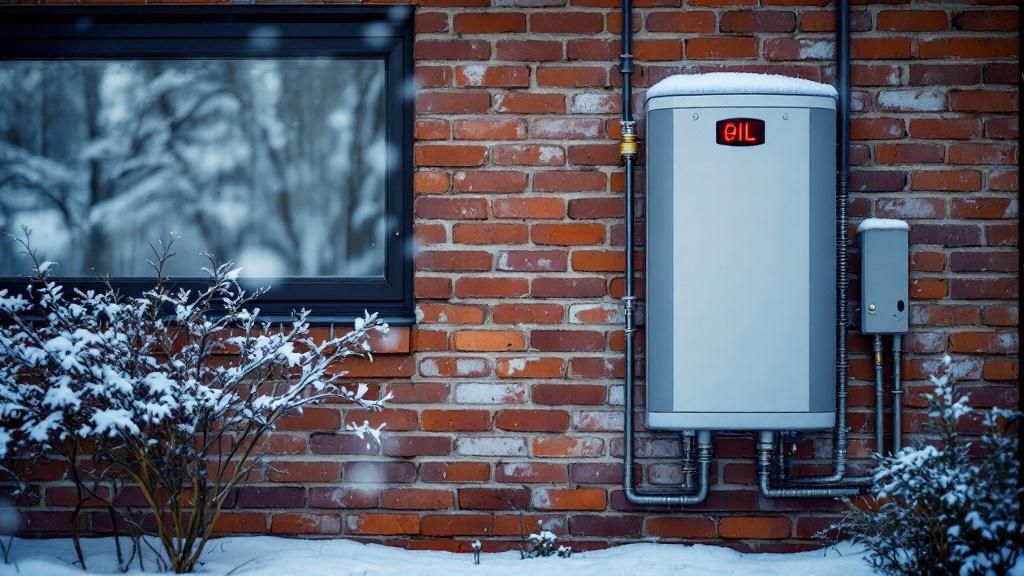
The government is to announce a £50 million aid programme for homeowners grappling with escalating fuel expenses, Prime Minister Sir Keir Starmer will confirm on Monday. The move comes as oil costs have surged above $100 a barrel following the outbreak of conflict in the Middle East, up from $71 before hostilities began. Unlike gas and electricity users, heating oil customers face no price ceiling from regulator Ofgem, making them especially exposed to market volatility. Some households report their bills have doubled. The crisis is particularly severe in Northern Ireland, where approximately 500,000 homes—nearly two-thirds of all households—use heating oil. The government has also asked the Competition and Markets Authority to examine accusations of unfair price increases by suppliers.
The domestic heating oil crisis intensifies
The fuel oil sector has been severely affected by the geopolitical tensions in the Middle East. The practical shutdown of the Strait of Hormuz, a vital shipping route through which a one-fifth of international oil reserves pass, has created severe supply constraints. In the past week, oil prices reached nearly $120 a barrel before retreating slightly, but remain substantially elevated. Energy Secretary Ed Miliband has indicated the government is considering “any options” to support the reopening of the strait, partnering with the US and international allies to steady international energy markets.
The absence of price regulation for heating oil has exposed consumers exposed to sharp cost increases. Whilst gas and electricity users enjoy Ofgem’s price cap, those dependent on heating oil have no such protection. This regulatory gap allows suppliers can transfer wholesale cost increases directly to customers without restriction. The government has responded by referring the matter to the Competition and Markets Authority, with CMA head Sarah Cardell confirming the watchdog is “with urgency” investigating possible violations and will “be prepared to take” enforcement action” if wrongdoing is detected.
- Crude oil prices rose from $71 to over $100 per barrel
- 500,000 Northern Irish homes depend on heating oil for warmth
- Some customers claim their heating bills have doubled in recent weeks
- Government signals court proceedings against companies breaking consumer protection laws
Why heating oil contrasts with electricity and gas
Heating oil occupies a unique and precarious position within the UK’s energy landscape, without the regulatory protections provided for gas and electricity consumers. Whilst millions of households enjoy Ofgem’s price cap, which shields them from sudden cost spikes, those relying on heating oil lack equivalent protection. This regulatory gap allows suppliers can transfer wholesale cost rises straight to customers with no limits or supervision, rendering them completely vulnerable to volatile global commodity markets and, as recent weeks have demonstrated, vulnerable to potential exploitation.
The absence of price regulation demonstrates heating oil’s role as a limited market segment set against mains gas and electricity. However, this distinction has grown more concerning as global instability push crude oil prices higher. Customers have noted their heating bills increasing dramatically very quickly, with no mechanism to appeal against price increases or seek regulatory intervention. The government’s £50m financial aid scheme constitutes an acknowledgment that this lack of protection has placed a significant portion of the population facing genuine hardship during the winter months.
Regional consequences and exposure
Northern Ireland is hit hardest by the heating fuel shortage, with approximately 500,000 homes—nearly two-thirds of all households in the region—reliant on oil for heating. This level of dependence makes Northern Ireland especially vulnerable to price volatility and supply disruptions. In contrast, England and Wales have only about 3% of properties relying on heating oil as their primary heat source, whilst Scotland experiences 5% dependency. The geographical inequality means Northern Irish households face disproportionate financial pressure at a time of elevated global energy costs.
The geographic distribution of oil heating consumers mirrors historical infrastructure patterns and rural settlement. Homes in regions lacking mains gas supply have traditionally turned to oil heating, forming clusters of significant exposure spread throughout the UK. Northern Ireland’s exceptionally high reliance rate means the region’s economy and social welfare systems confront particular pressures. The government’s support announcement will naturally target these regional hotspots, though uncertainty persists about whether £50m will properly meet the scale of need among all vulnerable populations.
Official intervention and enforcement measures
Prime Minister Sir Keir Starmer will utilise Monday’s news conference to present the government’s response to the fuel oil emergency, highlighting a zero-tolerance approach against companies accused of exploiting the international crisis. The £50m financial assistance, confirmed by Chancellor Rachel Reeves over the weekend, constitutes a active involvement in a sector usually left to commercial forces. Starmer is likely to warn that any companies discovered to have broken consumer protection laws will be subject to legal proceedings, underscoring the government’s resolve to protect vulnerable households from excessive pricing during this period of global instability.
The CMA has commenced an swift inquiry into potential breaches, with CMA chief Sarah Cardell committing to swift enforcement action if wrongdoing is identified. Reports of cancelled orders and artificially inflated prices have raised significant alarm, with the government keen to distinguish between genuine price rises driven by crude oil prices and intentional efforts to boost earnings at consumers’ expense. This dual approach—pairing economic assistance with market oversight—reflects mounting political demands to address both the immediate hardship facing households and the extended issue of market fairness.
- £50m assistance programme revealed to help households using heating oil dealing with doubled bills
- Government alerts to court proceedings against organisations breaking consumer protection laws
- CMA investigating potential price gouging and breaches of competition regulations
- Reports of cancelled orders and pricing manipulation sparking regulatory concerns
- Starmer pledges no tolerance for companies exploiting the Middle East situation
Industry response and scrutiny
The UK and Ireland Fuel Distributors Association has supported its members against claims of deliberate overcharging, arguing instead that distributors have faced unprecedented sudden demand increases alongside extreme price volatility. The industry body claims that despite difficult conditions, many distributors keep fulfilling orders as quickly as possible. However, this defence sits uneasily alongside customer accounts of order cancellations and sharp price increases, suggesting that whilst some providers may be operating fairly, others are exploiting supply shortages and consumer vulnerability during winter months.
The supervisory attention now falls on distinguishing between genuine market reactions to real supply constraints and excessive profit-taking. The practical blockade of the Strait of Hormuz, which supplies approximately one-fifth of worldwide oil production, has established legitimate supply issues that inevitably drive up prices. Yet the magnitude and pace of certain price rises have prompted serious questions about whether organisations are leveraging geopolitical instability as pretext for unjustified profit growth. The CMA’s inquiry will be essential in determining the boundary between justifiable pricing and illegal abuse genuinely sits.
Wider energy market challenges ahead
The heating oil crisis exposes a substantial vulnerability in Britain’s power systems: the lack of price protections for millions of homeowners outside the gas and electricity market. Whilst Ofgem’s pricing ceiling shields households using mains gas and electricity, the roughly 1.5 million households relying on heating oil—heavily concentrated in countryside regions, Scotland, and Northern Ireland—face unregulated markets where suppliers can modify pricing with little restriction. This regulatory shortfall has become acutely apparent as crude oil prices have surged, with some customers noting their yearly heating costs have doubled almost immediately. The disparity raises uncomfortable questions about fairness and whether the existing system sufficiently safeguards vulnerable households during volatile global commodity cycles.
Energy Secretary Ed Miliband has suggested the government is considering “any options” to help stabilise the global oil sector, including diplomatic engagement with the United States and partner nations to respond to the de facto closure of the Strait of Hormuz. However, such geopolitical approaches stay uncertain and improbable to provide prompt relief to hard-pressed families contending with winter heating bills. This reality highlights the disconnect between sustained energy security strategy and short-term consumer protection—a challenge that stretches well beyond the present Middle East crisis and points to systemic reform of heating oil sector regulation may be necessary to avert comparable crises in future years.
Political pressure and alternative solutions
Prime Minister Sir Keir Starmer’s decision to announce a £50m assistance scheme demonstrates the political imperative to respond visibly to household hardship, particularly in areas such as Northern Ireland where reliance on heating oil is especially pronounced. By simultaneously pledging zero tolerance for price gouging and warning of legal proceedings against companies breaching consumer protection laws, the administration seeks to address both the symptom and the cause of the crisis. However, detractors contend that a one-off financial injection, whilst welcome, does little to address the underlying regulatory framework that leaves heating oil users to subsequent price volatility without meaningful safeguards or market oversight mechanisms.
Longer-term approaches being examined likely include exploring whether Ofgem’s regulatory framework could be extended to heating oil markets, or whether alternative heating solutions—such as heat pumps and renewable energy heating—should benefit from increased funding and support to reduce future dependency on volatile oil markets. Energy transition policies already favour renewable energy and electrification, yet the transition pace remains measured. For the millions who depend on heating oil, particularly older people and lower-income families, urgent practical assistance is more important than far-off technological solutions, making the tension between immediate relief and long-term reform a defining challenge for government energy policy.
