
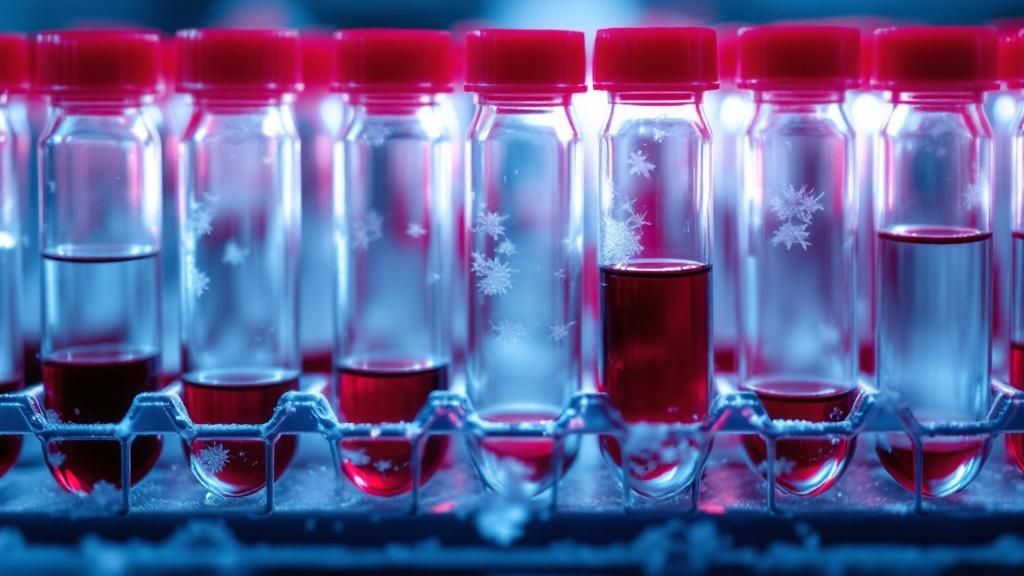
A 26-year-old woman from Bridgwater in Somerset has uncovered she possesses one of the rarest blood types in Britain, with only nine other blood donors across the entire UK who share her exact blood type composition. Mina Stoddart-Stones carries blood that is U negative and N negative—lacking antigens found in nearly 100% of the British population—alongside the uncommon RO blood subtype often seen in people of African or Caribbean descent. Her donations are so precious that they are frozen for up to 30 years by NHS Blood and Transplant, kept solely for patients with matching rare blood types requiring surgery or regular transfusions. Stoddart-Stones, who has been donating for years, only just discovered of her VIP status within the health service, describing the realisation as making her feel particularly valued and privileged.
A Present Beyond Measure
Stoddart-Stones’s dedication to giving stems from significant personal moments within her own family. As a baby, she was poorly and required medical care, and her father later battled cancer—experiences that instilled in her a profound appreciation for the NHS and its life-saving work. These pivotal times strengthened her commitment to give back to the health service that had been there for those close to her during their most difficult times. Now, with her unique blood classification, she has found a distinctly impactful way to create real change to patients across Britain.
“That small portion that I can do supporting them as much as they’ve helped my family,” she reflected on her motivation. Beyond blood donation alone, Stoddart-Stones has also signed up as a stem cell donor, further expanding her potential to help others. Joanne Mathews, head of NHSBT’s National Frozen Blood Bank in Liverpool, spoke of meeting Stoddart-Stones as akin to meeting “royalty,” recognising the extraordinary value of her contributions. Her blood units are assigned exclusively to patients with matching rare types, making certain every precious donation reaches those who truly need it.
- Only nine UK donors share Stoddart-Stones’s exact rare blood type combination
- Her blood is preserved for up to 30 years for use by future patients
- Rare blood donors comprise only 0.01% of the UK’s 800,000 blood donors
- She is also listed with the stem cell donor panel
Learning about Uncommon Blood Groups
Blood type rarity is determined by the presence or absence of specific antigens—proteins and carbohydrates on the surface of red blood cells that trigger immune responses. Most people possess widespread antigens such as the U and N antigens present in approximately 99% of the UK population. However, people such as Stoddart-Stones do not possess these antigens completely, making their blood incompatible with the overwhelming majority of patients. This genetic variation, whilst rare, proves essential for those rare patients who share the same blood type and require transfusions or surgical procedures.
The National Health Service manages specialised frozen blood banks to preserve these highly uncommon donations for extended periods, ensuring they remain available when required. Patients with rare blood types face significant challenges during medical emergencies or when undergoing planned operations, as locating suitable blood can become exceptionally challenging. In the absence of specialist rare donor initiatives and frozen blood reserves, patients suffering from conditions such as sickle cell disease needing frequent blood transfusions would face severely limited treatment options. The NHS’s forward-thinking strategy to identifying and supporting rare blood donors has revolutionised care for these vulnerable patients.
The Study Behind the Uncommon Nature
Stoddart-Stones’s blood group is classified as U negative and N negative, indicating she entirely lacks the U and N antigens found in nearly all other people. Additionally, her blood is RO subtype, a rare classification more frequently observed in communities of black African and Caribbean descent. This combination of missing antigens and uncommon subtype makes her blood extraordinarily valuable for specific patient populations. The genetic basis for these differences remains a subject of ongoing medical research and study.
When patients receive incompatible blood transfusions, their body’s defences attack the incompatible blood cells, potentially triggering serious complications ranging from fever and jaundice to organ failure and death. For patients with rare blood types, finding compatible donors before emergency situations arise is vital for their survival. NHS Blood and Transplant’s rare blood donor registers identify individuals with these precious blood types and keep comprehensive records. This systematic approach ensures that when a patient with an uncommon blood type requires urgent transfusion, suitable blood units can be found and given swiftly.
- Antigens are molecular markers on erythrocytes that establish blood transfusion compatibility
- Uncommon blood groups occur in fewer than 0.01% of UK donors overall
- Cryopreserved blood supplies can be kept for as long as 30 years in a secure manner
Life-Saving Applications
Mina Stoddart-Stones’s unusual blood type shows crucial for patients undergoing surgery or demanding urgent treatment. Her donations are reserved exclusively for patients with corresponding blood types, making certain when a patient in crisis arrives at the hospital needing a blood transfusion, matching blood is available. For patients with illnesses including sickle cell disease, which necessitates regular transfusions for life, the supply of rare blood donors like Stoddart-Stones means the distinction between controlled management and serious medical emergencies. The frozen reserves maintained by NHS Blood and Transplant guarantee that even when emergencies strike unexpectedly, medical teams can react swiftly with accurately matched blood.
Without specialist rare blood programmes, patients with uncommon blood types would encounter substantial waiting times during medical crises, potentially resulting in deaths that could be prevented. Stoddart-Stones’s work has substantially saved lives across Britain, though she may never know the individuals whom she has helped. Her choice to give blood consistently, alongside her involvement with the stem cell donation scheme, demonstrates strong dedication to helping the health service after her family received medical treatment during illness in childhood and her father’s treatment for cancer. This individual drive encourages numerous rare blood donors to continue their engagement with national donation initiatives
| Condition | Treatment Requirement |
|---|---|
| Sickle Cell Disease | Regular transfusions to manage chronic anaemia and prevent complications |
| Thalassaemia Major | Frequent blood transfusions to replace defective red blood cells |
| Surgical Operations | Compatible blood available for transfusion during planned procedures |
| Haemolytic Transfusion Reactions | Specially matched rare blood to prevent immune system complications |
The Cryopreserved Blood Bank System
NHS Blood and Transplant manages the National Frozen Blood Bank in Liverpool, where Joanne Mathews and her team maintain meticulous records of donors with rare blood types and their valuable donations. Blood units from rare donors like Stoddart-Stones are frozen and stored for approximately 30 years, creating a national stockpile that can be activated within hours when needed. This frozen storage capability revolutionises the provision of rare blood services, allowing the NHS to maintain supplies that would otherwise break down within weeks. The Liverpool facility represents the cornerstone of Britain’s rare blood security systems.
Stoddart-Stones plays a significant role in the National Frozen Blood Bank’s documentation, with her name and blood type information carefully catalogued to ensure her donations go exclusively to patients with corresponding rare blood types. Mathews spoke of encountering Stoddart-Stones as encountering “nobility,” reflecting the remarkable standing these donors occupy in the health service. The frozen blood network spans the entire country, connecting rare donors with patients throughout the UK who desperately need their vital donations. This sophisticated system illustrates how modern medical science can preserve precious biological resources for future emergencies.
Personal Motivation and Community Impact
For Mina Stoddart-Stones, the choice to give blood extends far beyond a straightforward NHS donation. Her drive stems in lived experience, shaped by her early health challenges and her father’s fight against cancer. Having witnessed firsthand the transformative power of medical care, she feels a profound sense of responsibility to give back to the NHS that supported her family in their times of greatest need. This personal attachment turns her infrequent donations from a medical procedure into a heartfelt contribution of appreciation and compassion with those battling significant illness.
The influence of Stoddart-Stones’ involvement echoes throughout the complete rare blood donation network, encouraging others to recognise their own potential to save lives. By publicly sharing her role as one of only nine contributors with her remarkably scarce blood type, she increases understanding about the critical importance of rare blood donations. Her commitment to engage in the stem cell database together with her blood donations showcases a holistic method to medical contribution. For individuals requiring treatment requiring precisely compatible blood, donors like Stoddart-Stones embody hope when conventional supplies cannot address their healthcare needs.
- Stoddart-Stones is involved with both blood donation and stem cell registers at the same time
- Her childhood illness and father’s cancer treatment shaped her commitment to helping others
- Rare blood donors offer support for patients with sickle cell disorder and thalassaemia major
The VIP Status of Infrequent Givers
Mina Stoddart-Stones maintains an extraordinarily exclusive position within the NHS Blood and Transplant service. As just nine donors in the entire United Kingdom with her particular blood group—U negative and N negative—she has been recognised as a VIP donor whose donations receive with exceptional care and reverence. Her blood type is so uncommon that she lacks the antigens present in nearly 100 per cent of the British population, making her genetic makeup invaluable to the health service. This scarcity has raised her standing considerably, transforming her from an ordinary volunteer donor into a nationally significant resource whose blood is literally frozen and preserved for many years, awaiting patients who match her exceptionally rare profile.
The recognition afforded to Stoddart-Stones extends beyond mere acknowledgment of her rarity. Joanne Mathews, head of NHSBT’s National Frozen Blood Bank in Liverpool, expressed the profound significance of meeting such a donor by comparing the experience to encountering royalty. This metaphorical elevation reflects the genuine importance these donors hold within the medical establishment. The frozen blood bank maintains meticulous records of uncommon donors like Stoddart-Stones, ensuring that her blood units are reserved solely to patients with matching blood types. She is part of NHSBT’s UK rare donor panel, which comprises approximately 1,200 individuals—roughly 0.01 per cent of the 800,000 blood donors across Britain—highlighting just how select this group truly is.
Acknowledgement and Responsibility
Being designated a VIP rare donor carries both profound honour and substantial obligation. Stoddart-Stones has adopted this twofold responsibility with demonstrated resolve, understanding that her donations directly impact patients undergoing surgery or coping with persistent health issues like sickle cell disease. The responsibility extends beyond basic giving; it requires keeping herself well, maintaining scheduled visits, and grasping the vital significance of her gift to the NHS. This heightened standing changes her from a passive participant in the blood donation system into an involved contributor in life-saving medical care, with her name and profile familiar to the specialists who guard her valuable genetic material.
