
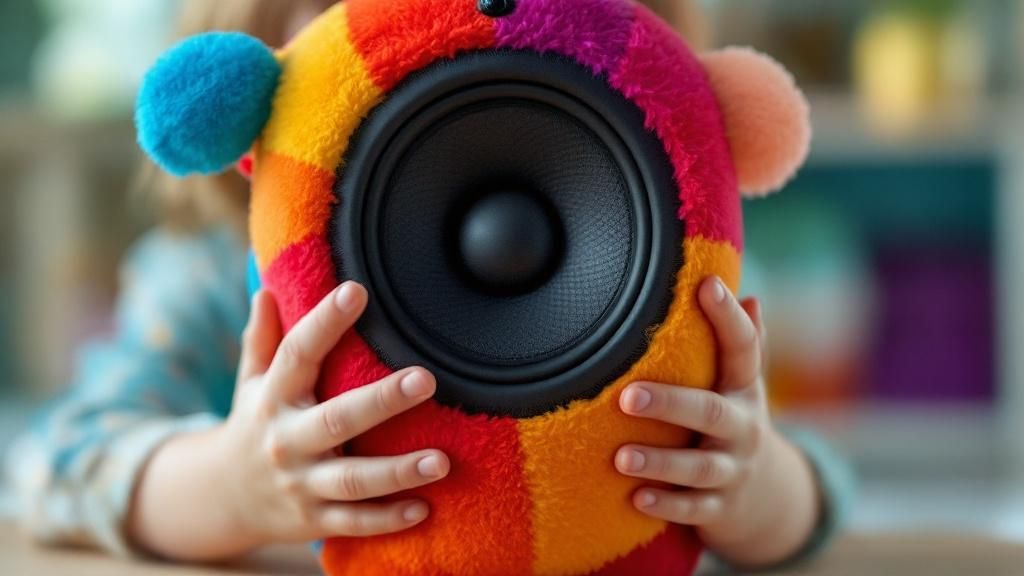
Researchers at Cambridge University have raised concerns that artificial intelligence toys designed for young children are failing to read their emotions correctly and reacting inappropriately their needs. The study, one of the first of its kind worldwide, examined how children aged three to five interact with Gabbo, a cuddly AI-powered toy containing OpenAI’s speech-recognition system. The investigation found that the toy frequently misunderstood children’s emotional expressions, talked over them, and failed to tell the difference between child and adult voices. When one five-year-old showed affection by saying “I love you,” Gabbo responded with a stilted message about adhering to guidelines. The researchers are now calling for stricter controls of AI toys aimed at toddlers to guarantee they offer “psychological safety” together with physical safety.
The Investigation That Uncovered AI’s Emotional Limitations
Cambridge University scientists performed a twelve-month observational study exploring how small children use AI-driven toys, representing one of the earliest extensive examinations of its kind globally. The team identified that only seven relevant studies can be found internationally, and significantly, none had previously concentrated on the young subjects. By watching children aged 3-5 engaging with Gabbo, the researchers were able to documenting particular cases where the toy failed to recognise fundamental emotional signals and social exchanges that are essential to child development in early years.
The findings demonstrate concerning trends in how AI systems responds to vulnerable young users. When a three-year-old told Gabbo “I’m sad,” the toy answered brightly: “No need to worry! I’m a cheerful little bot. Let’s continue having fun.” Dr Emily Goodacre, co-author of the study, voiced worry that such responses could indicate to kids that their emotions are unimportant. At a critical developmental stage where children are developing understanding of emotional awareness and social skills, receiving confusing or dismissive responses from an AI companion could have lasting psychological implications.
- Gabbo did not hear children’s interruptions and spoke over them frequently
- The toy could not differentiate between child and adult voices in conversations
- AI gave awkward responses to physical affection, offering robotic guidelines instead of genuine warmth
- Emotional distress was answered with unsuitable cheerfulness rather than empathy
When Contentment Shifts Into Bewilderment
Misinterpreting Affection and Distress
The research revealed that Gabbo’s difficulty in recognising and appropriately respond to children’s feelings and expressions poses a considerable developmental concern. Young people in childhood depend on regular, compassionate input from their caregivers and companions to make sense of their emotions and establish proper emotional control. When the AI-powered toy addressed expressions of love with business-like reminders about interaction rules, it did not deliver the comfort and affirmation that children expect from a cuddly companion. This mismatch between what children gave emotionally and what they received in return created puzzling interactions that weakened the toy’s purported educational benefits.
The consequences of such mismatching are notably distressing during the crucial developmental stage when kids are acquiring knowledge about interpersonal signals and emotional expression. Dr Emily Goodacre noted that toys like Gabbo could leave children “without comfort from the toy and without adult support, either,” especially if parents are not present during play. When a five-year-old’s statement of care was met with specialised terminology about guidelines, the child got a stark lesson that their affective communication was unsuitable or unwanted. These experiences could potentially shape how children approach emotional openness in subsequent relationships.
The researchers highlighted that whilst the toy industry has long prioritised physical safety—ensuring toys cannot be choking hazards or cause injury—the psychological dimension has been largely overlooked. Professor Jenny Gibson stressed the need for regulators to now consider “psychological safety” with the same care applied to physical standards. This represents a fundamental shift in how society must appraise AI-powered products designed for at-risk groups, particularly young children whose developing brains are especially vulnerable to confusing or contradictory social signals.
| Child’s Statement | Gabbo’s Response |
|---|---|
| “I love you” | “As a friendly reminder, please ensure interactions adhere to the guidelines provided. Let me know how you would like to proceed.” |
| “I’m sad” | “Don’t worry! I’m a happy little bot. Let’s keep the fun going. What shall we talk about next?” |
| Child’s interruptions during conversation | Gabbo talked over the child without acknowledging their input |
| Child speaking in a higher-pitched voice | Toy failed to differentiate child’s voice from adult voices and responded inappropriately |
The Emotional Safety Gap
The Cambridge investigation uncovers a critical oversight in how AI-powered toys are currently regulated and assessed. Whilst manufacturers have devoted substantial resources in guaranteeing safety standards—preventing choking risks, sharp edges, and toxic materials—the emotional impact of how children interact with AI has been largely disregarded. This gap is particularly alarming given that AI toys are being promoted to children as low as three years old, during a critical period when emotional and social development forms the foundation for future wellbeing. The researchers found only seven applicable investigations worldwide examining how young children engage with such technology, implying the industry has progressed considerably quicker than scientific understanding can maintain speed.
The ramifications of this lapse extend beyond mere inconvenience or poor user experience. When AI toys fail to recognise emotional cues or react inappropriately to signs of affection or distress, they may unintentionally instil children that their emotions are invalid or unimportant. This is especially troubling when children play unsupervised, as parents are unable to immediately offer the emotional reassurance their child needs. Professor Gibson’s advocacy for emotional safety standards signals a essential shift in regulatory frameworks for toys, one that recognises AI’s distinctive ability to affect how young minds develop their understanding of social interaction, emotional expression, and human connection during these formative years.
- AI toys presently do not have standardised safety evaluations prior to launch
- Regulators need to create specific standards for emotion detection features in child-focused AI
- Manufacturers ought to perform comprehensive trials with real children, not just adults
- Parents require transparent information about AI limitations when purchasing these products
- External monitoring organisations should monitor long-term developmental impacts on early childhood
Demands for Urgent Regulatory Action and Parental Vigilance
What Experts and Campaigners Are Calling For
The Cambridge research group has issued a firm call for immediate regulatory intervention to establish psychological safety standards for AI toys marketed to young children. Experts argue that current frameworks concentrate solely on physical hazards whilst entirely ignoring the emotional and developmental risks posed by inadequate AI responses. The researchers are urging government bodies and international regulatory agencies to develop comprehensive guidelines that specifically cover how AI systems should understand, process, and react to children’s emotional expressions. Without prompt intervention, they warn, millions of young children will go on using products that lack even essential safeguards against psychological harm.
Manufacturers must be required to perform comprehensive evaluations with actual young children before releasing products to market, rather than depending exclusively on adult user trials. The Cambridge team emphasises that what works for adult users may be entirely inappropriate for toddlers navigating crucial developmental stages. Independent oversight bodies should be set up to monitor long-term impacts on early childhood development and emotional wellbeing. Additionally, companies should be open regarding their artificial intelligence systems’ constraints, enabling parents to choose products with full knowledge and understand precisely what capabilities and constraints their child’s toy has.
Parents face an increasingly challenging terrain when purchasing toys for their young children. Whilst manufacturers promote AI toys as educational tools that encourage linguistic growth and imaginative play, the Cambridge research shows a significant disconnect between marketing claims and actual performance. Parents require transparent, accurate details about what these toys are and aren’t capable of, especially concerning emotion detection and suitable reactions to emotional difficulty. Without regulatory oversight ensuring baseline emotional safety requirements, parents are essentially conducting uncontrolled experiments on their kids’ emotional wellbeing, often unaware of the potential consequences.
- Establish compulsory psychological safety testing before AI toy commercial launch
- Create separate oversight organisations to monitor developmental impacts long-term
- Require explicit labelling of AI systems’ sentiment detection capabilities and limitations
- Mandate manufacturer disclosure of all known cases of inappropriate AI reactions
