
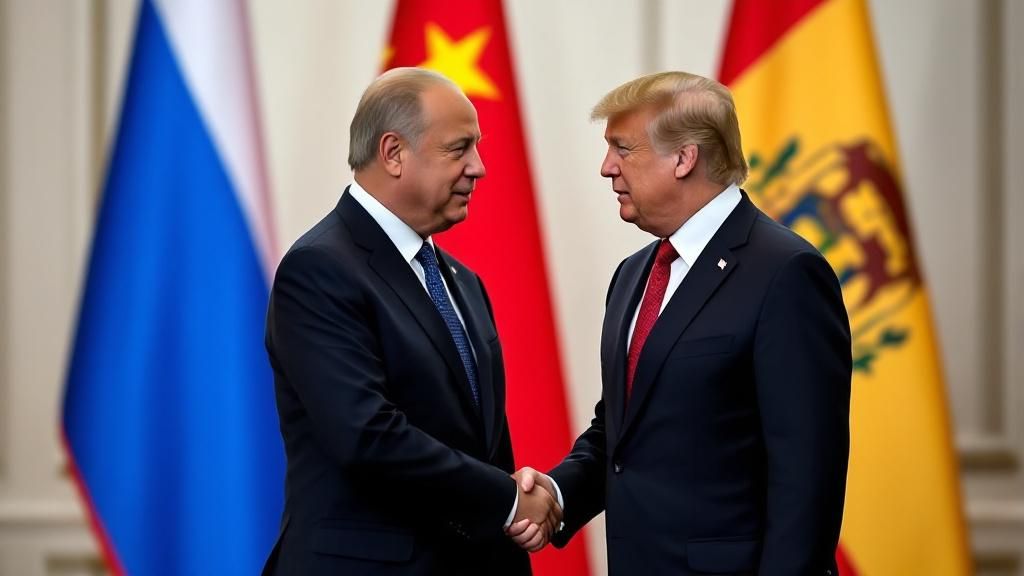
Sir Keir Starmer and Donald Trump have held their first conversation since the US president openly criticized Britain’s response to Iran, according to a statement from Downing Street. The telephone conversation marks an attempt to reduce friction between the two leaders after Trump voiced frustration with the UK prime minister’s unwillingness to permit American forces to use British military bases for initial offensive strikes against Iranian targets. During the conversation, Starmer and Trump discussed the worsening conditions in the Middle East and defense cooperation between the two nations, including the deployment of RAF bases for defensive purposes. The prime minister also conveyed his condolences to Trump following the deaths of six American soldiers in the region.
The Phone Call and Its Context
The dialogue between Starmer and Trump comes at a crucial point in UK-US relations, after several days of increasingly hostile rhetoric from the American president. Trump had taken to social media to voice his dissatisfaction with Britain’s restrained response to the Iran crisis, ruling out the possibility of UK aircraft carriers being sent to the Middle East and suggesting that Britain was no longer the “great ally” it once was. The timing of the call points to both leaders recognized the importance of avoid continued worsening in their relationship, in spite of their core differences over military strategy in the region.
Downing Street’s carefully crafted statement about the phone call emphasized areas of agreement rather than disagreement, centering on joint defense collaboration and collective defense efforts. The addition of Starmer’s condolences concerning American losses appeared designed to show support with the United States in this challenging time. However, the statement’s focus on “military cooperation through the use of RAF bases” notably did not address Trump’s central complaint—Britain’s resistance to involvement in combat missions—suggesting the underlying disagreement remains unresolved despite the diplomatic engagement.
- UK refuses to join early attack operations on Iran targets
- Britain commits to offering defensive support using RAF bases
- HMS Prince of Wales put on advanced readiness status
- RAF jets already deployed to intercept Iranian missiles
Britain’s Balanced Approach to Regional Tensions
The UK government has regularly upheld a distinction between defensive and offensive military operations in reaction to Iranian aggression, a position that has become a central point of contention with the Trump administration. Foreign Secretary Yvette Cooper has publicly defended Britain’s strategy, emphasizing that the nation will offer protective assistance when Iranian strikes threaten partner countries where British citizens are present. This measured approach reflects the government’s determination to protect British interests and those of partner nations without committing to the broader offensive campaign that Trump has promoted.
Cooper’s recent television appearance underscored the government’s resolve to pursue independent foreign policy choices rather than simply align with American interests. She noted that while the US president must determine what protects American national interests, the UK government has an equivalent duty to establish what protects British interests. This declaration of autonomy, though carefully worded, represents a direct challenge against Trump’s demand that Britain should automatically support American military decisions without question or deliberation.
Defensive Support vs Aggressive Tactics
Britain’s commitment to defensive operations has already been proven through tangible military measures. RAF jets have been deployed to the region specifically to intercept and destroy aerial weapons deployed by Iran at coalition objectives. This defensive stance allows the UK to back regional governments and defend British people without heightening tensions through involvement in offensive strikes. The difference between these strategies has become more significant as Trump continues to criticize nations that he views as reluctant to join his military operation.
The HMS Prince of Wales aircraft carrier has been moved to advanced readiness, signaling Britain’s capacity to react to further escalations if necessary. However, the officials have not verified whether the vessel will actually be deployed to the Middle East, keeping strategic flexibility about its plans. This strategic approach allows Britain to display military prowess and commitment while keeping the possibility to avoid deeper involvement in offensive operations that could escalate the situation.
- RAF jets stationed to intercept Iranian missiles and drones
- HMS Prince of Wales on advanced readiness for potential deployment
- UK supports allied nations through defensive military cooperation
- Government refuses to participate in broader offensive operations
- British bases ready for protective operations enabling collective self-defense
Political Backlash and Home Front Criticism
The disagreement between Starmer and Trump has sparked considerable debate within British political circles, with critics questioning whether the government has struck the right balance between maintaining the transatlantic alliance and protecting British sovereignty. Some observers argue that Starmer’s refusal to participate in initial offensive strikes was a principled stand that upheld international law and Britain’s independent foreign policy decision-making. Others contend that the diplomatic fallout with the US president could have long-term consequences for the special relationship and Britain’s strategic position in global affairs|role in worldwide matters. The timing of Trump’s public criticism, delivered through social media, has added an unusually confrontational tone to what is typically a more cordial diplomatic relationship|customary diplomatic exchange.
The dispute has also underscored fundamental disagreements about Britain’s role in conflicts in the Middle East and the extent to which the UK should align itself with US military operations. The Starmer administration has come under pressure from various quarters—justifying its choice to allies who expected British participation while at the same time managing Trump’s visible frustration. The prime minister’s statement that the UK would not join offensive operations but would back defensive measures represents an attempt to find middle ground, though this nuanced position appears to have satisfied neither the American president nor those who challenge any military involvement in the area whatsoever.
Dissenting Opinions and Strategic Challenges
Members of Parliament from different political backgrounds have voiced concerns about the government’s management of the Iran situation and its dealings with the Trump administration. Some Labour backbenchers have expressed support for Starmer’s choice to focus on British interests, viewing it as a important declaration of independence from American pressure. However, Conservative opposition figures have questioned whether the government properly engaged with allies before taking action, suggesting that better coordination might have avoided the public split with Washington and maintained Britain’s influence in affecting American policy.
Beyond parliamentary debate, foreign policy experts have offered perspectives on the geopolitical ramifications of the dispute. Many analysts stress that while Britain’s defensive commitment is reasonable, the public disagreement with Trump threatens to harm bilateral relations at a pivotal juncture. Others argue that Starmer’s willingness to say no to the American president, despite the political cost, shows that Britain retains genuine strategic autonomy. The broader concern centers on whether this incident points to a transformation in the traditionally close US-UK relationship or amounts to only a temporary disagreement that will be addressed through continued dialogue.
| Political Party | Position on UK Response |
|---|---|
| Labour Government | Defensive support appropriate; UK must prioritize national interests independently |
| Conservative Opposition | Questions coordination with allies; suggests better diplomacy could have prevented rift |
| Liberal Democrats | Supports defensive operations; opposes participation in wider offensive campaign |
| Foreign Policy Experts | Divided on whether assertion of independence strengthens or damages US-UK relations |
Understanding the US Alliance in Turbulent Times
The restart of discussions between Starmer and Trump marks a pivotal juncture in the transatlantic relationship, as both leaders seek to overcome their public disagreement over Iran strategy. The limited details released by Downing Street indicate a deliberate effort to recalibrate relations, with emphasis put on joint defense efforts and collective security interests. However, the underlying tension remains palpable, with Trump’s previous comments of British reluctance to join offensive operations still fresh in diplomatic circles. The call itself, while required, does not automatically address the core dispute about how Britain ought to act on security challenges in the region.
The timing of this conversation carries significant weight, happening mere days after Trump’s dismissive social media posts and his pointed comparison of Starmer unfavorably to Winston Churchill. Such public rebukes from a serving U.S. president are uncommon in contemporary U.S.-British relations, highlighting the actual dissatisfaction within the Trump administration. Yet the openness of each party to reconnect suggests neither leader wishes to enable this disagreement to lastingly undermine a partnership that stays foundational to both nations’ geopolitical objectives. The task before them involves discovering shared interests without either side compromising its core national security principles.
The Equilibrium Between Independence and Partnership
Britain’s choice to offer only defensive support rather than joining initial offensive strikes represents a careful calibration of its geopolitical standing. The UK government has consistently framed this as a question of national priorities rather than disagreement with American objectives, emphasizing that defensive operations—including the deployment of RAF jets to counter Iranian missile attacks—constitute significant involvement to regional security. This distinction allows Starmer to maintain that Britain continues to be a committed ally while demonstrating independent judgment about military engagement. The approach reflects a wider understanding that being an ally does not require automatic alignment on every decision.
Foreign Secretary Yvette Cooper’s latest statements underscore this philosophy, asserting that the UK government must determine its own strategic priorities rather than outsourcing foreign policy to other nations. This claim to autonomy, while arguably divisive with Washington, carries domestic political importance for Starmer’s government. Labour backbenchers and the wider British population have shown support for the choice to avoid offensive operations, regarding it as sensible restraint. However, preserving this balance demands careful diplomatic engagement to stop Washington from reading British caution as reluctance to back American security interests.
- RAF jets dispatched to intercept Iranian missiles directed toward UK allies
- HMS Prince of Wales positioned on advanced readiness for potential deployment
- British bases available for protective action but not opening offensive moves
- Continued dialogue between leaders vital for diplomatic restoration
Regional Alerts and Escalation Risks
The rising rhetoric between Washington and London reflects underlying concerns about possible additional Iranian retaliation and the threat of wider regional conflict. Trump’s open criticism of Britain’s cautious approach indicates frustration not merely with military choices but with what he views as insufficient commitment to American-led strategy in the Middle East. The president’s dismissal of British involvement as joining “conflicts after we’ve already won” oversimplifies the intricate security calculus facing regional allies. Iran’s demonstrated willingness to launch direct strikes against Israel and US interests suggests that the conflict remains volatile, with multiple actors able to causing further escalation that could pull in other nations irrespective of their initial positions.
The death of six American soldiers, which Starmer recognized in his condolences during the telephone conversation, underscores the real human toll of instability in the Middle East. This tragedy may have provided an chance for both leaders to restart discussions beyond the hostility of recent days. However, the fundamental question of military strategy remains unresolved. British officials are concerned that joining offensive operations could provoke Iranian reactions targeting UK staff and assets, while American officials seem to regard such caution as insufficient solidarity. This tension highlights the real challenge confronting allied nations: balancing support for American security interests against evaluations of their own strategic vulnerabilities and domestic political constraints.
