
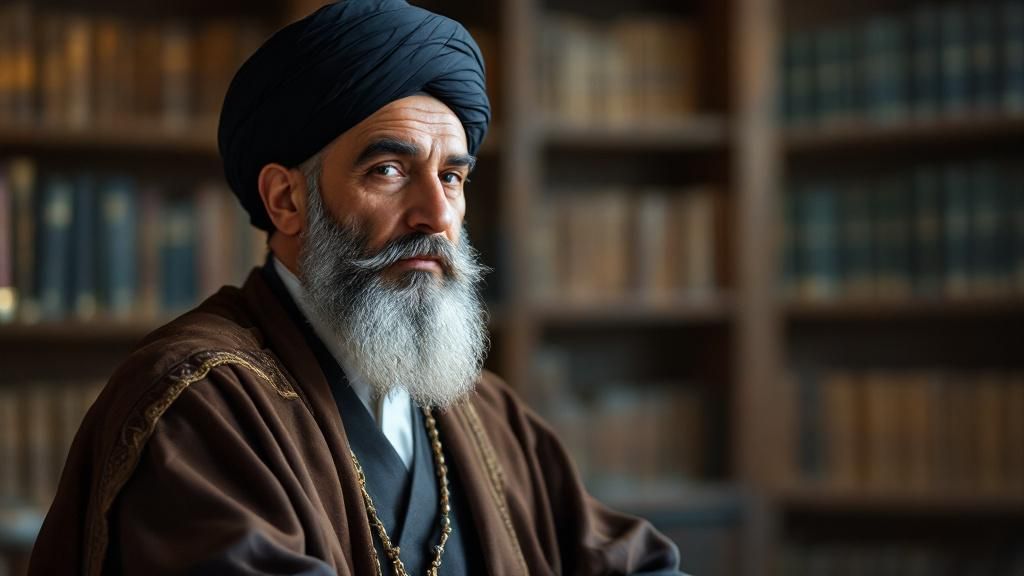
Mojtaba Khamenei, the fifty-six-year-old son of Iran’s former Supreme Leader Ayatollah Ali Khamenei, has been chosen as his heir after his father’s passing in US-Israeli strikes. The choice constitutes a significant moment for the Islamic Republic, as Mojtaba assumes control of one of the world’s most powerful theocracies in spite of having never held public office or given a single public speech. Born in Mashhad in 1969, Mojtaba has spent many years operating largely out of public view, developing an mysterious image that contrasts sharply with his father’s prominent role. Yet according to US diplomatic cables disclosed by WikiLeaks, he has long wielded significant behind-the-scenes influence, making him the description of “the power behind the robes” within Iran’s regime.
From Behind-the-Scenes Influence to Supreme Leadership
Mojtaba Khamenei’s ascent to Iran’s top position marks a major change from the shadows to the pinnacle of power. For decades, he functioned in the shadows of Iran’s political establishment, his sway whispered about in diplomatic circles but rarely recognized publicly. US cables from WikiLeaks painted a picture of a shrewd operative with considerable sway over state operations, yet he maintained an notably removed detachment from the public view. His selection as highest authority confirms what those in the know long suspected: that the quiet figure in the shadows possessed the trust and capability to direct the Islamic state through its most turbulent era.
The transition also illuminates a core contradiction within Iran’s theocratic system. The Islamic Republic’s establishment tenets explicitly reject hereditary succession, insisting instead that the supreme leader be appointed for his theological qualifications and demonstrated leadership. Yet Mojtaba’s selection signals a departure from this principle, prompting inquiry about whether the regime’s ideological base can withstand such a departure. His father, Ali Khamenei, had reportedly expressed doubts about his son’s nomination, according to members of the Assembly of Experts. Nevertheless, the clerical body ultimately appointed Mojtaba, implying that strategic interests may have taken precedence over legal objections.
- Did not occupy an official government position prior to becoming supreme leader
- Studied Islamic theology in Qom starting in 1999
- Served briefly in the military throughout Iran-Iraq War as a teenager
- Rarely made public appearances or conducted interviews during his lifetime
A Existence Largely Hidden From Public View
Mojtaba Khamenei’s ascent to Iran’s top position is distinctive in that it comes from a figure who has purposefully kept away from the public spotlight for the majority of his years. Unlike his father, who served in high-ranking posts before taking on supreme leadership, Mojtaba has abstained from public service, delivered public speeches, or spoken to journalists. This self-imposed obscurity has made him an enigmatic figure to the Iranian public, who understand little regarding the man now tasked with leading their nation. His selection represents a triumph of backroom power over public standing, a complete inversion of customary leadership patterns in Iran.
The scarcity of photographs and video footage of Mojtaba highlights his intentional distance from the public sphere. During his five and a half decades, he has cultivated an deeply reclusive existence, preferring to operate through informal networks and close confidants rather than official government positions. This approach has enabled him to build influence without the scrutiny that typically accompanies top-level roles. Intelligence analysts and diplomatic observers have consistently identified his subdued authority, yet the Iranian citizens stayed mostly ignorant of his significance until his elevation to supreme leader was made public, exposing the extent to which power in Iran works outside the awareness of ordinary citizens.
Early Years and Religious Education
Born on September 8, 1969, in Mashhad, a major religious center in northeastern Iran, Mojtaba grew up in an environment steeped in Islamic tradition and clerical authority. As the second of Ayatollah Ali Khamenei’s six children, he was brought up in Iran’s highest circles of power during a transformative period in the nation’s history. He received his secondary education at the renowned Alavi School in Tehran, an institution recognized for training the children of Iran’s elite. This privileged upbringing placed him in the country’s leading circles from an early age.
During his adolescent years, Mojtaba performed the military for limited periods as the Iran-Iraq War raged across the nation. The eight-year conflict, which claimed hundreds of thousands of lives, significantly affected Iran’s political culture and deepened the regime’s suspicion of Western influence. His military service, though modest, linked him with the revolutionary generation that had toppled the monarchy and founded the Islamic Republic. These formative experiences embedded him within the ideological worldview that still shapes Iranian governance and foreign policy decisions.
The Delayed Path to Theological School
A significant aspect of Mojtaba’s biography is his relatively late beginning of formal religious study. In 1999, at age 30, he relocated to Qom, Islam’s most sacred city in Iran and the primary center for Shia religious training. This timing was unusual, as most clerics start their seminary training in their late teens or early twenties. More importantly, Mojtaba did not wear religious vestments until relocating to Qom, suggesting he had followed a secular or semi-secular lifestyle in his earlier years. The reasons for this non-traditional route remain unclear, as he has not publicly disclosed his postponed dedication to formal religious training.
His relocation to Qom constituted a watershed moment in his life, though it did not quickly propel him into widespread recognition. Rather, his years of theological study supplied the theological qualifications necessary for him to eventually take on leadership positions within the Iranian clergy. The transition from secular life to religious training at such a mature stage of life invites scrutiny about his genuine theological commitment versus the pragmatic need of acquiring religious legitimacy. Nevertheless, his period spent in Qom finalized the metamorphosis that would eventually place him to take on his father’s role as the supreme leader of the Islamic Republic.
Claims regarding Electoral Manipulation and Political Power
Despite his minimal public presence, Mojtaba Khamenei has been at the center of numerous claims regarding Iran’s election system and the concentration of authority within the supreme leader’s closest advisors. International observers and Iranian opposition movements have consistently argued that his influence extended far further than official statements, particularly in rejecting potential candidates and shaping outcomes during elections for the presidency. These claims intensified following controversial election results in 2009 and 2013, when reformist candidates were deliberately excluded from participating by the Council of Guardians, a institution closely connected with the supreme leader’s office. Mojtaba’s claimed participation in these choices, though never directly proven, sparked conjecture about his function as a behind-the-scenes architect of Iran’s political landscape.
Western security services and human rights bodies have documented patterns pointing to systematic initiatives to suppress political opposition and maintain hardline dominance within Iran’s government structures. Mojtaba’s documented ties to the Revolutionary Guards and other security apparatus have generated alarm about his capacity to merge military and civilian control even further should he assume the position of supreme leader. Critics argue that his designation as successor constitutes a deviation from the Islamic Republic’s founding principles, which in theory stress meritocratic selection of clerical leaders rather than hereditary succession. The lack of transparency concerning his rise to power has intensified international scrutiny and domestic debate about the future course of Iran’s governmental system.
| Year | Allegation |
|---|---|
| 2009 | Involvement in barring reformist candidates from presidential election |
| 2013 | Role in Guardian Council’s rejection of moderate candidates |
| 2026 | Succession through hereditary means rather than merit-based selection |
- Alleged control of Guardian Council candidate vetting processes and electoral results
- Suspected ties with Revolutionary Guard Corps security and military operations
- Criticized for transfer of power contravening Islamic Republic’s founding democratic principles
Religious Credentials and the Ayatollah Question
One of the most contentious aspects of Mojtaba Khamenei’s rise to supreme leader is his spiritual credentials—or rather, the concerns about it. Unlike his father, who spent decades building his reputation as a respected cleric and theologian before taking power, Mojtaba did not begin formal religious studies until age 30, a delayed beginning in the Shia clerical establishment. His delayed entry into religious education raises fundamental questions about whether he has the academic qualifications and religious standing traditionally expected of Iran’s supreme leader, a position that theoretically requires recognition as a source of emulation among the faithful.
The Islamic Republic’s founding ideology formally requires that the supreme leader should be chosen based on religious knowledge and ethical character, not hereditary relationships. Mojtaba’s minimal religious writings and limited participation with religious scholarship compared to other prominent religious scholars have generated opposition from conservative scholars who contend his selection undermines the credibility of the system itself. International observers and Iranian progressive organizations have highlighted this discrepancy, challenging whether his elevation signals a significant departure away from the meritocratic principles that theoretically govern clerical advancement in Shia religious practice.
Advancing Position the Administrative Structure
To reinforce his faith-based standing before his succession, Mojtaba went through a accelerated rise within Iran’s ecclesiastical structure. In the past several years, he was given the status of Ayatollah, a senior title within Shia Islam that usually necessitates considerable academic achievement and recognition from traditional religious bodies. However, critics contend that this promotion was expedited and arranged specifically to legitimize his candidacy for supreme leader, rather than achieved via traditional pathways of religious scholarship and peer recognition.
The timing and circumstances of Mojtaba’s rise have drawn scrutiny from religious scholars both throughout and beyond Iran. Many doubt that the conventional criteria for achieving Ayatollah status were actually fulfilled or whether institutional pressure and his paternal influence expedited the process. This apparent shortcut has come to represent larger concerns about the hereditary aspect of his succession process and the possible erosion of institutional norms within Iran’s theological establishment.
Difficulties In Store for Iran’s Incoming Supreme Authority
Mojtaba Khamenei’s ascension to Iran’s supreme leadership role takes place in a especially volatile moment for the Islamic Republic. The context of his rise—subsequent to his father’s death in American-Israeli military operations—have intensified scrutiny over his fitness and qualifications to lead. International tensions remain elevated, with ongoing regional conflicts and nuclear negotiations producing immediate challenges that will test his diplomatic acumen and decision-making abilities. Additionally, economic problems at home remain unresolved, including inflation and unemployment that have eroded confidence among citizens in the regime’s leadership and administration. These overlapping challenges call for proven leadership skills at the very moment when questions about Mojtaba’s abilities remain outstanding.
The recently appointed supreme leader must also navigate the core tension inherent to his succession: the Islamic Republic’s founding principle clearly opposes hereditary rule in favor of selection based on qualifications by clerical bodies. This ideological tension threatens to undermine his standing among traditionalists and reform-minded clerics alike. Mojtaba’s previous invisibility in public life, while perhaps strategically advantageous during his father’s reign, now leaves him without a track record of proven leadership experience or public connection. His capacity to strengthen his grip on authority while preserving the appearance of institutional credibility will determine whether his rule strengthens governmental stability or accelerates its internal fracturing during an already destabilized period.
- Addressing US-Israeli military threats alongside proxy conflicts in the region successfully
- Confronting economic deterioration and broad public dissatisfaction regarding living conditions
- Establishing legitimacy for his rule despite succession through inheritance contradicting original principles
- Creating agreement between rival factions across Iran’s religious leadership
- Building trust via public interaction after decades of isolation
