
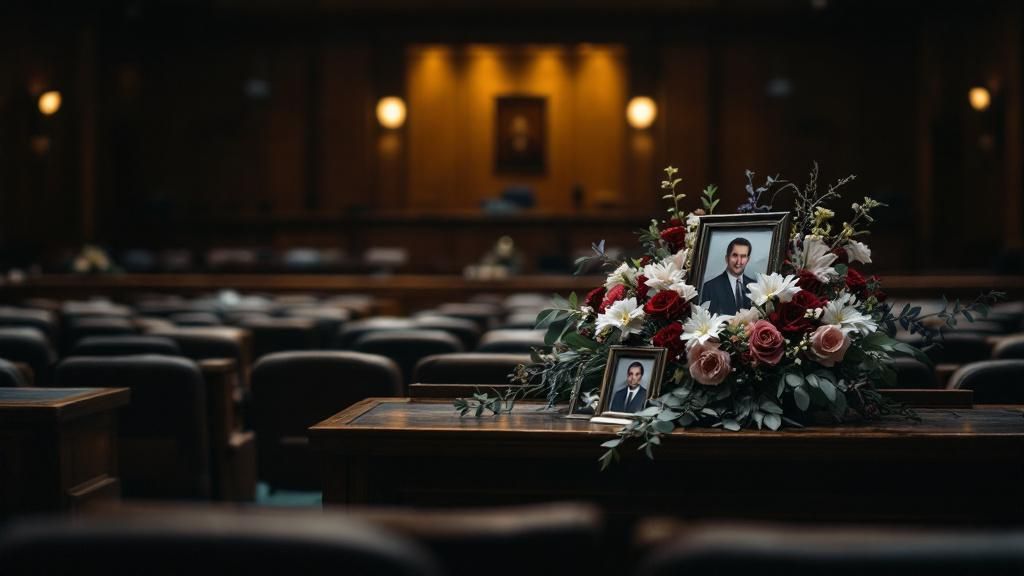
The UK’s long-standing Covid-19 inquiry received its final witness testimonies this week, closing a chapter on one of the most extensive public inquiries in British history. Among the last voices to give evidence was Rivka Gottlieb, who recounted the pain of losing her father, Michael, to Covid in April 2020—a death made more painful by the fact that he died without family in hospital. Her account, delivered in west London, was one of over eight hours of emotional accounts from grieving families presented during the inquiry’s concluding hearings. Since public hearings began in June 2023, the inquiry has examined evidence from 381 witnesses across the UK and reviewed 600,000 documents, questioning everything from state policy to the lived experiences of healthcare workers and grieving families.
The Last Witnesses: Narratives That Informed the Review
The final sessions of the Covid inquiry brought together 12 handpicked family members of the deceased to recount their accounts during the final two days of witness testimony. Their accounts painted a heartbreaking picture of families separated by social distancing restrictions that prevented family members from being present at the moment of death. Rivka Gottlieb’s account of her dad Michael—a fit, active 73-year-old who held a part-time job and taught children at his local synagogue—exemplified the human cost of the crisis. Michael’s decline in the hospital was swift and isolating; he could merely convey his declining health through a WhatsApp text when medical staff readied to place him on a ventilator.
In total, 42 bereaved relatives have provided evidence since the inquiry’s public hearings began in June 2023, presenting profoundly personal accounts on loss and isolation. Beyond the bereaved families, the inquiry heard from 381 individuals such as porters, cleaners, care workers, and nurses who worked in Covid wards, delivering frontline accounts of the crisis. These accounts supplemented the inquiry’s review of 600,000 documents, from WhatsApp conversations to private diary entries, creating an unprecedented record of the pandemic’s impact. The emotional weight of these final hearings highlighted the inquiry’s dedication to amplifying the perspectives of those most directly affected by the health emergency and government decisions.
- 42 bereaved relatives gave evidence during the investigation from June 2023 onwards
- Concluding sessions explored the pandemic’s effects on mental health and vulnerable populations
- Isolation requirements stopped families from being present at deaths
- Healthcare workers and key personnel discussed frontline experiences and difficulties
Loneliness and Loss: The Human Cost of COVID-19 Lockdowns
Separated at the End of Life
The Covid inquiry’s closing statements revealed the profound psychological impact of restrictions that kept families separated during their relatives’ last moments. Rivka Gottlieb’s testimony illustrated this profound isolation—her father Michael spent his last days in hospital without loved ones at his side, communicating only through WhatsApp messages as his condition worsened. Hospital visitation limits, implemented to prevent virus transmission, meant that patients died surrounded by medical staff rather than those closest to them. These policies, while intended to protect public health, created a secondary trauma for grieving families who were prevented from saying goodbye or being physically present in their last moments.
The inquiry heard how this forced isolation intensified the emotional weight of bereavement. Rivka described feeling “haunted” by the fact that her father died alone, a feeling shared by numerous families who testified during the final weeks of hearings. The lack of presence during a loved one’s death breached fundamental human needs for closeness and resolution. Many family members spoke of the enduring psychological trauma from being absent during these vital times, explaining how the separation compounded of remorse and guilt to their grief. These accounts underscored how pandemic protocols, despite medical justification, produced profound human costs that extended far beyond the immediate health crisis.
Funeral Practices Compromised by Procedural Requirements
Beyond hospital visitation, pandemic restrictions also disrupted funeral rites and religious ceremonies that families customarily depend on for grief processing and collective assistance. For many, particularly within faith communities, these rituals hold profound personal and sacred significance. The inquiry heard accounts of families prevented from assembling for proper funerals, compelled to express their grief in isolation or with severely limited attendance. Spiritual rituals that typically bring communities together were suspended or significantly modified, denying mourners the communal support and sacred consolation these gatherings provide. The loss of these rituals represented a compounded loss—the death itself, coupled with the inability to pay respects to the departed through culturally significant and spiritually important practices.
The extended psychological consequences of missing these rituals emerged clearly in statements from grieving family members. Many described extended mourning compounded by the lack of closure ceremonies and collective grieving. Some families organized delayed memorial services extended periods later, seeking to restore practices that the pandemic had deprived them. The inquiry recognized that these restrictions, while sometimes necessary from a health protection standpoint, created enduring psychological harm. Witnesses stressed how the denial of burial ceremonies and spiritual practices caused them to feel that their loved ones’ deaths were somehow lessened or unacknowledged, adding profound suffering to their bereavement and hampering their capacity to grieve in culturally significant ways.
- Hospital visitation restrictions kept families from being there at passing of loved ones
- Funeral limitations disrupted religious ceremonies vital to the grieving process and communal assistance
- Delayed memorial services at a later time failed to completely recover absent ritual finality
- Faith groups faced considerable strain from suspended faith practices and meetings
- Absence of rituals impeded grief and postponed emotional recovery for countless individuals
A Major Investigation: Scope, Cost, and Controversy
The Covid inquiry has become one of the largest and costly public investigations in British history, demonstrating the unprecedented scale of the pandemic’s effects on the nation. Since public hearings began in June 2023, the inquiry has meticulously gathered testimony from 381 witnesses across four countries—England, Scotland, Wales, and Northern Ireland—while at the same time examining over 600,000 documents. This comprehensive approach has included everything from government communications and WhatsApp exchanges to intimate diary entries, creating an exhaustive historical record of how the crisis progressed and how decisions were made at every level of society and governance.
The monetary commitment in this inquiry has attained unprecedented levels, with the overall expenditure now standing at £204 million. Beyond this figure, the government has committed an additional £111 million for its own legal representation and staffing requirements throughout the investigation. These substantial expenditures highlight the complexity and duration of examining how the pandemic was managed across multiple sectors, from medical services to social services. The inquiry’s scope extends far beyond interviewing prime ministers and senior officials; it has intentionally focused on listening to essential staff and everyday people whose circumstances changed fundamentally by Covid-19 and the government’s handling of the crisis.
| Metric | Details |
|---|---|
| Total Cost to Date | £204 million |
| Government Legal and Staffing Costs | £111 million additional |
| Witnesses Heard Publicly | 381 across four nations |
| Documents Reviewed | 600,000 including communications and personal records |
Questions Concerning Value and Performance
The considerable monetary investment to the review has predictably prompted controversy about whether the expenditure represents reasonable returns for citizens. Skeptics have raised concerns about whether such comprehensive inquiries, while detailed, justify their significant expenditures in an period of limited public budgets. The dual spending structure—with both the inquiry itself and separate government legal teams utilizing budgets—has drawn particular scrutiny. Some commentators suggest that the extended duration and comprehensive scope, while maintaining rigor, have led to rising expenses that potentially could have been limited through simplified processes or quicker resolutions.
Advocates of the inquiry, however, argue that the expenditure is justified given the scale of the pandemic’s effects and the importance of creating a thorough public record. They argue that inadequate investigation would represent a disservice to the 227,000 people who passed away with Covid as a cause on their death certificates between March 2020 and May 2023. The decision to engage with diverse witnesses—from bereaved families to healthcare workers to vulnerable populations—guarantees that multiple perspectives inform the final recommendations. This inclusive approach, while costly, is viewed by proponents as vital for identifying systemic failures and forestalling future crises.
What Comes After: Documentation, Guidance, and Responsibility
With the final testimonies concluded, the Covid inquiry now enters its most consequential phase: consolidating findings from 381 witnesses and 600,000 documents into detailed conclusions and proposals. The inquiry chair will generate extensive reports assessing government preparedness, decision-making during lockdowns, the impact on at-risk populations, and healthcare system responses. These conclusions are expected to serve as the foundation for potential policy reforms and accountability measures. The inquiry’s conclusions will probably shape how Britain prepares for upcoming public health crises and shapes public health governance for decades to come.
The bereaved families who testified in the past several weeks are watching closely to see whether their accounts lead to meaningful change. Many family members expressed that their main reason for participating was guaranteeing their deceased family members contributed to similar tragedies. The inquiry’s recommendations could tackle shortcomings within disease preparedness, improve information-sharing procedures in emergency circumstances, and establish more explicit direction on terminal care management in emergency situations. Families trust the significant commitment and extensive hearing process will yield actionable insights that demonstrate their participation held genuine weight in influencing institutional reform.
- Inquiry chair to generate detailed reports assessing state readiness and decision-making processes
- Findings anticipated to shape upcoming crisis preparedness and health system oversight nationally
- Potential accountability measures may follow from discovered structural weaknesses and shortcomings
- Grieving relatives anticipate results will prompt substantive legislative changes and organizational restructuring
Pressure for Reform Outside England
While the Covid inquiry examined the UK-wide response, devolved governments in Scotland, Wales, and Northern Ireland have announced their own investigative processes and policy changes. Witnesses from all four nations provided evidence on local variations in pandemic management, lockdown implementation, and aid for affected communities. Families across the UK are calling for unified improvements to emergency preparedness that reflect distinct healthcare systems and governance structures. The inquiry’s recommendations are expected to guide dialogue about inter-agency cooperation during forthcoming health crises and uphold consistent standards of care across all UK nations.
A Plea for Remembrance and Future Preparedness
The closing testimonies presented at the Covid inquiry held a weight beyond statistics and policy assessment—they were profoundly intimate pleas for remembrance and structural reform. Rivka Gottlieb’s account of her father Michael’s solitary death in hospital captured the human cost of the pandemic that numbers alone cannot convey. Her poignant remarks about fearing the worst with every phone call resonated throughout the hearing room, bringing home to inquiry members that behind the 227,000 deaths lay personal narratives of loss, separation, and trauma. These closing testimonies ensured that the voices of the bereaved would not be forgotten as the inquiry moved toward its final recommendations.
For the families who took part, witnessing the inquiry meant far more than seeking answers—it was a dedication to ensuring their loved ones’ deaths led to significant change. Many relatives stressed that their main motivation was stopping comparable tragedies in upcoming health emergencies. The inquiry’s investigation into the effects of social distancing rules, hospital isolation policies, and communication failures during the pandemic has revealed systemic failures that require attention. As the inquiry prepares its final reports, bereaved families are watching intently to see whether their emotional testimony and the £204 million investment will translate into concrete reforms that strengthen Britain’s readiness for coming crises.
